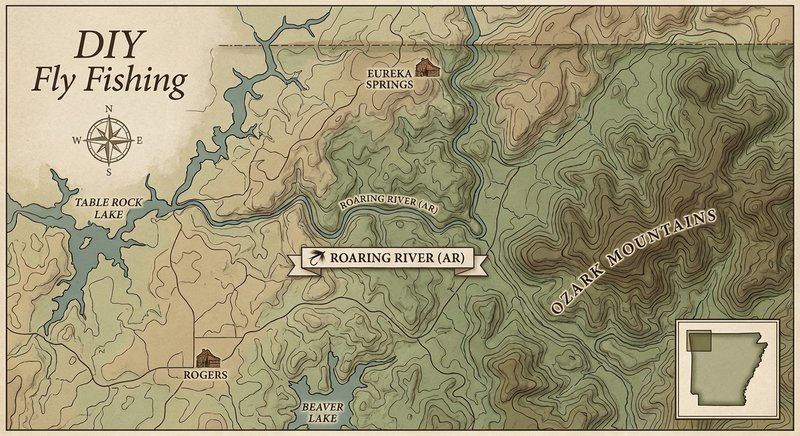
Roaring River (AR)
Fly fishing in Arkansas · Advanced · Best seasons: Spring, Summer, Fall
Target Species
Rainbow Trout, Brown Trout
About This Water
Small Ozark stream with wild trout. Technical fishing in remote setting.
Fishing Recommendations
Welcome to one of the most unique trout fisheries in the Ozarks. While the Roaring River is technically located just across the border in Cassville, Missouri, it is the "home water" for many Northwest Arkansas anglers. Fed by a massive spring pumping out millions of gallons of 57-degree water daily, it provides a consistent, cold-water environment that supports a massive population of trout.
Here is your comprehensive guide to fly fishing the Roaring River.
🎣 Location Overview
Roaring River is a "Missouri Trout Park," meaning it is managed intensely with daily stockings from an on-site hatchery. However, don't let the "park" designation fool you—this is a high-quality limestone spring creek.
The water is incredibly clear, ranging from deep turquoise pools to fast-moving riffles and "chutes." It is divided into three distinct zones:
- Zone 1: Catch-and-keep (Lures and bait).
- Zone 2: Fly-fishing only. This is the "holiest" water for fly anglers, featuring technical runs and educated fish.
- Zone 3: Catch-and-keep (Natural and scented bait allowed).
What makes it special is the accessibility combined with the challenge. You can see hundreds of fish at a time, but catching the "educated" ones requires finesse, light tippets, and perfect presentations.
🐟 Target Species & Behavior
Rainbow Trout
The primary resident. Because they are stocked daily, you will find "fresh" fish that are aggressive and "holdovers" that have survived several weeks. The holdovers become extremely wary, holding in the shadows of ledges or at the very tail-ends of pools.
Brown Trout
While less numerous than rainbows, the browns in Roaring River are the prizes. They tend to hide under the deep undercut banks and near the massive boulders in the lower sections of the park. They are most active during low-light conditions and become highly aggressive during the fall spawn.
📅 Best Times to Fish
- Spring (March – May): This is the peak of the "regular" season. The water levels are good, and the bugs are moving. "Opening Day" (March 1st) is a major regional event.
- Summer (June – August): While other rivers in the region get too warm to fish, Roaring River stays cold. It is a sanctuary for trout and anglers alike during the heat of July.
- Fall (September – October): The most beautiful time to fish. The crowds thin out, and the Brown Trout start moving.
- Winter (November – February): The park transitions to a Catch and Release season. This is the best time for serious fly anglers, as the crowds disappear, and the fishing is world-class for those who can handle the cold.
Prime Window: The first two hours after the morning whistle and the final hour before the evening whistle are consistently the most productive.
🪰 Recommended Flies & Techniques
Top Fly Patterns
- Nymphs: Zebra Midges (size 18-22 in red, black, or silver), Scuds (grey or olive, size 16-18), and Sowbugs.
- Dry Flies: The Crackleback is a Missouri legend—fish it dry or strip it back like a streamer. Also, Griffith’s Gnats and Parachute Adams (size 18-20).
- Streamers: Woolly Buggers (White, Olive, or Black), and the "John Deere" (a localized green/yellow jig fly).
- The "Egg": During high water or right after stocking, a peach or pink Glo-Bug is lethal.
Techniques
- Sight Fishing: Because the water is gin-clear, you should spot your target before casting. If you can see the fish's mouth open, you're in business.
- The "Roaring River Strip": Using a Crackleback or a small streamer, cast across the current and use short, erratic strips to entice a reaction strike.
- Micro-Nymphing: Use a very small indicator (or just a piece of yarn) with 6X or 7X fluorocarbon tippet. These fish are "leader shy."
💡 Pro Tips & Local Knowledge
- Fish the "Edges": Most people stand in the middle of the stream and fish the deep holes. The biggest fish often hold 12 inches from the bank under overhanging grass.
- The Hatchery Effect: When the hatchery workers feed the fish in the raceways, the "wild" fish in the river often get active. Pay attention to the timing.
- The Winter Secret: During the winter catch-and-release season, the fish are less pressured and more likely to take large streamers. It’s the best time to hunt for a trophy Brown Trout.
- Stealth Matters: Wear natural colors (greens and browns). If you can see the fish clearly, they can see you. Crouching while approaching a pool will significantly increase your hook-up rate.
⚠️ Important Information
Access & Fees
- Missouri Fishing License: Required for all anglers 16 and older.
- Daily Trout Tag: During the regular season (March 1 – Oct 31), you must purchase a daily tag at the park store. You must keep this tag on your person.
Regulations
- Zone 2 is Fly-Only: No soft plastics, no scented baits, and no "dropper" rigs that include non-fly components.
- Wading: Wading is permitted, but be mindful of other anglers, as the river is relatively narrow.
- Whistle Starts: During the regular season, fishing begins and ends with a loud whistle blast. Do not cast before the morning whistle!
Pro Gear Recommendation
A 9-foot 4-weight or 5-weight rod is the perfect tool for this water. It provides enough backbone to fight a 5lb rainbow but enough delicacy to protect the 7X tippet required to fool them.
Bug Hatches & Matching Flies
| Hatch | Type | Peak months | Time of day | Hook sizes | Matching flies |
|---|---|---|---|---|---|
| Chironomids (Midges) Chironomidae | midge | January, February, March, December | All Day | #18-24 | Zebra Midge #18-22, Griffith's Gnat #20-24, Palomino Midge #20-22 |
| Blue Winged Olive (BWO) Baetis | mayfly | March, April, October, November | Late Morning/Afternoon | #18-22 | RS2 #20-22, Parachute Adams #18-22, Pheasant Tail Nymph #18-20 |
| Sowbugs Isopoda | terrestrial | March, April, May | All Day | #14-18 | Ray Charles #14-18, Soft Hackle Sowbug #16-18, Scud #14-18 |
| Mother's Day Caddis Brachycentrus | caddis | April, May | Late Afternoon/Evening | #14-16 | Elk Hair Caddis #14-16, Holy Grail Caddis #14-16, Peacock Caddis #14-16 |
| Sulfurs Ephemerella invaria | mayfly | May, June | Evening | #16-18 | Sulfur Parachute #16-18, Sulfur Emerger #16-18, Sparkle Dun #16-18 |
| Tricos Tricorythodes | mayfly | July, August, September | Early Morning | #22-26 | Trico Spinner #22-26, Sunken Trico Spinner #22-24 |
| Terrestrials (Ants & Beetles) Formicidae / Coleoptera | terrestrial | June, July, August | All Day | #12-18 | Black Foam Ant #16-18, Chernobyl Ant #10-14, Fat Albert #12-14 |
| Crane Flies Tipulidae | terrestrial | August, September | Afternoon | #10-14 | Daddy Long Legs #10-12, Crane Fly Larva #10-14 |