Spring River
Fly fishing in Arkansas · Beginner · Best seasons: Spring, Summer, Fall
Target Species
Rainbow Trout, Brown Trout
About This Water
Spring-fed river with natural trout reproduction. Clear water and excellent wading opportunities.
Fishing Recommendations
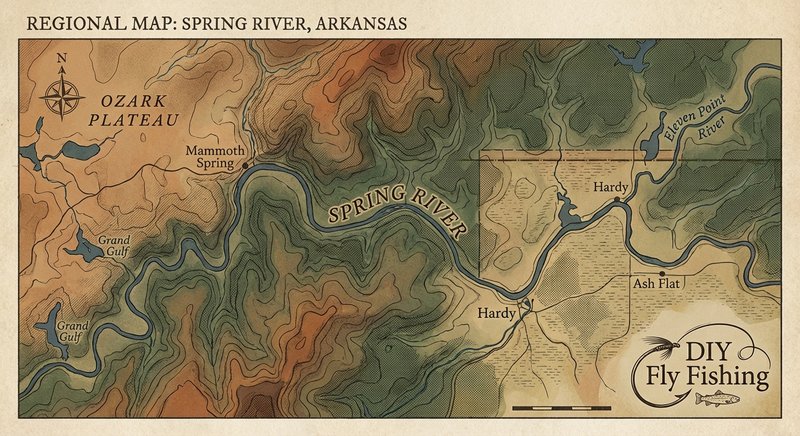
The Spring River in North Central Arkansas is one of the most unique trout fisheries in the United States. Unlike the famous tailwaters of the White and Little Red Rivers which rely on dam releases, the Spring River is fed by Mammoth Spring, which pumps out roughly nine million gallons of 58-degree water per hour. This constant flow creates a "perpetual spring" environment that remains cold and oxygenated year-round.
As your guide, here is everything you need to know to find success on the Spring River.
🎣 Location Overview
The Spring River is a true Ozark gem. Because it is spring-fed rather than dam-controlled, the water levels are remarkably consistent, though they can rise after heavy local rains. The river is characterized by a series of limestone shelves, waterfalls, and long, glassy pools.
The water is crystal clear and flows over a bed of slick limestone and gravel. What makes it special is the sheer volume of water—it is a powerful river with a steady current that supports a massive biomass of aquatic insects and crustaceans. It feels more like a classic freestone river than a typical Arkansas tailwater.
🐟 Target Species & Behavior
The Spring River is primarily a Rainbow Trout fishery, but it holds a respectable population of Brown Trout, some of which reach impressive sizes.
- Rainbow Trout: These are the stars of the river. They are highly active and congregate in the "oxygenated water"—look for them in the riffles, at the base of the limestone falls, and in the "bubbles" where the current breaks.
- Brown Trout: The Browns are more elusive and territorial. They prefer the deeper pools, undercut banks, and the shadowy areas beneath the limestone ledges. Large Browns are often found near "Dam 3" and in the slower, deeper stretches downstream.
- Behavior: Because the water temperature stays around 58°F, the fish are active year-round. They are "current-oriented" feeders; if the water is moving, they are usually looking up or out for food.
📅 Best Times to Fish
The Spring River is a 365-day fishery, but each season has its nuances:
- Spring (March - May): Prime time. Aquatic insect activity increases, and the fish are aggressive after the winter. This is the best time for dry fly action.
- Summer (June - August): While the water stays cold enough for trout, the "Canoe Hatch" is real. The Spring River is a popular destination for recreational floaters. Pro Tip: Fish from dawn until 10:00 AM to have the river to yourself before the tubes and canoes arrive.
- Fall (September - November): My favorite time. The crowds vanish, the foliage is stunning, and the Brown Trout become more aggressive as they prepare for their spawn.
- Conditions: Overcast days are gold on this river. The lack of shadows makes the trout less "spooky" in the clear water.
🪰 Recommended Flies & Techniques
Top Fly Patterns
- Scuds & Sowbugs (Sizes 14–18): This is the most important recommendation. The Spring River is crawling with crustaceans. Gray, olive, or tan sowbugs are the "bread and butter."
- Zebra Midges (Sizes 18–22): Red, black, or silver. Effective year-round, especially in the slower pools.
- Pheasant Tail Nymphs (Sizes 14–18): A great imitation for the various mayfly nymphs present.
- Woolly Buggers (Sizes 6–10): Black, olive, or white. Essential for targeting Brown Trout near the ledges.
- Elk Hair Caddis (Sizes 14–16): Use these when you see rising fish in the late afternoon or early morning.
Techniques
- Indicator Nymphing: This is the most productive method. Use a light indicator and enough split shot to get your flies down to the "shelf" where the fish are holding. A two-fly rig (e.g., a Sowbug followed by a Zebra Midge) is deadly.
- Swinging Streamers: On a sink-tip line, cast across and down current near the limestone drops. Let the fly swing through the deep pockets to entice a big Brown.
- Sight Fishing: In the clear pools, move slowly. You can often spot fish holding against the white limestone bottom.
💡 Pro Tips & Local Knowledge
- The "Dam 3" Area: This is the most famous stretch for fly anglers. It offers excellent wading access and a high concentration of fish. Focus on the island area just below the dam.
- The Limestone is Slick: I cannot stress this enough—the limestone shelves are like greased glass. Cleated wading boots (felt or rubber with studs) and a wading staff are mandatory.
- Stealth Matters: Because the water is clear and the river isn't incredibly deep in most wading spots, avoid wearing bright colors. Low-profile approaches will prevent spooking the larger, more educated fish.
- Fish the "Drop-offs": The river is full of sudden depth changes where the limestone ledges end. Trout sit right on the edge of these drop-offs waiting for food to be pushed over the "waterfall."
⚠️ Important Information
- Access points:
- Mammoth Spring State Park: Good for viewing, but most fishing starts just downstream.
- Dam 3: The premier public access for fly anglers.
- Many Islands / Lassiter Access: Better for floating or fishing from a drift boat/kayak.
- Regulations: You must have an Arkansas Fishing License AND a Trout Permit.
- Catch & Release: While some areas allow harvesting, I highly encourage catch and release for all Brown Trout to maintain the quality of the trophy fishery.
- Check the AGFC: Always check the Arkansas Game and Fish Commission for current specific regulations on lure types and limit sizes, as they can change seasonally.
Tight lines, and enjoy the beauty of the Ozarks!
Bug Hatches & Matching Flies
| Hatch | Type | Peak months | Time of day | Hook sizes | Matching flies |
|---|---|---|---|---|---|
| Blue Winged Olive Baetis spp. | mayfly | February, March, October, November | Mid-day/Afternoon | #18-22 | RS2 #18-22, Parachute Adams #18-22, BWO Emerger #18-20 |
| Midges Chironomidae | midge | January, February, December | All Day | #18-24 | Zebra Midge #18-22, Griffith's Gnat #20-24, Morgan's Midge #20-22 |
| Grannom Caddis Brachycentrus | caddis | April, May | Morning/Evening | #14-16 | Elk Hair Caddis (Black/Dark Olive) #14-16, Holy Grail #14-16, LaFontaine's Deep Sparkle Pupa #14-16 |
| Sulphur Ephemerella invaria | mayfly | May, June | Evening | #14-16 | Sulphur Parachute #14-16, Pheasant Tail #14-16, Sulphur Spinner #14-16 |
| Tan Caddis Hydropsyche | caddis | June, July, August, September | Evening/Late Evening | #14-18 | Peeping Caddis #14-16, X-Caddis (Tan) #14-18, Iris Caddis #16-18 |
| Trico Tricorythodes | mayfly | July, August, September | Early Morning | #22-26 | Trico Spinner #22-24, Trico Dun #22-24 |
| Crane Fly Tipulidae | terrestrial | August, September, October | Afternoon/Evening | #8-12 | Daddy Long Legs #8-12, Crane Fly Larva #10-12 |
| Light Cahill Stenacron canadense | mayfly | June, July | Late Afternoon/Evening | #12-14 | Light Cahill #12-14, Gold Ribbed Hare's Ear #12-14 |
| Grasshoppers Orthoptera | terrestrial | July, August, September | Afternoon | #8-12 | Dave's Hopper #8-12, Yum Yum Hopper #10-12 |