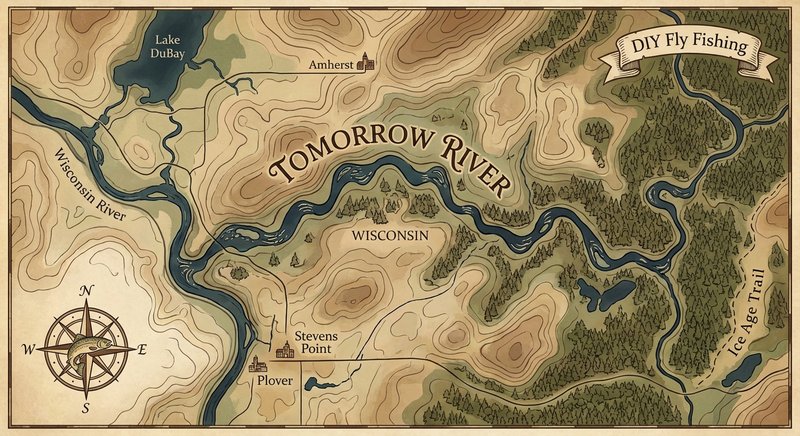
Tomorrow River
Fly fishing in Wisconsin · Beginner · Best seasons: Spring, Summer, Fall
Target Species
Brook Trout, Brown Trout
About This Water
Central Wisconsin stream with wild brook and brown trout. Good public access.
Fishing Recommendations
Tight lines! The Tomorrow River (which becomes the Waupaca River downstream of Amherst) is one of Central Wisconsin’s premier spring creek gems. It is a quintessential upper Midwest trout stream—cold, clear, and characterized by its mix of gravel runs, deep bends, and heavy woody debris.
Here is your comprehensive guide to fishing the Tomorrow River.
🎣 Location Overview
The Tomorrow River is a classic Class 1 trout stream located in Portage County. What makes it special is its glacial origin. It flows through a moraine landscape, which provides a steady supply of cold, mineral-rich groundwater. This keeps the water temperatures stable even during the heat of July.
The river is relatively small and intimate, ranging from 15 to 30 feet wide in most sections. It features a diverse bottom composition of sand, gravel, and silt. Anglers love it because it offers a "technical" experience; it isn't always easy to fish due to the overhanging alders and downed timber, but the rewards are wild, vibrant fish in a serene setting.
🐟 Target Species & Behavior
The Tomorrow River is primarily a Brook and Brown Trout fishery.
- Brook Trout: These are the native jewels of the system. They are most prevalent in the upper reaches (above Nelsonville). They are opportunistic but spooky. Look for them in the "tightest" spots—under overhanging grass, in small pockets, and near cold-water feeders.
- Brown Trout: The Browns take over as the dominant species as you move downstream toward Amherst. These fish can reach impressive sizes (16–20+ inches). They are nocturnal and predatory. During the day, they hold tight to submerged logs and undercut banks.
- Feeding Habits: They rely heavily on a diet of Scuds, Crane Fly larvae, and Mayflies. In late summer, terrestrial insects (grasshoppers and ants) become a primary focus.
📅 Best Times to Fish
Optimal Seasons
- Spring (Late April – June): This is the "Golden Era" on the Tomorrow. The insect hatches are prolific, and the water levels are usually perfect.
- Summer (July – August): While other rivers get too warm, the Tomorrow stays cool. Focus on early mornings or late evenings. Terrestrial fishing is at its peak.
- Fall (September – October): The Brookies are in their spawning colors, and the large Browns become aggressive before the season closes (usually Oct 15).
Best Times of Day
- Morning: 7:00 AM to 11:00 AM for nymphing and early hatches.
- Evening: 7:00 PM until dark. The "Spinner Fall" on summer evenings can be legendary.
🪰 Recommended Flies & Techniques
Top Fly Patterns
- Dries:
- Adams (Parachute): Sizes 14–18 (The ultimate searcher).
- Elk Hair Caddis: Sizes 14–16 (Tan or Olive).
- Light Cahill: Sizes 14–16 (Essential for June evenings).
- Tricos: Size 20–24 (For technical morning fishing in August).
- Nymphs:
- Gold-Ribbed Hare’s Ear: Sizes 14–16.
- Pheasant Tail: Sizes 16–18.
- Pink Squirrel: Size 14–16 (A Driftless/Wisconsin staple that works wonders here).
- Scuds (Gray or Olive): Size 16.
- Streamers/Terrestrials:
- Woolly Bugger: Black or Olive, Size 8–10.
- Fat Albert or Dave’s Hopper: Sizes 10–12.
Techniques
- Tight-Line Nymphing: Because the river has so much wood, a traditional indicator often gets snagged. High-sticking nymphs through gravel runs is highly effective.
- "Dapping" and Short Casts: The Tomorrow is brushy. You often won't be making 40-foot casts. Master the roll cast and the side-arm cast to get under the alders.
- Streamer Stripping: On overcast days, swing a small streamer against the far bank and strip it back aggressively to trigger a big Brown.
💡 Pro Tips & Local Knowledge
- The "Nelsonville to Amherst" Stretch: This is the most popular section for a reason. It has the best balance of size and fish density.
- Respect the "Wood": If you aren't losing a few flies to the trees, you aren't fishing where the big fish are. The largest Browns sit deep inside the log jams.
- Wading Stealth: The water is clear. If you splash or wade heavily, the trout will shut down before you even cast. Always wade upstream and move slowly.
- The Trico Hatch: In late summer, the Tomorrow has a fantastic Trico hatch. You'll need 6X or 7X tippet and a very steady hand. It's frustrating but incredibly rewarding.
⚠️ Important Information
- Access: Much of the river is bordered by private land, but Wisconsin has excellent laws regarding navigable water. As long as you keep your "feet wet" or stay within the ordinary high-water mark, you are legally allowed to fish.
- Key Access Points:
- The bridge on Hwy 161 near Nelsonville.
- The Tomorrow River State Trail crossings.
- Amherst Millpond area (watch for local signage).
- Regulations: Always check the current WDNR Trout Regulations. Much of the Tomorrow is under "Category 5" or specific size/bag limits to protect the wild population. Most serious anglers practice 100% Catch and Release here to preserve the fishery.
- Gear: A 7.5' to 8.5' 4-weight rod is the perfect tool for this water. A 5-weight is better if you plan on throwing streamers.
Guide’s Final Word: The Tomorrow River isn't a river for distance casters; it’s a river for hunters. Be patient, watch the water, and appreciate the silence of the Wisconsin woods. Good luck!
Bug Hatches & Matching Flies
| Hatch | Type | Peak months | Time of day | Hook sizes | Matching flies |
|---|---|---|---|---|---|
| Blue-Winged Olive Baetis spp. | mayfly | April, May, September, October | Midday | #18-22 | RS2 #18-22, Parachute BWO #18-22, BWO CDC Emerger #20 |
| Hendrickson Ephemerella subvaria | mayfly | May | Afternoon | #12-14 | Red Quill #12-14, Hendrickson Nymph #12-14, Pheasant Tail #14 |
| Grannom Caddis Brachycentrus | caddis | May | Morning/Afternoon | #14-16 | Peacock Caddis #14-16, Deep Sparkle Pupa #14-16, Elk Hair Caddis (Dark) #14-16 |
| Sulphur Ephemerella invaria/dorothea | mayfly | June | Evening | #14-18 | Sulphur Parachute #16-18, Sulphur Spinner #14-18, Hare's Ear #16 |
| Light Cahill Stenacron/Stenonema | mayfly | June, July | Late Evening | #12-14 | Light Cahill #12-14, Gold Ribbed Hare's Ear #12-14 |
| Trico Tricorythodes | mayfly | July, August, September | Early Morning | #20-24 | Trico Spinner #20-24, Zebra Midge #20-22 |
| Terrestrials Formicidae/Gryllidae | terrestrial | July, August, September | Midday | #10-18 | Black Foam Ant #16-18, Dave's Hopper #10-12, Fat Albert #12-14 |
| Tan Caddis Hydropsyche | caddis | June, July, August | Evening | #14-16 | Elk Hair Caddis (Tan) #14-16, Holy Grail Caddis #14-16, Hydropsyche Larva #14 |