Two Hearted River
Fly fishing in Michigan · Intermediate · Best seasons: Summer, Fall
Target Species
Brook Trout
About This Water
Made famous by Hemingway. Upper Peninsula stream with wild brook trout. Remote wilderness fishing.
Fishing Recommendations
Welcome to the "Big Two-Hearted" country. As a guide, I can tell you that fishing the Two Hearted River in Michigan’s Upper Peninsula (U.P.) is as much about the soul and the scenery as it is about the fish. While Ernest Hemingway famously used the name for his short story (even though he actually fished the nearby Fox River), the Two Hearted is the true crown jewel of the U.P. wilderness.
Here is your comprehensive guide to fly fishing the Two Hearted River.
🎣 Location Overview
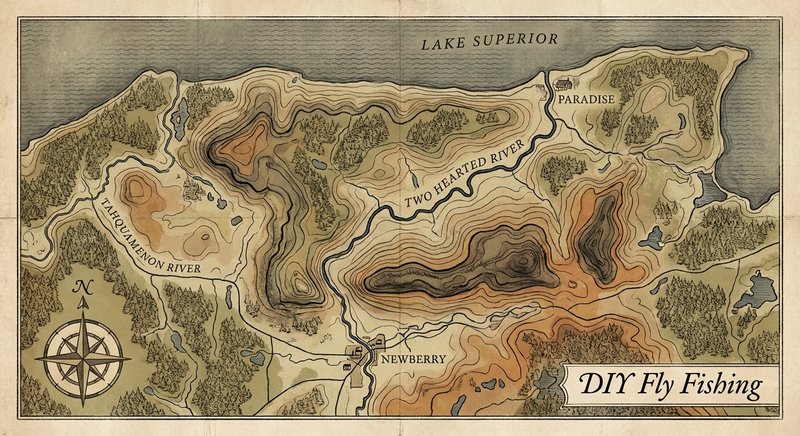
The Two Hearted River is a "Wild and Scenic" designated river located in Luce County, flowing through some of the most remote territory in the Midwest before emptying into Lake Superior.
What makes it special: This is true boreal forest fishing. The water is famously tannic—a deep, tea-colored hue caused by the surrounding cedar swamps and hemlocks. This acidity and cold temperature create a perfect habitat for native Brook Trout. The river is characterized by heavy "sweepers" (fallen trees), deep undercut banks, and a bottom that transitions from gravel runs to soft, shifting sand. It is a quiet, hauntingly beautiful place where you are more likely to see a moose or a bald eagle than another angler.
🐟 Target Species & Behavior
Primary Species: Native Brook Trout (Salvelinus fontinalis).
- Behavior: These are wild, opportunistic feeders. Because the U.P. has a relatively short growing season, Brookies are aggressive. However, because the water is so clear (despite the tea color), they are incredibly spooky.
- Where they hold:
- The Wood: If there isn’t wood, there usually aren’t fish. Look for "sweepers" or log jams.
- Undercut Banks: The river carves deep under the grassy banks.
- Foam Lines: "Foam is home." If you see bubbles or foam gathering in an eddy, there’s a Brookie underneath it waiting for a meal.
- Feeding: They focus on aquatic insects (Mayflies, Caddis), but as they grow larger, they become highly piscivorous (eating small minnows) and terrestrial-dependent.
📅 Best Times to Fish
Summer (Late June – August)
This is the prime window for dry fly enthusiasts.
- Conditions: The water stays cold even in July due to spring feeders.
- The Hatch: Look for the Hexagenia limbata (Giant Mayfly) in late June/early July.
- Time of Day: Early morning or the "magic hour" before dusk. Mid-day is excellent for terrestrial fishing under the shade of overhanging cedars.
Fall (September)
This is when the river becomes electric.
- Conditions: As the water cools further, Brook Trout begin their pre-spawn movements. Their bellies turn a fiery orange-red.
- Behavior: They become much more aggressive and will strike at larger streamers to defend territory.
- Note: The trout season in Michigan typically closes on the last Saturday of September for Type 1 streams (check current DNR regs), so plan accordingly.
🪰 Recommended Flies & Techniques
Dry Flies (Summer)
- Parachute Adams (Size 14-18): The gold standard for Michigan.
- Royal Wulff (Size 12-14): High visibility is key in the dark water.
- Terrestrials: Fat Albert (Black or Tan), Foam Ants, and Chernobyl Ants. The "splat" of a grasshopper on the water often triggers a strike.
Nymphing
- Bead-head Hare’s Ear (Size 14-16): Works wonders in the gravel runs.
- Prince Nymph: The flash helps in the tannic water.
- Technique: Use a high-sticking method or a small indicator. Keep your drifts tight to the log jams.
Streamers (Best for Fall)
- Woolly Bugger (Black or Olive, Size 6-10): Imitates leeches or crayfish.
- Muddler Minnow: A classic Michigan fly that mimics the sculpins found in the Two Hearted.
- Technique: "Pound the banks." Cast as close to the wood as possible and give the fly short, erratic strips.
💡 Pro Tips & Local Knowledge
- Fear the Wood: You will lose flies. If you aren't casting dangerously close to the fallen logs, you aren't fishing where the big Brookies live. Bring extra tippet and a stout 4wt or 5wt rod to pull fish away from the snags.
- The "High Bridge" and "Reed City" Stretches: These are classic access points. The area around the Reed City Bridge offers great wading and diverse water.
- Stealth is Vital: The Two Hearted is often narrow. Avoid wading if you can cast from the bank; if you must wade, move like a heron. The vibration of a heavy footstep on the sandy bottom will send every trout within 30 feet into hiding.
- The Mouth: Don't ignore the mouth where the river meets Lake Superior. In late summer and fall, you might encounter "Coasters"—migratory Brook Trout that grow significantly larger in the Big Lake.
⚠️ Important Information
- Access: Much of the river is accessible via the Two Hearted River State Forest Campground. Be prepared for sand roads; a vehicle with decent clearance is recommended.
- Bugs: I cannot stress this enough—the Black Flies and Mosquitoes are legendary. From June through July, they can be brutal. Bring high-quality repellent and a head net.
- Regulations: Most of the Two Hearted is Type 1 Trout Water (5 fish limit, 8-inch minimum for Brookies), but regulations change. Always check the Michigan DNR Fishing Guide before your trip.
- Safety: This is cell phone "dead zone" territory. Carry a physical map or a GPS unit, and let someone know where you are going. Bears are present; keep a clean camp.
Guide’s Final Word: The Two Hearted isn't about catching 20-inch monsters; it's about catching a 10-inch native Brookie that looks like it was painted by an artist, in a river that feels like it hasn't changed in a hundred years. Tight lines!
Bug Hatches & Matching Flies
| Hatch | Type | Peak months | Time of day | Hook sizes | Matching flies |
|---|---|---|---|---|---|
| Hendrickson Ephemerella subvaria | mayfly | May | Afternoon | #12-14 | Red Quill #12-14, Hendrickson Emerger #14, Pheasant Tail #12-16 |
| Brown Drake Ephemera simulans | mayfly | June | Evening/Dusk | #10-12 | Brown Drake Spinner #10-12, Hairwing Brown Drake #10-12, Brown Drake Nymph #10-12 |
| Hex / Giant Michigan Mayfly Hexagenia limbata | mayfly | June, July | Night | #4-8 | Hexagenia Spinner #4-6, Robert's Yellow Drake #6-8, Hex Wiggle Nymph #6-8 |
| Sulphur Ephemerella invaria | mayfly | June, July | Evening | #14-18 | Sulphur Parachute #14-18, Sulphur Emerger #16-18, Gold Ribbed Hare's Ear #14-16 |
| Spotted Sedge Hydropsyche | caddis | June, July, August | All Day/Evening | #14-18 | Elk Hair Caddis (Tan) #14-18, LaFontaine's Deep Sparkle Pupa #14-16, Holy Grail Caddis #14-16 |
| Giant Stonefly / Salmonfly Pteronarcys dorsata | stonefly | June | Morning/Afternoon | #4-8 | Pat's Rubber Legs #4-8, Stimulator (Orange) #6-10, Kaufmann's Stone #6-8 |
| Blue Winged Olive Baetis | mayfly | May, September, October | Afternoon | #18-22 | BWO Parachute #18-22, RS2 #20-22, WD-40 #20-22 |
| Grasshopper Orthoptera | terrestrial | July, August, September | Late Morning/Afternoon | #8-12 | Dave's Hopper #8-12, Parachute Hopper #10-12, Morrish Hopper #8-10 |
| Trico Tricorythodes | mayfly | August, September | Morning | #20-24 | Trico Spinner #20-24, Trico Parachute #20-22, Zebra Midge #20-22 |
| White Miller Ephoron leukon | mayfly | August | Evening/Dusk | #12-14 | White Wulff #12-14, Ephoron Spinner #12-14, Light Cahill #14 |