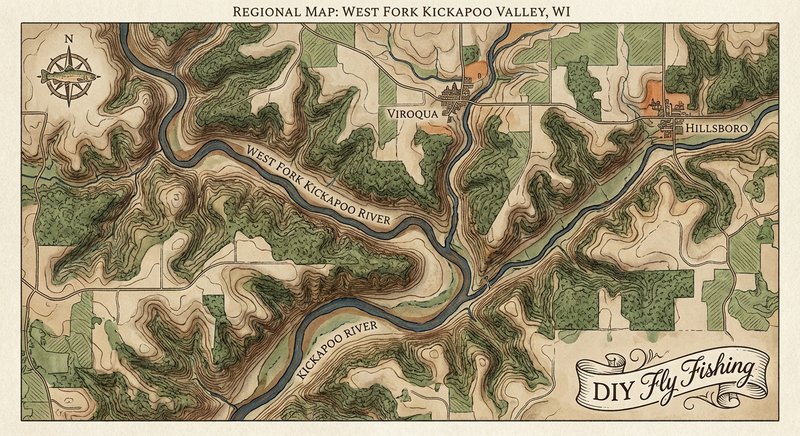
West Fork Kickapoo River
Fly fishing in Wisconsin · Intermediate · Best seasons: Spring, Summer, Fall
Target Species
Brown Trout, Brook Trout
About This Water
Classic Driftless spring creek with wild brown trout. Scenic valley fishing.
Fishing Recommendations
The West Fork of the Kickapoo River is the crown jewel of Wisconsin’s "Driftless Area." Located in Vernon County, this spring-fed limestone stream is legendary among fly anglers for its cold, nutrient-rich water and its classic meadow-stream character. Unlike many mountain streams, the West Fork meanders through lush valleys, offering a technical but highly rewarding experience.
Here is your comprehensive guide to fly fishing the West Fork Kickapoo.
🎣 Location Overview
The West Fork Kickapoo is a quintessential limestone spring creek. Because the Driftless Area was missed by the last glaciers, the terrain is defined by deep valleys and high ridges. The river is characterized by heavy silt bottoms in some areas and gravel runs in others, but what makes it special is the extensive habitat restoration.
For decades, the Wisconsin DNR and Trout Unlimited have installed "Lunker Structures" (underwater wooden cribs) and stabilized banks. This has created a massive population of wild fish. The water stays a consistent temperature year-round, meaning it rarely freezes in winter and stays cool enough for trout even during the dog days of August.
🐟 Target Species & Behavior
- Brown Trout: The primary resident. These are wild, wary fish. They range from 10-inch "zippers" to 20-inch-plus trophies. They are ambush predators, often holding deep under cut banks or within the shadows of lunker structures.
- Brook Trout: Generally found in the colder, upper headwaters and the smaller feeder tributaries. They are opportunistic feeders but highly sensitive to water temperature and overhead cover.
Behavior: These fish are "bank-oriented." Because the West Fork is often narrow, the trout spend their lives looking at the banks for terrestrial insects and hiding under the overhanging grass. They are easily spooked by shadows and heavy wading.
📅 Best Times to Fish
- Spring (April - May): This is the window for the "Early Black Stonefly" and Blue-Winged Olives (BWO). The fish are hungry after winter. Water levels are usually high but clear.
- Summer (June - August): Famous for the Trico "Whiteout" hatches in the early mornings. Afternoon fishing revolves around terrestrials (grasshoppers and beetles) along the meadow banks.
- Fall (September - October): The Brown Trout become aggressive and territorial as they prepare for the spawn. This is the best time to throw large streamers for the biggest fish in the river.
Best Times of Day:
- Summer: 6:00 AM – 10:00 AM (Trico hatch) and 7:00 PM – Dark (Caddis).
- Spring/Fall: 10:00 AM – 4:00 PM (Midday warmth triggers insect activity).
🪰 Recommended Flies & Techniques
Top Fly Patterns
- The Pink Squirrel (#14-18): A Driftless legend. Created by John Bethke, this bead-head nymph works year-round.
- Trico Spinner (#20-24): Essential for summer mornings.
- Hippo Hopper or Dave’s Hopper (#10-14): For "ploppin'" against the banks in July and August.
- Scuds & Sowbugs (#16-18): These are the "bread and butter" protein sources in limestone streams. Use gray or olive.
- Elk Hair Caddis (#14-18): The go-to dry fly for evening rises.
- Black or Olive Woolly Bugger (#8-12): For stripping through deep holes and under banks.
Techniques
- The "Hopper-Dropper": A very effective summer tactic. Tie a large foam hopper on top and hang a Pink Squirrel or Pheasant Tail nymph 18-24 inches below it.
- Tight-Line Nymphing: Because the West Fork has many deep slots and lunker structures, a Euro-nymphing style or short-leash indicator rig allows you to get flies deep into the "basement" where big browns hide.
- Stealth Presentation: Use a long leader (9-12 feet) and a light tippet (5X or 6X). Approach the stream from behind the fish (upstream) and stay low.
💡 Pro Tips & Local Knowledge
- Focus on Avalanche and Bloomingdale: The stretch near the village of Avalanche is world-famous. There is a high concentration of public easements here. The area near Bloomingdale offers slightly more "intimate" water with more tree cover.
- Fish the "Lunker Structures": If you see a bank that looks unnaturally straight with rocks piled on it, that’s a man-made lunker structure. The fish are under your feet. Cast your nymph or streamer so it drifts right along the edge of the wood/rock.
- Stay Out of the Water: The West Fork is narrow. If you can cast from the bank without being seen, do it. Wading often sends silt and vibrations downstream, alerting the fish to your presence before you even cast.
- Cloudy Days are Trophy Days: If the sky is gray and there's a light drizzle, put away the dry flies and throw a large, dark streamer. The biggest browns lose their wariness in low light.
⚠️ Important Information
- Access: Wisconsin has excellent "Fishing Easements." Look for the yellow DNR signs on fence posts. These allow you to walk the banks on private land for the purpose of fishing. Stay within the corridor.
- Regulations: The West Fork often has specific "Catch and Release" sections or "Artificial Lures Only" sections. Always check the current Wisconsin Trout Regulations booklet (available online or at local shops) as seasons and bag limits change by section.
- License: You need a Wisconsin Inland Fishing License AND an Inland Trout Stamp.
- Gear: A 8'6" or 9' 4-weight rod is the "Driftless Standard." It’s light enough for delicate dries but has enough backbone to handle a 18-inch Brown Trout in current.
- Invasive Species: Clean your boots! New Zealand Mud Snails have been found in the Driftless Area. Use a scrub brush and disinfectant to prevent spreading them between watersheds.
Guide’s Final Thought: "The West Fork isn't about long casts; it's about short, accurate casts and staying hidden. Approach it like a hunter, and the river will reward you."
Bug Hatches & Matching Flies
| Hatch | Type | Peak months | Time of day | Hook sizes | Matching flies |
|---|---|---|---|---|---|
| Blue-Winged Olive Baetis | mayfly | April, May, September, October | Mid-day to Afternoon | #18-22 | BWO Parachute #18-22, RS2 #20-22, Pheasant Tail #18-20 |
| Grannom Caddis Brachycentrus | caddis | April, May | Afternoon/Evening | #14-16 | Elk Hair Caddis (Olive) #14-16, Deep Sparkle Pupa #14-16, Holy Grail #14-16 |
| Sulfur Ephemerella invaria/dorothea | mayfly | May, June | Evening | #14-18 | Sulfur Parachute #16-18, Sulfur Emerger #16-18, Frenchie #16-18 |
| Light Cahill Stenacron interpunctatum | mayfly | June, July | Evening | #12-14 | Light Cahill #12-14, Gold Ribbed Hare's Ear #12-14 |
| Trico Tricorythodes | mayfly | July, August, September | Early Morning | #20-24 | Trico Spinner #20-24, Zebra Midge #20-22 |
| Japanese Beetle Popillia japonica | terrestrial | July, August | All Day | #12-14 | Foam Beetle #12-14, Coffee's Sparkle Beetle #12-14 |
| Cranefly Tipulidae | terrestrial | August, September | Afternoon/Evening | #10-14 | Daddy Long Legs #10-12, Killer Bug #12-14 |
| Midges Chironomidae | midge | February, March, April | All Day | #18-24 | Griffith's Gnat #18-22, Zebra Midge (Red/Black) #18-22, Top Secret Midge #20-22 |