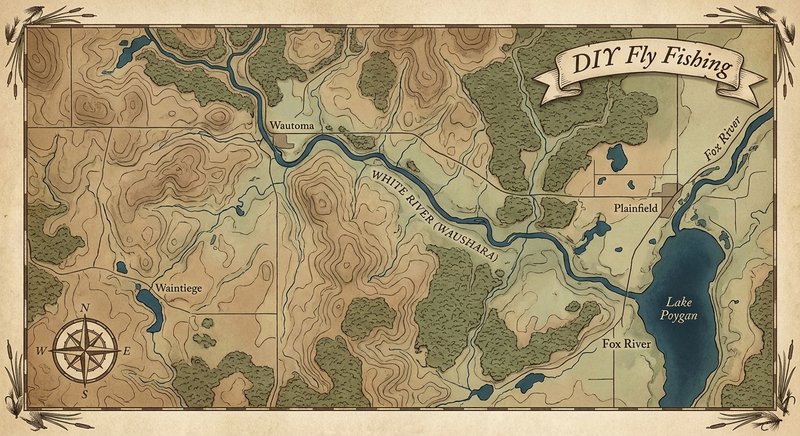
White River (Waushara)
Fly fishing in Wisconsin · Intermediate · Best seasons: Spring, Summer, Fall
Target Species
Brown Trout, Brook Trout
About This Water
Central Wisconsin spring creek with wild trout. Scenic sand county fishing.
Fishing Recommendations
The White River in Waushara County is one of the crown jewels of Central Wisconsin’s "Sand County" trout waters. Unlike the rocky, spring-fed creeks of the Driftless Area to the west, the White River flows through a landscape of glacial outwash, characterized by sandy bottoms, crystal-clear spring water, and an incredible amount of woody debris.
Here is your guide to mastering the White River.
🎣 Location Overview
The White River is a classic "Central Sands" spring creek. It is divided into several distinct branches (Main, West, East, and South), with the Main Branch below the White River Flowage being the most famous.
What makes this river special is its thermal stability. Because it is fed by massive groundwater aquifers, the water remains ice-cold in the summer and rarely freezes solid in the winter. The river is defined by its "lumber"—fallen logs, submerged root balls, and overhanging tag alders. It is a technical river that rewards stealth and precise casting, offering a wilder, more secluded feel than many of the more famous Midwestern streams.
🐟 Target Species & Behavior
- Brown Trout: The Main Branch is famous for its wild Brown Trout. These fish are notorious for living deep inside "the wood." They are ambush predators; the larger specimens (18–22"+) are rarely seen in the open during mid-day and require heavy cover or low-light conditions to coax out.
- Brook Trout: Found primarily in the upper reaches and the West Branch. These are the "jewels" of the system—wild, vibrant, and eager to rise to a well-placed dry fly. They frequent the quicker riffles and the heads of pools.
- Behavior: Fish here are extremely spooky due to the clarity of the water and the sandy substrate, which reflects light. If they see your shadow or feel the vibration of a heavy footstep, the pool is "done" for the next hour.
📅 Best Times to Fish
- Spring (Late April – Early June): This is the prime window for hatches. You’ll see Blue-Winged Olives, Hendricksons, and Grannom Caddis. The fish are hungry after winter and less wary.
- Summer (Late June – August): The "Terrestrial Season." This is arguably the most fun time to fish the White. When the heat drives bugs into the water, big browns look for grasshoppers, beetles, and ants dropped from the overhanging banks.
- Fall (September – October): Pre-spawn. Brown trout become aggressive and territorial. This is the best time to throw large streamers to move the biggest fish in the river.
- Best Time of Day: During summer, dawn and dusk are mandatory for big fish. However, on overcast, drizzly days, the "trophy window" can stay open all afternoon.
🪰 Recommended Flies & Techniques
Top Fly Patterns
- Dries: Elk Hair Caddis (size 14-18), Parachute Adams (16-20), Hippo Hopper (size 8-12), and Dave’s Hopper. Don’t overlook a size 18 Black Ant in August.
- Nymphs: Gold-Ribbed Hare’s Ear (14-16), Pheasant Tail (16-20), and Scuds/Sowbugs (size 14-18 in grey or olive). The White has a high crustacean count.
- Streamers: Black or Olive Woolly Buggers, Sculpin patterns (Muddler Minnows), and the "Home Invader."
Effective Techniques
- The "Pocket Pick": Use a short, accurate cast to "dink" a dry fly into the tiny pockets of soft water behind fallen logs. You often only have a 2-foot drift before the current grabs your line.
- Tight-Line Nymphing: In the deeper runs, use a heavy tungsten bead-head nymph to get down fast. The sandy bottom means the trout are hugging the floor or the underside of logs.
- Streamer "Stripping": Cast your streamer tight to the opposite bank's wood, let it sink for a second, and use aggressive, erratic strips to trigger a reaction strike from a territorial Brown.
💡 Pro Tips & Local Knowledge
- Fish the Wood: If you aren't losing a few flies to the trees and logs, you aren't fishing where the big fish live. The White is an "obstacle course" river.
- Stealth is Everything: Wear drab colors (camo, olive, or tan). Move slowly. Avoid "wading waves" by staying out of the water whenever possible and fishing from the bank.
- The "Trico" Secret: In late summer, the White has a decent Trico (tiny mayfly) hatch. If you see fish rising to "nothing" in the morning, tie on a size 22-24 Trico Spinner.
- The Upper White River Fishery Area: Focus on the public lands off State Highway 22 and County Road YY. These stretches offer miles of public access and excellent habitat restoration work by Trout Unlimited and the WDNR.
⚠️ Important Information
- Access: The White River is blessed with extensive WDNR Public Fishing Grounds. Look for the "Public Hunting/Fishing" signs. Always respect private property boundaries where the public land ends.
- Regulations: Waushara County trout regulations can be complex. Much of the White River is under Category 5 (Special Regulations)—check the current WDNR Trout Tool or pamphlet for specific size and bag limits, as many sections are Catch & Release only or have a high minimum length (e.g., 18").
- Wading Safety: The bottom is mostly sand, but there are "muck pockets" that can be surprisingly deep. A wading staff is highly recommended, especially when navigating around log jams.
- Permits: A Wisconsin Inland Fishing License and an Inland Trout Stamp are required.
Guide’s Final Word: The White River isn't about high fish counts; it’s about the quality of the hunt. Bring your 4-weight or 5-weight rod, a spool of 5X fluorocarbon, and your best stealth game. If you respect the river's silence, it might just give up a wild Brown you'll remember for a decade.
Bug Hatches & Matching Flies
| Hatch | Type | Peak months | Time of day | Hook sizes | Matching flies |
|---|---|---|---|---|---|
| Blue-Winged Olive Baetis | mayfly | April, May, September, October | Mid-day | #18-22 | BWO Sparkle Dun #18-22, RS2 #20-22, Pheasant Tail #18-20 |
| Hendrickson Ephemerella subvaria | mayfly | April, May | Afternoon | #12-14 | Red Quill #12-14, Hendrickson Nymph #12-14, Hendrickson Emerger #14 |
| Grannom Caddis Brachycentrus | caddis | April, May | Morning/Afternoon | #14-16 | Peacock Caddis #14-16, Deep Sparkle Pupa #14-16, Elk Hair Caddis (Olive) #14-16 |
| Sulphur Ephemerella invaria / dorothea | mayfly | May, June | Evening | #14-18 | Sulphur Parachute #16-18, Sulphur Snowshoe Emerger #16, Rusty Spinner #14-18 |
| Light Cahill Stenacron interpunctatum | mayfly | June, July | Evening | #12-14 | Light Cahill #12-14, Gold Ribbed Hare's Ear #12-14 |
| Giant Michigan Mayfly (Hex) Hexagenia limbata | mayfly | June, July | Night | #6-8 | Hexagenia Dun #6-8, Hex Spinner #6-8, Hex Wiggle Nymph #8 |
| Trico Tricorythodes | mayfly | July, August, September | Morning | #20-24 | Trico Spinner (Poly wing) #20-24, Griffith's Gnat #20-22 |
| Terrestrials Formicidae / Gryllidae | terrestrial | July, August, September | All Day | #10-18 | Black Foam Ant #16-18, Crowe Beetle #14-16, Dave's Hopper #10-12 |