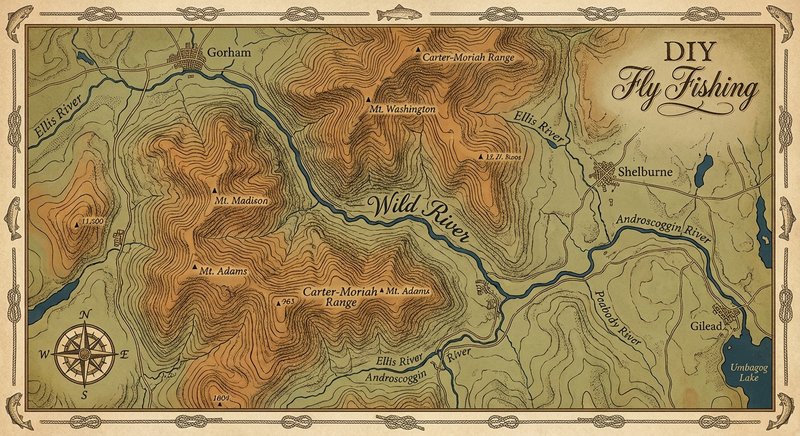
Wild River
Fly fishing in New Hampshire · Advanced · Best seasons: Summer, Fall
Target Species
Brook Trout
About This Water
White Mountain wilderness stream with native brook trout. Remote hiking required.
Fishing Recommendations
The Wild River in New Hampshire is a crown jewel for the "bluelining" enthusiast. Living up to its name, this river flows through the heart of the White Mountain National Forest, specifically the Wild River Wilderness. It is one of the most pristine, rugged, and visually stunning backcountry streams in New England.
Here is your comprehensive guide to fly fishing the Wild River.
🎣 Location Overview
The Wild River is a quintessential freestone mountain stream. It begins in the high peaks of the Carter-Moriah Range and flows north into the Androscoggin River near Gilead, Maine.
What makes it special is its wildness. Much of the river is inaccessible by car, requiring a hike-in approach. The water is gin-clear, cold, and highly oxygenated, characterized by massive granite boulders, deep plunge pools, and long, shimmering riffles. Anglers love it because it offers a "step back in time" experience—there are no stocked fish here; you are chasing wild, native brook trout in an environment that looks exactly as it did 200 years ago.
🐟 Target Species & Behavior
The primary (and often only) target here is the Wild Brook Trout (Salvelinus fontinalis).
- Behavior: These are opportunistic feeders. Because mountain streams are nutrient-poor, these fish cannot afford to be picky. However, they are extremely "spooky." The water is so clear that if you can see them, they have likely already seen you.
- Holding Spots: Look for them in the "pocket water" behind large boulders, in the foam lines (the "bubble line"), and at the very head of deep pools where oxygen is highest.
- Diet: Their diet consists of small stoneflies, mayflies (Caddis and Blue Winged Olives), and terrestrials (ants and beetles) during the warmer months.
📅 Best Times to Fish
While the river is open in spring, the high snowmelt often makes it dangerous and unfishable until late June.
- Summer (Late June – August): This is the prime window. The water levels drop to manageable wading heights.
- Time of Day: Early morning and the "golden hour" before dusk are best, though the canopy provides enough shade for decent midday fishing.
- Fall (September – October): This is arguably the most beautiful time. The brook trout begin to don their spawning colors (vibrant oranges and reds).
- Prime Window: Mid-afternoon when the sun warms the water slightly.
- Note: Be mindful of spawning beds (redds) in late October; avoid stepping in shallow gravel areas.
🪰 Recommended Flies & Techniques
You don't need a massive fly box for the Wild River, but you do need a stealthy approach.
Top Fly Patterns
- Dry Flies: Royal Wulff (#14-16), Elk Hair Caddis (#14-18), Stimulators (Orange or Yellow, #12-16), and Humpey's.
- Terrestrials: Black Ants (#16-20) and Foam Beetles are deadly in August.
- Nymphs: Pheasant Tail (#16-18), Gold-Ribbed Hare’s Ear (#14-16), and Prince Nymphs.
- Streamers: A small Black Ghost or Mickey Finn can trigger aggressive strikes from the larger "trophy" brookies (10+ inches) in the deep pools.
Effective Techniques
- Dry-Dropper: This is the most effective way to fish the Wild. Use a buoyant Stimulator as your "indicator" and hang a small Pheasant Tail nymph 18-24 inches below it.
- High-Sticking: Due to the complex currents around boulders, keep as much fly line off the water as possible to avoid drag.
- The Upstream Approach: Always fish moving upstream so you stay behind the fish’s field of vision.
💡 Pro Tips & Local Knowledge
- The "One-Cast" Rule: In these clear pools, you often get one perfect cast. If you slap the water or line the fish, the pool will "go dark" for an hour.
- Size Matters: While most fish are 5–8 inches, the Wild River holds "ghosts"—older brook trout that can reach 12 inches. These fish stay in the darkest, deepest shadows under undercut banks or massive boulders.
- The Wild River Road: The road leading to the Wild River Campground is unpaved and can be rough. It is often closed in late fall/winter. Check the US Forest Service status before heading out.
- Stealth is Key: Wear drab colors (greens and browns) to blend into the forest. Avoid "bright" fly lines; a weight-forward moss green line is preferable.
⚠️ Important Information
- Access: Access is via Wild River Road off Route 2 in Gilead, Maine (though the river quickly crosses into NH). You can also hike in via the Highwater Trail or the Wild River Trail for a more secluded experience.
- Regulations: New Hampshire fishing regulations apply for most of the river. It is generally open to fishing from Jan 1 to Oct 15, but always check the current NH Fish & Game Digest, as rules on "Wild Trout Streams" can change.
- Safety: This is true wilderness. Cell service is non-existent. There are black bears and moose in the area; carry bear spray and let someone know your itinerary.
- Wading: The granite in the Wild River is notoriously slippery. Boots with felt soles (where legal) or studs are highly recommended.
Guide’s Final Word: The Wild River isn't about the size of the fish or the ease of the catch; it’s about the purity of the pursuit. Bring a 3-weight rod, a light pack, and a sense of adventure.
Bug Hatches & Matching Flies
| Hatch | Type | Peak months | Time of day | Hook sizes | Matching flies |
|---|---|---|---|---|---|
| Quill Gordon Epeorus pleuralis | mayfly | April, May | Midday to Afternoon | #12-14 | Quill Gordon Dry #12-14, Gold Ribbed Hare's Ear #12-14 |
| Hendrickson Ephemerella subvaria | mayfly | May | Afternoon | #12-14 | Red Quill #12-14, Hendrickson Emerger #14, Pheasant Tail #12-14 |
| Early Brown Stonefly Strophopteryx fasciata | stonefly | April, May | Midday | #12-16 | Early Brown Stone #14-16, Prince Nymph #12-16 |
| March Brown Maccaffertium vicarium | mayfly | June | Afternoon | #10-12 | March Brown American #10-12, Gold Ribbed Hare's Ear #10-12 |
| Grannom Caddis Brachycentrus occidentalis | caddis | May | Morning/Evening | #14-16 | Elk Hair Caddis (Olive) #14-16, Holy Grail #14-16 |
| Spotted Sedge Hydropsyche | caddis | June, July, August | Evening | #14-18 | Tan Elk Hair Caddis #14-18, LaFontaine's Deep Sparkle Pupa #14-16 |
| Light Cahill Stenacron interpunctatum | mayfly | June, July | Evening | #12-16 | Light Cahill #12-16, Cahill Wet Fly #14 |
| Giant Golden Stonefly Acroneuria lycorias | stonefly | June, July | Morning/Evening | #6-10 | Stimulator (Yellow) #8-12, Pat's Rubber Legs #6-10 |
| Blue-Winged Olive Baetis vagans | mayfly | May, September, October | Midday/Overcast | #18-22 | BWO Parachute #18-22, RS2 #20-22 |
| Black Carpenter Ant Camponotus pennsylvanicus | terrestrial | July, August, September | All Day | #12-16 | Black Foam Ant #12-16, Chernobyl Ant #10-12 |