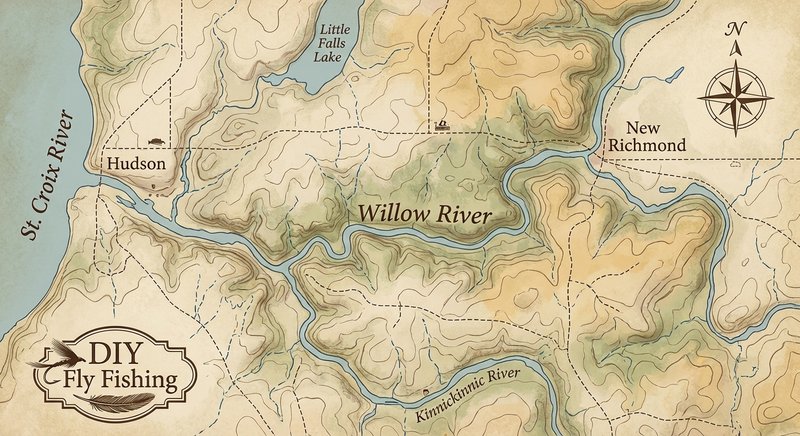
Willow River
Fly fishing in Wisconsin · Beginner · Best seasons: Spring, Summer, Fall
Target Species
Brown Trout, Brook Trout
About This Water
Western Wisconsin stream with wild brown trout. Accessible near Hudson.
Fishing Recommendations
The Willow River in Western Wisconsin is a gem of the Driftless-adjacent region. Located just a short drive from the Twin Cities, it offers a diverse range of water—from the dramatic plunge pools of Willow River State Park to the classic meadow-style meandering reaches near New Richmond.
Here is your comprehensive guide to fly fishing the Willow River.
🎣 Location Overview
The Willow River is a spring-fed tributary of the St. Croix River. It is unique because it transitions from a classic "meadow stream" in its upper reaches to a high-gradient, rocky canyon environment within Willow River State Park.
Anglers love the Willow for its accessibility and its "big fish" potential. Unlike some of the smaller, tighter Driftless streams to the south, parts of the Willow allow for longer casts and more diverse tactics. The water is generally fertile, with a limestone influence that supports a robust biomass of insects and crustaceans, leading to healthy, well-fed trout.
🐟 Target Species & Behavior
- Brown Trout: The primary resident. In the lower sections and within the State Park, you’ll find wild Browns that can reach impressive sizes (16–20+ inches). They are notorious for holding deep in "the bubbles" below waterfalls or tucked tight under the thick undercut banks and log jams.
- Brook Trout: Found more frequently in the colder, upper headwaters and the smaller spring-fed feeders. They are opportunistic but require the coldest, cleanest water the system offers.
- Behavior: These fish are highly pressured due to their proximity to Hudson and the Twin Cities. They are "PhD trout"—wary of sloppy wading and thick leaders. They feed heavily on scuds and sowbugs year-round but look to the surface during the prolific caddis and mayfly hatches of late spring.
📅 Best Times to Fish
- Spring (April – June): This is the prime window. As the water warms, the bug activity explodes. Early spring brings Blue Winged Olives (BWOs), followed by the spectacular Grannom (Caddis) and Hendrickson hatches in May.
- Summer (July – August): Focus on the early morning or late evening. The Trico hatch in July is legendary—tiny white-winged mayflies that bring every fish in the river to the surface. During the day, look for the "Hex" hatch (Giant Michigan Mayfly) in the slower, siltier stretches in late June/July.
- Fall (September – October): The Brown Trout become aggressive as they prepare to spawn. This is the best time for "hunting" large fish with streamers. The colors of the Willow River canyon in the fall are world-class.
- Prime Conditions: Overcast days are your best friend on the Willow. The fish lose their wariness, and the BWO hatches are much more intense.
🪰 Recommended Flies & Techniques
Top Fly Patterns
- Nymphs: Pink Squirrel (a Wisconsin staple), Bead-head Pheasant Tail (14-18), Scuds (gray or olive, 14-16), and Zebra Midges (18-22).
- Dry Flies: Elk Hair Caddis (14-16), Parachute Adams (16-20), Trico Spinners (22-24), and Hippie Stompers or Fat Alberts for terrestrial season.
- Streamers: Wooly Buggers (Black or Olive), Sculpzilla, and small Clouser Minnows for the deeper pools.
Effective Techniques
- European Nymphing: In the "Race" and the pocket water sections of the State Park, a tight-line nymphing rig is incredibly effective for picking apart the fast, turbulent water.
- Dry-Dropper: In the meadow sections, a high-visibility foam terrestrial with a small scud dropped 18 inches below is the "go-to" summer setup.
- Stealth Streamer Stripping: In the fall, cast streamers tight to the undercut banks and use an erratic, "injured baitfish" retrieve.
💡 Pro Tips & Local Knowledge
- The "Willow Race": Below the dam in the State Park, there is a section known as the "Race." It’s fast, oxygenated water. Even when the rest of the river is sluggish in the summer heat, this water stays cool and the fish stay active.
- Fear the Silt: The Willow can get turbid after a heavy rain. If the water looks like chocolate milk, head further upstream toward New Richmond or wait 24 hours. However, a "stained" river (tea-colored) is actually perfect for streamer fishing.
- Long Leaders: Because of the fishing pressure, use 9ft to 12ft leaders tapering down to 5X or 6X fluorocarbon tippet for nymphing. If you can see the fish, they can definitely see you.
- The Bridge Strategy: Many anglers fish right at the bridges. If you are willing to walk 15–20 minutes through the brush away from any road crossing, the fishing quality improves significantly.
⚠️ Important Information
- Access:
- Willow River State Park: Requires a Wisconsin State Park vehicle admission sticker. It offers excellent access but gets crowded with hikers/swimmers on summer weekends.
- Public Easements: There are several DNR easements and bridge crossings upstream near New Richmond. Look for the green "Public Fishing Area" signs.
- Regulations: Wisconsin trout regulations can be complex. The Willow typically falls under Category 4 or 5 (check the current WDNR Trout Tool for specific length and bag limits).
- Permits: A Wisconsin Inland Trout Stamp and a valid Fishing License are required.
- Wading Safety: The rocks in the State Park canyon can be incredibly slick. Felt soles or studs are highly recommended.
Guide’s Final Word: The Willow is a "thinking man's" river. It rewards the patient angler who wades quietly and observes the water before making the first cast. Don't be afraid to go small—sometimes a size 22 midge is the only thing a trophy Brown will look at.
Bug Hatches & Matching Flies
| Hatch | Type | Peak months | Time of day | Hook sizes | Matching flies |
|---|---|---|---|---|---|
| Blue Winged Olives Baetis | mayfly | April, May, September, October | Mid-day/Afternoon | #18-22 | RS2 #18-22, Parachute Adams #18-22, BWO Sparkle Dun #18-20 |
| Hendrickson Ephemerella subvaria | mayfly | May | Afternoon | #12-14 | Hendrickson Dark #12-14, Pheasant Tail #12-14, Red Quill #14 |
| Grannom Caddis Brachycentrus | caddis | April, May | Morning/Evening | #14-16 | Elk Hair Caddis (Olive) #14-16, Deep Sparkle Pupa #14-16, Peacock Caddis #16 |
| Sulphurs Ephemerella invaria/dorothea | mayfly | May, June | Evening | #14-18 | Sulphur Parachute #14-18, Sulphur Spinner #16-18, Sulphur Emerger #16 |
| Tricos Tricorythodes | mayfly | July, August, September | Early Morning | #20-24 | Trico Spinner #20-24, Drowned Trico #22, Griffith's Gnat #20-24 |
| Light Cahill Stenacron canadense | mayfly | June, July | Evening | #12-14 | Light Cahill #12-14, Gold Ribbed Hare's Ear #12-14 |
| Terrestrials Formicidae / Orthoptera | terrestrial | July, August, September | All Day | #10-18 | Black Foam Ant #16-18, Dave's Hopper #10-12, Cinnamon Ant #14-16 |
| Midges Chironomidae | midge | January, February, March, November, December | Mid-day | #18-24 | Zebra Midge #18-22, Palomino Midge #20-22, Brassie #18-20 |