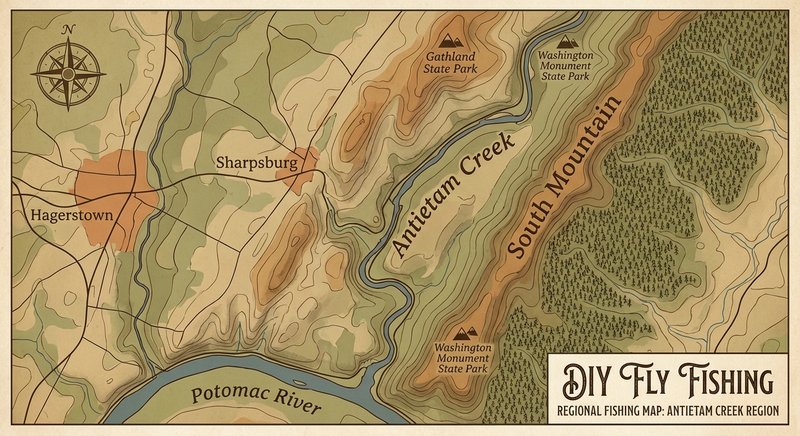
Antietam Creek
Fly fishing in Maryland · Beginner · Best seasons: Spring, Summer, Fall
Target Species
Brown Trout, Rainbow Trout
About This Water
Historic Western Maryland stream with brown trout. Flows through Civil War battlefield.
Fishing Recommendations
Welcome to one of Maryland’s most scenic and historically significant fly fishing destinations. As your guide, I’m excited to walk you through the nuances of Antietam Creek. This is a classic limestone-influenced stream that offers a blend of technical challenges and rewarding hookups amidst the rolling hills of Washington County.
🎣 Location Overview
Antietam Creek is a spring-fed gem flowing through the heart of Maryland’s limestone corridor. Unlike the high-gradient freestone streams of the Appalachian Mountains, Antietam is characterized by its moderate pace, deep ledge pools, and rich aquatic vegetation.
What makes it special is its limestone chemistry. The water is nutrient-dense and alkaline, which leads to incredible insect biomass and steady water temperatures. For anglers, this means the fish grow fast and stay active even when other streams are too warm or too cold. Fishing through the Antietam National Battlefield provides a somber, beautiful backdrop that is truly unique in the world of fly fishing.
🐟 Target Species & Behavior
The creek is primarily managed as a trout fishery through stocking, but its spring-fed nature allows for significant "holdover" fish that become wild-acting and wary.
- Rainbow Trout: These are the most common residents. They tend to hold in the faster riffles and at the heads of pools where oxygen levels are highest. They are opportunistic feeders but can become "educated" quickly after being stocked.
- Brown Trout: The prize of the Antietam. Holdover Browns tuck into the deep undercut banks, under fallen logs, or within the thick mats of elodea (river weed). They are more nocturnal and secretive, often requiring streamers or very technical nymphing to entice.
- Behavior: Because this is limestone water, the fish are "lookers." They have time to inspect your fly in the steady current. Stealth is paramount; if you can see them, they have likely already seen you.
📅 Best Times to Fish
- Spring (March – June): This is the prime window. Water levels are usually stable, and the major hatches (Grannoms and Sulphurs) occur. April and May provide the most consistent dry fly action.
- Summer (July – August): Focus on the early morning or late evening. While the spring influence keeps the water cooler than most, midday temperatures can still stress the fish. This is Trico and Terrestrial season.
- Fall (September – November): A favorite for locals. As temperatures drop, Brown trout become aggressive ahead of the spawn. The fall colors on the battlefield are spectacular, and the Blue Winged Olive (BWO) hatches can be prolific on drizzly afternoons.
🪰 Recommended Flies & Techniques
Nymphing (The Bread & Butter)
Since trout do 90% of their feeding underwater here, nymphing is the most productive method.
- Patterns:
- Scuds & Sowbugs: (Sizes 14–18) In grey, olive, or tan. These are staples in limestone spring creeks.
- Pheasant Tail: (Sizes 16–20) To mimic the abundant Mayfly nymphs.
- Zebra Midge: (Sizes 18–22) Essential for winter and early spring.
- Technique: Use a "Tactical Nymphing" approach. A light indicator or Euro-nymphing setup works best to navigate the varying depths of the ledge pools.
Dry Flies (The Match-the-Hatch)
- Sulphurs: (Sizes 14–18) Late May through June.
- Tricos: (Sizes 22–24) For the patient angler during summer mornings.
- Terrestrials: (Sizes 12–16) Ants, Beetles, and Cricket patterns along the grassy banks in late summer.
Streamers (For the Trophy Browns)
- Patterns: Woolly Buggers (Olive or Black), Slump Busters.
- Technique: Fish these tight against the limestone ledges and undercut banks, especially after a rain when the water has a slight "stain" to it.
💡 Pro Tips & Local Knowledge
- Mind the Weeds: Antietam is full of aquatic grass. Instead of getting frustrated, look for the "lanes" or "buckets" between the weed beds. Fish sit in these lanes like they are on a conveyor belt of food.
- The "Devil’s Backbone" Spot: Devil’s Backbone County Park is the most popular access point. While it gets pressured, the water downstream of the dam holds a high volume of fish. For more solitude, hike further away from the parking lots.
- Stay Low: The water is often crystal clear. Wear earthy tones (camo/olive/brown) and avoid "shining" the water with your rod. A low-profile approach will double your catch rate.
- Light Tippet: You will often need to drop down to 6X or 7X fluorocarbon to fool the holdover trout in the slower flats.
⚠️ Important Information
Access Points
- Devil’s Backbone County Park: Easy access, restrooms, and well-stocked.
- Antietam National Battlefield: Beautiful water, but be strictly observant of National Park Service parking regulations. Stay on marked paths to avoid trampling sensitive historic sites.
- Funkstown Community Park: Good access for the upper sections.
Regulations & Permits
- License: A Maryland Non-Tidal Fishing License and a Trout Stamp are required for all anglers over 16.
- Regulations: Parts of Antietam Creek are managed as "Put and Take" (standard bait/lure rules), while other sections may have specific gear restrictions. Always consult the Maryland DNR Freshwater Fishing Guide before your trip, as boundaries can change annually.
Special Considerations
- Private Property: Much of the land surrounding the creek is private. Respect "No Trespassing" signs and stay within the high-water marks when wading through private stretches.
- Wading Safety: The limestone ledges can be extremely slippery and drop off suddenly. Felt-soled boots or studs are highly recommended.
Guide’s Final Thought: Antietam isn't just about the fish; it's about the atmosphere. Take a moment between casts to appreciate the limestone bluffs and the history of the land. Tight lines!
Bug Hatches & Matching Flies
| Hatch | Type | Peak months | Time of day | Hook sizes | Matching flies |
|---|---|---|---|---|---|
| Trico Tricorythodes | mayfly | July, August, September | Morning | #20-24 | Trico Spinner #20-24, Trico Emerger #22-24 |
| Sulphur Ephemerella dorothea | mayfly | May, June | Late Afternoon/Evening | #14-18 | Sulphur Parachute #16-18, Pheasant Tail Nymph #14-18, Sulphur Cripple #16 |
| Blue-Winged Olive Baetis | mayfly | March, April, October, November | Afternoon | #18-22 | RS2 #20-22, BWO Sparkle Dun #18-20, Micro-Mayfly Nymph #18-22 |
| White Miller Ephoron leukon | mayfly | August | Evening/Dusk | #12-14 | White Wulff #12-14, White Miller Cripple #12-14 |
| Tan Caddis Hydropsyche | caddis | May, June, July | Evening | #14-18 | Elk Hair Caddis #14-18, LaFontaine Sparkle Pupa #16, Holy Grail Caddis #14-16 |
| Terrestrials Formicidae/Coleoptera | terrestrial | July, August, September | All Day | #12-18 | Cinnamon Ant #16-18, Black Beetle #14-16, Dave's Hopper #12 |
| Grannom Caddis Brachycentrus | caddis | April | Morning/Afternoon | #14-16 | Picket Pin #14, Green Weenie #14-16, Grannom Adult #14-16 |
| Midges Chironomidae | midge | January, February, March, December | Late Morning/Afternoon | #20-26 | Zebra Midge #20-24, Griffith's Gnat #20-22, Morgan's Midge #22-24 |