Casselman River
Fly fishing in Maryland · Beginner · Best seasons: Spring, Summer, Fall
Target Species
Brown Trout, Brook Trout
About This Water
Western Maryland stream with wild brown and brook trout. Remote mountain fishing.
Fishing Recommendations
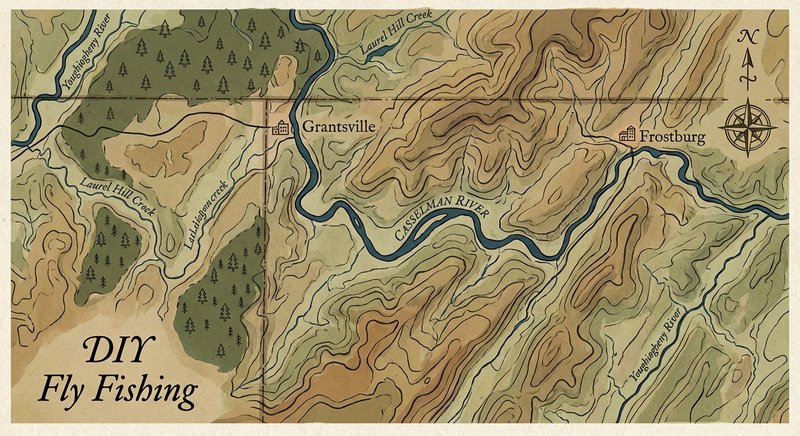
The Casselman River in Western Maryland (Garrett County) is a storied tailwater-style fishery without the dam. Flowing north from the Pennsylvania border through the charming town of Grantsville, the Casselman offers a classic Appalachian freestone experience with wide, easy-to-wade runs, historic scenery, and some of the most consistent trout fishing in the Mid-Atlantic.
🎣 Location Overview
The Casselman is unique because it is one of the few rivers in the region that recovered from historical acid mine drainage to become a premier trout destination. It is characterized by its low gradient and wide riverbed, filled with medium-sized cobblestones and flat ledgerock.
Anglers love the Casselman for its accessibility. Unlike the steep, laurel-choked banks of nearby mountain creeks, the Casselman features high banks and a wide corridor that allows for easy backcasting. The "Delayed Harvest" section, which runs for about four miles near the Spruce Forest Artisan Village and the historic Penn Alps Restaurant, is the crown jewel of the river.
🐟 Target Species & Behavior
While the river holds several species, the primary focus for fly anglers is the trout:
- Brown Trout: These are the "smart" residents of the river. They tend to hold in the deeper undercut banks and the darker "buckets" behind large boulders. As the sun goes down, browns move into the shallow tailouts to feed.
- Brook Trout: While most of the brookies in the main stem are stocked, they are beautiful specimens. You can also find wild, native brook trout in the small cold-water tributaries that feed into the Casselman.
- Rainbow Trout: (Note: Heavily stocked in the Delayed Harvest area). They are often found in the faster, oxygenated "riffle" water at the heads of pools.
Behavior: The trout here are very insect-focused. Because the river is relatively shallow, they are "spooky." If you can see the fish, they have likely already seen you. Stealth and long leaders are your best friends here.
📅 Best Times to Fish
Optimal Seasons
- Spring (Late March – June): This is the prime window. Water levels are usually stable, and the major hatches occur during this time.
- Fall (October – November): The river is restocked for the Delayed Harvest season. The Brown trout become aggressive as they prepare for the spawn, and the fall foliage in Garrett County is world-class.
- Summer (July – August): This is the "danger zone." The Casselman is a freestone river and can get very warm. Pro Tip: If water temps exceed 68°F, stop fishing to protect the trout. Look for "thermal refuges" where cold springs enter the main stem.
Best Times of Day
- Spring/Fall: Mid-day is excellent as the sun warms the water and triggers insect activity.
- Summer: First light and the last hour of "magic hour" before dark.
🪰 Recommended Flies & Techniques
Top Fly Patterns
- Dry Flies:
- Adams Parachute (Size 14-18) - The gold standard.
- Elk Hair Caddis (Size 14-16) - Tan or Olive.
- Sulfurs (Size 16-18) - Essential for May and June evenings.
- Nymphs:
- Pheasant Tail (Size 14-20) - Mimics many of the river's mayfly nymphs.
- Zebra Midge (Size 18-22) - Vital for picky fish in low water.
- Pat’s Rubber Legs (Size 8-12) - Great for high-water spring fishing.
- Streamers:
- Woolly Bugger (Size 8-12) - Black or Olive.
- Black Ghost - A traditional favorite for this river.
Techniques
- Tight-Line/Euro Nymphing: Extremely effective in the riffles and deeper slots. Because the river is wide and relatively shallow, a long rod helps you reach the "seams" without creating drag.
- The "Dry-Dropper": My go-to setup for the Casselman. Use a buoyant Elk Hair Caddis on top and a small Pheasant Tail nymph 18-24 inches below it.
- Swinging Wet Flies: A traditional technique that works wonders here during a caddis hatch.
💡 Pro Tips & Local Knowledge
- The "Castel-man" Shuffle: The river bottom is covered in slippery rocks. Always wear felt-soled boots or studs.
- Focus on the Bridge: The area around the Stanton’s Mill Bridge and the historic Stone Bridge (Cassellman Bridge State Park) holds fish year-round due to the depth and structure.
- The Stealth Factor: Because the water is often clear and slow-moving, use a 12-foot leader tapered to 5X or 6X fluorocarbon tippet. Approach pools from downstream and stay low to the water.
- Check the Gauge: Check the USGS gauge at Grantsville. Ideal wading flows are between 100 and 250 cfs. Anything over 400 cfs becomes difficult to wade safely.
⚠️ Important Information
- Regulations: The most popular stretch is the Delayed Harvest Trout Conservation Area.
- Catch and Release Only from October 1 through June 15.
- During this time, you must use artificial lures or flies only.
- Permits: A Maryland Non-Tidal Fishing License and a Trout Stamp are required. You can purchase these online via the MD DNR "Compass" portal.
- Access: Ample parking is available at the Casselman River Bridge State Park and near Stanton’s Mill. There is also access along River Road.
- Environment: Be mindful of "Didymo" (rock snot). Always clean, drain, and dry your gear after fishing to prevent the spread of invasive species.
The Casselman is a river of grace and history. Treat it with respect, fish the evening hatches, and you'll see why it remains a favorite for Maryland fly anglers. Tight lines!
Bug Hatches & Matching Flies
| Hatch | Type | Peak months | Time of day | Hook sizes | Matching flies |
|---|---|---|---|---|---|
| Blue-Winged Olive Baetis species | mayfly | March, April, September, October | Midday | #18-22 | RS2 #20-22, Parachute Adams #18-22, Pheasant Tail #18-20 |
| Hendrickson Ephemerella subvaria | mayfly | April, May | Afternoon | #12-14 | Red Quill #14, Hendrickson Nymph #12-14, Comparadun #14 |
| Sulphur Ephemerella invaria / dorothea | mayfly | May, June | Evening | #14-18 | Sulphur Parachute #14-18, CDC Bubbleback Emerger #16-18, Sulphur Spinner #14-18 |
| March Brown Maccaffertium vicarium | mayfly | May | Afternoon | #10-12 | March Brown Western #10-12, Hare's Ear #10-12 |
| Slate Drake Isonychia bicolor | mayfly | June, September | Late Afternoon/Evening | #10-12 | Isonychia Nymph #10-12, Parachute Slate Drake #12 |
| Tan Caddis Hydropsyche species | caddis | May, June, July | Evening | #14-16 | Elk Hair Caddis #14-16, Pupa-X #16, Frenchie #14-16 |
| Golden Stonefly Acroneuria species | stonefly | June, July | Morning/Evening | #8-12 | Golden Stone #8-12, Stimulator #10-12 |
| Terrestrials Formicidae / Coleoptera | terrestrial | July, August, September | Afternoon | #12-18 | Cinnamon Ant #16-18, Black Foam Beetle #14-16, Dave's Hopper #10-12 |