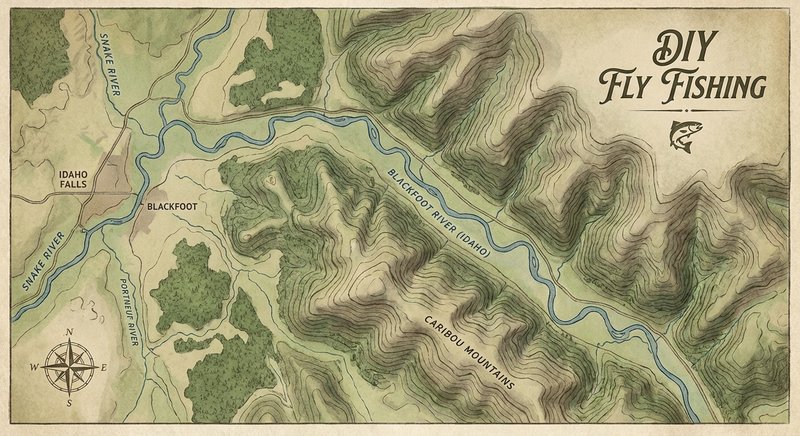
Blackfoot River (Idaho)
Fly fishing in Idaho · Beginner · Best seasons: Summer, Fall
Target Species
Cutthroat Trout, Rainbow Trout
About This Water
Eastern Idaho stream with cutthroat and rainbow trout. Scenic fishing near Blackfoot Reservoir.
Fishing Recommendations
The Blackfoot River in Idaho is a hidden gem of the Intermountain West, often overshadowed by its famous neighbor to the north in Montana. However, for the discerning angler, the Idaho Blackfoot offers some of the finest meadow-style fly fishing for native Yellowstone Cutthroat trout in the country.
🎣 Location Overview
The Blackfoot River meanders through high-elevation sagebrush steppe and lush meadow valleys in Southeast Idaho. It is divided into two distinct personalities: the Upper Blackfoot (above Blackfoot Reservoir) and the Lower Blackfoot (below the dam).
What makes this river special is its "classic meadow" character. The upper river, in particular, flows through the Blackfoot River Wildlife Management Area (WMA). It is characterized by deep undercut banks, tight oxbow bends, and slow, glassy glides. It looks like a spring creek but carries the soul of a wild mountain river. Anglers love it because it offers a "big fish in small water" experience, where a well-placed dry fly can result in a 20-inch native trout in a stream you can almost jump across.
🐟 Target Species & Behavior
- Yellowstone Cutthroat Trout: The crown jewel of the Blackfoot. These are native, wild, and incredibly beautiful. They are known for being surface-oriented and willing to rise to a hopper, but they are wary.
- Rainbow Trout & Cutbows: More common in the lower reaches below the reservoir. They are harder fighters and often hold in the faster riffles and "pockets" rather than the deep meadow bends.
Behavior: These fish are masters of the "undercut bank." During the bright sun of midday, the largest fish will tuck deep under the overhanging grass. They feed heavily on terrestrials (grasshoppers, ants, beetles) from July through September. In the lower river, fish are more opportunistic and will hold in the bubble lines and tail-outs of pools.
📅 Best Times to Fish
- Summer (July – August): This is the prime window. After the spring runoff subsides (usually late June), the river settles into its meadow rhythm. This is peak "Hopper Time."
- Fall (September – October): My personal favorite time. The crowds (which are already small) disappear. The Cutthroat become aggressive before winter, and the Mahogany Dun and Blue Winged Olive (BWO) hatches can be prolific.
- Time of Day: In the summer, the "magic hour" is often late morning (10 AM) once the sun hits the water and gets the insects moving, through about 4 PM. In the fall, focus on the warmest part of the day.
🪰 Recommended Flies & Techniques
Top Fly Patterns
- Terrestrials: Panty Dropper Hopper (size 8-12), Morrish Hopper, Foam Beetles, and Cinnamon Ants (size 16).
- Dry Flies: Parachute Adams (14-18), PMDs (16), Purple Haze (14-16), and in late fall, Sparkle Duns or RS2s for BWO hatches.
- Nymphs: Pheasant Tail (16-18), Zebra Midge (18-20), and Pat’s Rubber Legs (size 10-12) for the deeper holes.
- Streamers: Small Wooly Buggers in Olive or Black, and Sparkle Minnows.
Techniques
- The "Hopper-Dropper": This is the standard setup. Use a high-visibility foam hopper as your indicator and hang a small unweighted Pheasant Tail or Copper John 18-24 inches below it.
- Stealth Approach: Because the water is slow and clear, the fish can see you from a distance. Stay low, wear drab clothing, and avoid "lining" the fish with your fly line.
- Dry-Fly Prowess: On the upper river, accuracy is more important than distance. You need to land your fly within inches of the grassy undercut banks.
💡 Pro Tips & Local Knowledge
- The "Slow Drift": Many anglers strip their hoppers too much. On the Blackfoot, a "dead drift" with just an occasional, tiny twitch is often what triggers the big Cutthroats.
- Walk the Banks: Don't just fish the easy access points. The Blackfoot rewards those willing to hike a mile or two into the WMA. The further you get from the bridges, the less pressured the fish are.
- Watch the Wind: Southeast Idaho is notorious for wind. If it kicks up, don't go home—this is when the grasshoppers get blown into the water. Switch to a shorter, heavier leader (3x or 4x) and "splat" your hopper near the bank.
- Check the Lower River: Below the reservoir, the river flows through a canyon. This area offers more "traditional" trout water with boulders and riffles. It’s a great alternative if the meadow sections are mossy or slow.
⚠️ Important Information
- Access: Much of the upper river is within the Blackfoot River Wildlife Management Area. This provides excellent public access, but please respect the fences and use the provided stiles.
- Regulations: Idaho Fish and Game (IDFG) often has specific regulations for the Blackfoot, including barbless hooks and catch-and-release requirements for Cutthroat in certain sections. Always check the current IDFG Seasons and Rules before heading out.
- Safety: This is moose and bear country. While Grizzly bears are rare this far south, they are not unheard of. Carry bear spray and be mindful of moose in the thick willows.
- Environmental Care: The banks are fragile. Try to stay on established paths to prevent erosion of the very undercut banks that the fish rely on for cover.
The Blackfoot is a technical, rewarding, and stunningly beautiful river. Treat the native Cutthroat with respect—keep them in the water and release them quickly so they can continue their legendary legacy in these Idaho meadows.
Bug Hatches & Matching Flies
| Hatch | Type | Peak months | Time of day | Hook sizes | Matching flies |
|---|---|---|---|---|---|
| Salmonfly Pteronarcys californica | stonefly | June | All Day | #4-8 | Rogue River Stone #4-8, Pats Rubber Legs #4-8, Cat Puke #6-8 |
| Golden Stonefly Hesperoperla pacifica | stonefly | June, July | Morning/Afternoon | #8-12 | Chubby Chernobyl (Gold) #8-12, Golden Twenty-Incher #8-12, Norm Wood Special #10-12 |
| Pale Morning Dun (PMD) Ephemerella excrucians | mayfly | July, August | Late Morning/Afternoon | #16-18 | RS2 (Gray/Olive) #16-18, Sparkle Dun #16-18, Pheasant Tail #16-20 |
| Blue Winged Olive (BWO) Baetis | mayfly | April, May, September, October | Mid-day/Overcast | #18-22 | Parachute Adams #18-22, Barr's BWO Emerger #18-22, Micro Mayfly #18-20 |
| Spotted Sedge / Caddis Hydropsyche | caddis | July, August | Evening | #14-18 | Elk Hair Caddis #14-18, LaFontaine's Deep Sparkle Pupa #14-16, Goddard Caddis #14-16 |
| Yellow Sally Isoperla | stonefly | July | Afternoon/Evening | #14-16 | Little Yellow Sloan #14-16, Yellow Sally Nymph #14-16 |
| Trico Tricorythodes | mayfly | August, September | Early Morning | #20-24 | Trico Spinner #20-24, Zebra Midge #20-22 |
| Grasshoppers Orthoptera | terrestrial | August, September | Late Morning/Afternoon | #8-12 | Morrish Hopper #8-12, Dave's Hopper #10-12, Thunder Thighs Hopper #10-14 |