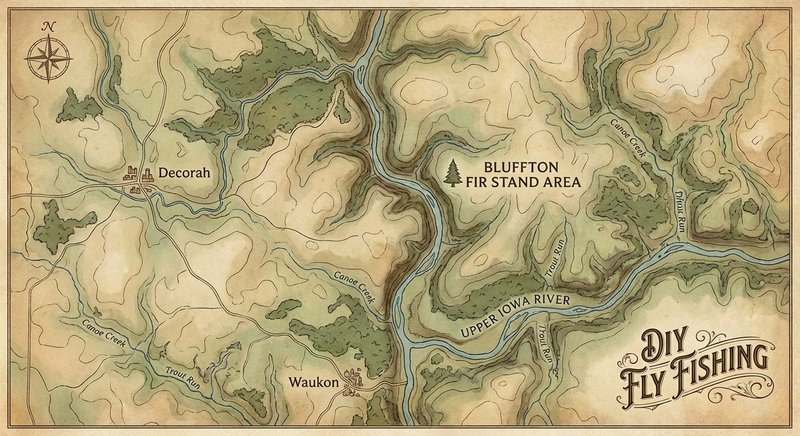
Bluffton Fir Stand Area
Fly fishing in Iowa · intermediate · Best seasons: spring, summer, fall
Target Species
Brown Trout, Brook Trout
About This Water
Winneshiek County wildlife area with stream access. Wild trout in scenic setting.
Fishing Recommendations
Welcome to the Bluffton Fir Stand Area in Winneshiek County, Iowa. As a guide in the Driftless Area, I consider this one of the most scenic and unique gems in the entire Midwest. Located north of Decorah along the Upper Iowa River corridor, this area feels more like the Pacific Northwest or Canada than the rolling plains of Iowa, thanks to the rare relict stand of Balsam Firs clinging to the limestone bluffs.
Here is your comprehensive guide to fly fishing the cold-water treasures of the Bluffton area, specifically focusing on Coldwater Creek, which flows through and near this preserve.
🎣 Location Overview
The Bluffton Fir Stand is a State Preserve characterized by 200-foot limestone bluffs and the coldest microclimate in Iowa. The primary draw for trout anglers here is Coldwater Creek, one of Iowa’s premier trophy trout streams.
What makes this area special is the karst topography. The water emerges from a massive cave (Coldwater Spring) at a constant 47–50 degrees Fahrenheit. This ensures the water stays cool enough for trout even in the heat of July. The stream is a classic limestone spring creek: crystal clear, rich in nutrients, and filled with "creek chocolate"—lush aquatic vegetation that hides massive numbers of invertebrates.
🐟 Target Species & Behavior
Brown Trout
The "King" of Coldwater Creek. While the Iowa DNR stocks this stream, there is a significant population of wild, stream-bred Browns.
- Behavior: They are notoriously wary. Big browns hold in deep undercut banks, beneath fallen timber, or at the "head of the pool" where oxygen is highest.
- Feeding: They are opportunistic but transition to piscivorous (fish-eating) behavior once they cross the 14-inch mark.
Brook Trout
Iowa's only native trout. While more common in the smaller headwater feeders, you will find them in the swifter, colder riffles of the main creek.
- Behavior: Much more aggressive and less "spooky" than browns. They prefer the highly oxygenated water near the spring source.
- Feeding: They rarely miss a well-presented dry fly or a small flashy nymph.
📅 Best Times to Fish
- Spring (April – May): This is prime time. The Blue-Winged Olive (BWO) hatches are prolific on overcast days. As the water warms slightly, the Grannom Caddis hatch begins, leading to spectacular surface action.
- Summer (June – August): While other Iowa streams might get too warm, the Bluffton/Coldwater area remains fishable. Early morning (5:00 AM - 9:00 AM) is the golden window. This is also peak terrestrial season.
- Fall (September – October): The most beautiful time to be in the Fir Stand. Brown trout become aggressive as they prepare for the fall spawn. Streamer fishing is at its peak.
- Prime Conditions: Overcast, drizzly days are best. The low light brings the big, shy browns out from under the banks.
🪰 Recommended Flies & Techniques
Top Fly Patterns
- Nymphs:
- The Pink Squirrel (Size 14-18): A Driftless staple. The hot bead and flash work wonders in the limestone water.
- Scuds/Sowbugs (Size 14-16): The primary food source in these spring creeks year-round. Use gray or olive.
- Zebra Midge (Size 18-22): Essential for picky fish in clear water.
- Dry Flies:
- Elk Hair Caddis (Size 14-16): Great for the pocket water.
- Hippie Stomper (Size 14): A fantastic attractor/terrestrial pattern that floats high.
- BWO Sparkle Dun (Size 18-20): For those technical spring hatches.
- Streamers:
- Wooly Bugger (Black or Olive): The gold standard.
- Pine Squirrel Leech: Excellent for swinging through deep holes.
Effective Techniques
- The "Dry-Dropper": Use a high-visibility dry fly with a weighted nymph tied 18–24 inches below it. This covers two levels of the water column.
- Tight-Line Nymphing: Because the creek is relatively narrow, European-style nymphing (without a bobber) is incredibly effective for feeling the subtle take of a trout in the weeds.
- Stealth Approach: This is the most important technique. Crawl on your knees if you have to. If you can see the fish, they have likely already seen you.
💡 Pro Tips & Local Knowledge
- The "Fir Stand" Hike: Accessing the creek through the Bluffton Fir Stand Preserve requires a bit of a hike. Most casual anglers stick to the bridge access points. If you are willing to walk 15–20 minutes downstream or upstream into the preserve, the fishing pressure drops significantly.
- Fish the "Edges": In the summer, the aquatic vegetation (Elodea and Watercress) grows thick. Fish the narrow lanes of open water between the weed beds. This is where the big browns lie in ambush.
- The Upper Iowa Connection: Don't ignore the confluence where Coldwater Creek meets the Upper Iowa River. During the summer, the cold plume of water entering the river attracts Smallmouth Bass and large Trout alike.
⚠️ Important Information
- Access: Much of the land surrounding the creek is private, but there are significant sections of Public Fishing Access and MMPA (Management/Public Access) areas. Look for the green "Fish Iowa" signs. Always respect fences and stay within the stream banks on private land.
- Regulations:
- A valid Iowa Fishing License and Trout Fee are required.
- Check current Iowa DNR regulations for specific "Catch and Release" or "Artificial Lure Only" segments, as these can change by season or specific stream reach.
- Safety: The bluffs are steep and the limestone can be slick. I highly recommend felt-soled wading boots or rubber soles with studs.
- Cell Service: Expect zero bars once you drop down into the Bluffton valley. Download your maps for offline use before you leave Decorah.
Guide’s Final Word: The Bluffton Fir Stand is a place for the "thinking angler." It rewards patience, stealth, and a deep appreciation for the unique ecology of the Driftless. Tight lines!
Bug Hatches & Matching Flies
| Hatch | Type | Peak months | Time of day | Hook sizes | Matching flies |
|---|---|---|---|---|---|
| Blue-Winged Olive Baetis tricaudatus | mayfly | April, May, September, October | Late Morning/Afternoon | #18-22 | RS2 #18-22, Parachute BWO #18-20, BWO Emerger #20-22 |
| Hendrickson Ephemerella subvaria | mayfly | April, May | Afternoon | #12-14 | Red Quill #12-14, Hendrickson Nymph #12-14, Pheasant Tail #14 |
| Grannom Caddis Brachycentrus | caddis | April, May | Morning/Evening | #14-16 | Peacock Caddis #14-16, Deep Sparkle Pupa #14-16, Elk Hair Caddis #14-16 |
| Sulphur Ephemerella invaria/dorothea | mayfly | May, June | Evening | #14-18 | Sparkle Dun #16-18, Sulphur Parachute #14-18, Hare's Ear Nymph #16 |
| Light Cahill Stenonema ithaca | mayfly | June, July | Evening | #12-14 | Light Cahill #12-14, Gold Ribbed Hare's Ear #12-14 |
| Trico Tricorythodes | mayfly | July, August, September | Early Morning | #20-24 | Trico Spinner #22-24, Sunken Trico Spinner #22-24, Griffith's Gnat #20-22 |
| Little Brown Stonefly Strophopteryx fasciata | stonefly | March, April | Afternoon | #14-16 | Little Brown Stone Nymph #14-16, Picket Pin #14, Stimulator #16 |
| Terrestrials Formicidae/Gryllidae | terrestrial | July, August, September | All Day | #8-18 | Dave's Hopper #8-12, Black Foam Ant #14-18, Crowe Beetle #14-16 |
| Midges Chironomidae | midge | December, January, February, March | Mid-day | #18-24 | Zebra Midge #18-22, Palomino Midge #20-22, Griffith's Gnat #20-24 |