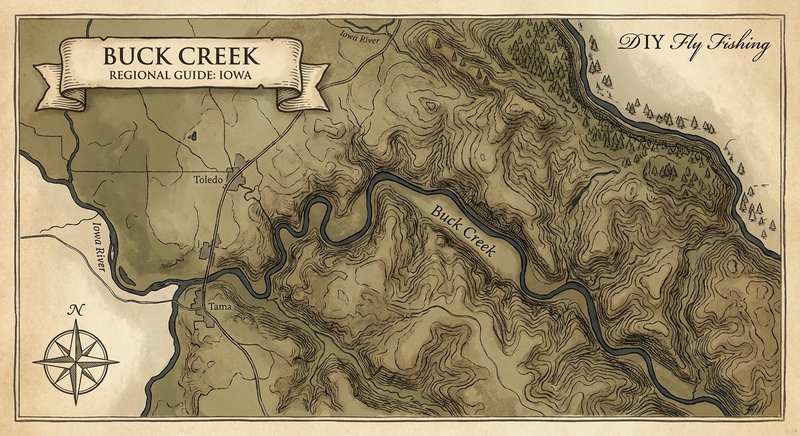
Buck Creek
Fly fishing in Iowa · intermediate · Best seasons: spring, summer, fall
Target Species
Brown Trout
About This Water
Clayton County stream with wild brown trout. Scenic Driftless valley setting.
Fishing Recommendations
Buck Creek, located in the heart of Clayton County in Northeast Iowa’s "Driftless Area," is a hidden gem that often plays second fiddle to the more famous streams like North Bear or Waterloo Creek. However, for the angler seeking wild fish and a more intimate, solitary experience, Buck Creek is a premier destination.
Here is your comprehensive guide to fly fishing Buck Creek, Iowa.
🎣 Location Overview
Buck Creek is a classic limestone spring-fed stream and a tributary to the Turkey River. What makes it special is its wild character. Unlike many Iowa streams that rely heavily on stocking, Buck Creek boasts a robust population of naturally reproducing Brown Trout.
The water is characterized by its clarity and cold temperatures, even in the heat of July. It is a narrow, "technical" stream with tight corridors, undercut banks, and a mix of gravel riffles and deep, silty pools. Anglers love it because it rewards stealth and precision rather than long-distance casting. It feels like a true wilderness experience tucked into the rolling agricultural hills of Iowa.
🐟 Target Species & Behavior
The primary draw here is the Wild Brown Trout.
- Behavior: These fish are notoriously spooky. Because the water is clear and the stream is narrow, they are highly sensitive to shadows and bank vibrations.
- Holding Patterns: Look for them tucked tight against undercut banks, under overhanging grass, or at the very tail-ends of deep pools during low-light hours. In the spring, they will move into the swifter riffles to feed on nymphs.
- Feeding: Their diet consists heavily of scuds (freshwater shrimp), midge larvae, and mayflies (Blue-winged Olives and Pale Morning Duns). As they grow larger, they become highly piscivorous, feeding on small chubs, dace, and even smaller trout.
📅 Best Times to Fish
Buck Creek is a year-round fishery due to the constant spring influence, but your target seasons offer the best action:
- Spring (March - May): This is the prime window. The first hatches of Blue-winged Olives (BWO) bring fish to the surface. Water levels are usually stable unless there is a heavy spring melt or rain.
- Summer (June - August): Early mornings and late evenings are essential. This is Terrestrial Season. While other streams might warm up too much, Buck Creek stays cool. Look for "Trico" hatches at dawn.
- Fall (September - November): This is "Pre-Spawn" time. Brown trout become aggressive and territorial. Their colors darken, and they are more likely to chase large streamers.
- Best Time of Day: During summer, fish from dawn until 10:00 AM, then again from 6:00 PM until dark. On overcast, drizzly days, the fishing can be spectacular all day long.
🪰 Recommended Flies & Techniques
Top Fly Patterns
- Nymphs:
- Gold-Ribbed Hare’s Ear (#16-18)
- Flashback Pheasant Tail (#18-20)
- Ray Charles or Pink Scuds (#16-18) – A Driftless staple.
- Dry Flies:
- Parachute Adams (#18-22)
- Elk Hair Caddis (#16-18)
- Hi-Viz Tricos (#20-24) for summer mornings.
- Terrestrials:
- Dave’s Hopper (#10-12)
- Black Ants or Beetles (#16-18) – High success near overhanging grass.
- Streamers:
- Black or Olive Woolly Buggers (#8-12)
- Muddler Minnows (to mimic sculpins).
Techniques
- The "Sneak and Peak": Stay low. Often, the best way to fish Buck Creek is on your knees. Approach pools from downstream and cast upward.
- Nymphing: Use a "Dry-Dropper" rig. A buoyant hopper or klinkhammer on top with a weighted scud or pheasant tail 18 inches below is deadly.
- Tight-Line Nymphing: In the deeper runs, use a Euro-style or tight-line approach to avoid drag caused by complex surface currents.
💡 Pro Tips & Local Knowledge
- Mind the Banks: The banks of Buck Creek are often soft. If you "clump" along the bank, the vibrations will send every trout in the pool scurrying for cover before you even pull line off your reel.
- Focus on the Lower Sections: The lower reaches near the confluence with the Turkey River often hold the largest "trophy" Browns that move up from the river to find cooler water.
- The "Shadow" Rule: Never let your shadow fall across the water you intend to fish.
- Local Secret: Use a 7.5-foot to 8-foot 3-weight or 4-weight rod. Anything longer is difficult to maneuver under the willow sweepers and through the brush.
⚠️ Important Information
Access
- Buck Creek has several points of access through public fishing easements on private land. Always look for the green "Iowa DNR Fish Management" signs.
- Respect the landowners: stay within the fenced corridors and do not litter.
Regulations
- License: An Iowa fishing license and a Trout Fee are required for all anglers.
- Limits: Check current Iowa DNR regulations, as some sections may have specific "Catch and Release" only rules or gear restrictions (artificial lures/flies only). Generally, the Driftless streams favor a "leave it better than you found it" ethos.
Special Considerations
- Cow Pastures: Some sections run through active pastures. Be prepared to share the field with cattle—they are generally harmless but can muddy the water if they cross upstream of you.
- Flash Floods: Being a valley stream, Buck Creek can rise rapidly during heavy thunderstorms. If the water turns "chocolate milk" color, head for high ground and wait it out; it usually clears within 24 hours.
Guide’s Final Word: Buck Creek is a "Ph.D. stream." It will frustrate you one day and reward you with the most beautiful wild trout of your life the next. Bring your stealth game and your smallest flies.
Bug Hatches & Matching Flies
| Hatch | Type | Peak months | Time of day | Hook sizes | Matching flies |
|---|---|---|---|---|---|
| Blue-Winged Olive (BWO) Baetis tricaudatus | mayfly | March, April, September, October | Late Morning/Afternoon | #18-22 | RS2 #18-22, Parachute Adams #18-22, Pheasant Tail Nymph #18-20 |
| Grannom Caddis Brachycentrus occidentalis | caddis | April, May | Morning/Evening | #14-16 | Elk Hair Caddis (Olive/Black) #14-16, LaFontaine's Deep Sparkle Pupa #14-16, Peacock Caddis #16 |
| Sulfur / Pale Morning Dun Ephemerella invaria | mayfly | May, June | Evening | #14-18 | Sulfur Parachute #14-18, Sulfur Emerger #16-18, Flashback Pheasant Tail #16-18 |
| Trico Tricorythodes spp. | mayfly | July, August, September | Early Morning | #20-24 | Trico Spinner (Poly Wing) #20-24, Zebra Midge (Black) #20-22, Griffith's Gnat #20-22 |
| Cinnamon Caddis Hydropsyche spp. | caddis | June, July, August | Evening/Night | #14-18 | Tan Elk Hair Caddis #14-18, Gold Ribbed Hare's Ear #14-16, Caddis Poop-Pupa #16 |
| Terrestrials (Hoppers/Ants) Orthoptera / Formicidae | terrestrial | July, August, September | Mid-day/Afternoon | #10-18 | Dave's Hopper #10-14, Black Foam Ant #16-18, Chernobyl Ant #12-14 |
| Chironomid / Midge Chironomidae | midge | January, February, March, December | All Day | #18-24 | Zebra Midge (Red/Silver) #18-22, Griffith's Gnat #20-24, Top Secret Midge #20-22 |
| Light Cahill Stenacron interpunctatum | mayfly | June, July | Evening | #12-14 | Light Cahill Dry #12-14, Cream Usual #14, Hare's Ear Nymph #12-14 |