Browns River
Fly fishing in Vermont · Beginner · Best seasons: Spring, Summer, Fall
Target Species
Brown Trout, Brook Trout
About This Water
Northwestern Vermont stream in Jericho area. Brown and brook trout with good roadside access.
Fishing Recommendations
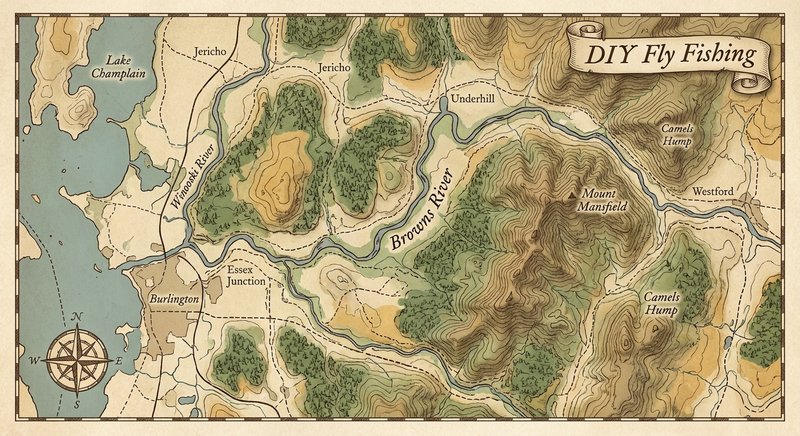
The Browns River in Vermont is one of the state’s hidden gems. While it doesn't always get the national press of the Winooski or the Battenkill, local anglers know it as a productive, intimate, and scenic fishery. Flowing from the western slopes of Mount Mansfield through the towns of Underhill, Westford, and Essex before joining the Lamoille River, it offers a classic New England freestone experience.
Here is your comprehensive guide to fly fishing the Browns River.
🎣 Location Overview
The Browns River is a classic freestone stream that transitions beautifully from a high-gradient mountain brook to a meandering valley river.
- The Upper River (Underhill area): This is rugged, fast water with plenty of "pocket water," plunges, and boulders. It feels like a true wilderness stream.
- The Middle/Lower River (Westford to Essex): The river slows down, carving through farmland and forest. You’ll find deeper pools, long runs, and significant undercut banks.
What makes it special is the backdrop—fishing in the shadow of Mount Mansfield—and the fact that it remains relatively wadeable throughout its length. It is a "technical" small stream; it rewards stealth and precise casting rather than long-distance bombing.
🐟 Target Species & Behavior
The Browns River is a two-species game: Brown Trout and Brook Trout.
- Brook Trout: Found predominantly in the colder, faster headwaters above Underhill Center. They are opportunistic but spooky. Look for them in the "bubbles"—the highly oxygenated water at the head of pools.
- Brown Trout: These are the kings of the middle and lower sections. They are notorious for hugging the banks. Many of the larger Browns (12–16 inches, with the occasional "trophy" for this size water) hold under overhanging root balls or in the deep, slow bends. They are primarily nocturnal feeders but will rise for significant hatches.
📅 Best Times to Fish
Spring (Late April – June)
This is "Peak Season." Once the snowmelt (mud season) subsides and the water hits 50°F, the fish become very active. This is when you’ll see the best hatches.
- Window: Mid-day is best in early spring; shifting to late afternoon as June approaches.
Summer (July – August)
The Browns can get low and warm. During a heatwave, fishing should be restricted to the early morning hours (6 AM – 10 AM) to avoid stressing the fish.
- Pro Tip: If the valley water is too warm, head upstream into the mountains where the canopy provides shade and the water stays cool.
Fall (September – October)
A spectacular time to be on the water. The Brown Trout become aggressive as they prepare for the spawn.
- Window: All day. Overcast days are particularly productive for streamer fishing.
🪰 Recommended Flies & Techniques
Dry Flies
The Browns River fish aren't always "match the hatch" picky, but they expect a natural drift.
- Patterns: Ausable Wulff (classic VT fly), Elk Hair Caddis (Size 14-18), Parachute Adams, and Stimulators.
- Terrestrials: In July and August, a Black Ant or a Foam Beetle dropped right against the bank is deadly.
Nymphing
This is the most consistent way to catch fish here, especially in the pocket water.
- Patterns: Pheasant Tail (Size 14-18), Prince Nymph, and Gold-Ribbed Hare’s Ear.
- Technique: Use a "Dry-Dropper" rig. A high-visibility dry fly with a small nymph hanging 18-24 inches below it is perfect for the shallow runs of the Browns.
Streamers
For the larger Browns in the deeper Westford holes:
- Patterns: Woolly Buggers (Black or Olive, Size 8-10) and Muddler Minnows.
- Technique: "Strip and Pause" through the deep undercut banks.
💡 Pro Tips & Local Knowledge
- The "Westford Slide": The stretch around the Westford town common and the covered bridge is iconic. However, because it's popular, the fish are smarter here. Use a longer leader (9ft - 12ft) and 6x tippet to avoid spooking them.
- Stealth is Key: Because the water is often crystal clear, your shadow will clear a pool faster than a bad cast. Always approach from downstream and stay low.
- The "Lamoille Run": In the late fall, some larger trout from the Lamoille River may move into the lower sections of the Browns. This is your best chance at a 18+ inch fish.
- Check the Gauge: The Browns River doesn't have its own USGS gauge, but the Lamoille River at Jeffersonville gauge is a good proxy. If the Lamoille is spiking, the Browns is likely too turbid to fish.
⚠️ Important Information
- Access: Much of the Browns River flows through private land. Vermont has generous laws regarding fishing on unposted land, but always respect "Posted" signs and try to ask permission if you see a landowner. Public access is available at several bridge crossings and town parks in Underhill and Westford.
- Regulations: Most of the Browns River falls under "General Fishing Regulations" for Vermont (2 trout limit, no length minimum), but always check the Vermont Fish & Wildlife Law Digest before heading out, as rules can change seasonally.
- Wading Safety: The river bed is a mix of gravel and slippery "river snot" (algae) on bowling-ball-sized rocks. Felt-soled boots or studs are highly recommended.
- Catch & Release: While not mandatory on the whole river, practicing catch and release (especially for wild Brookies) ensures this small resource remains vibrant for years to come.
Tight lines! The Browns River is a place where you can truly get lost in the rhythm of the cast.
Bug Hatches & Matching Flies
| Hatch | Type | Peak months | Time of day | Hook sizes | Matching flies |
|---|---|---|---|---|---|
| Blue-Winged Olive Baetis spp. | mayfly | April, May, September, October | Mid-day | #18-22 | RS2 #18-22, BWO Sparkle Dun #18-20, Pheasant Tail #18-22 |
| Hendrickson Ephemerella subvaria | mayfly | April, May | Afternoon | #12-14 | Red Quill #12-14, Hendrickson Emerger #12-14, Gold Ribbed Hare's Ear #12-14 |
| Grannom Caddis Brachycentrus | caddis | May | Morning/Afternoon | #14-16 | Elk Hair Caddis (Dark) #14-16, Pupa Peep #14-16, Holy Grail #14-16 |
| March Brown Maccaffertium vicarium | mayfly | May, June | Afternoon | #10-12 | March Brown Dry #10-12, March Brown Wet Fly #10-12, Hare's Ear Nymph #10-12 |
| Sulfur / Pale Evening Dun Ephemerella invaria | mayfly | June, July | Evening | #14-18 | Sulfur Parachute #14-18, Sulfur CDC Emerger #14-16, Rusty Spinner #14-18 |
| Light Cahill Stenacron candidum | mayfly | June, July, August | Evening | #14-16 | Light Cahill #14-16, Cream Usual #14-16 |
| Golden Stonefly Acroneuria spp. | stonefly | June, July | Anytime/Evening | #8-12 | Pat's Rubber Leg #8-12, Golden Stimulator #10-12 |
| Common Terrestrials Formicidae / Coleoptera | terrestrial | July, August, September | All Day | #12-18 | Black Foam Ant #16-18, Chernobyl Ant #10-14, Crowe Beetle #14-16 |