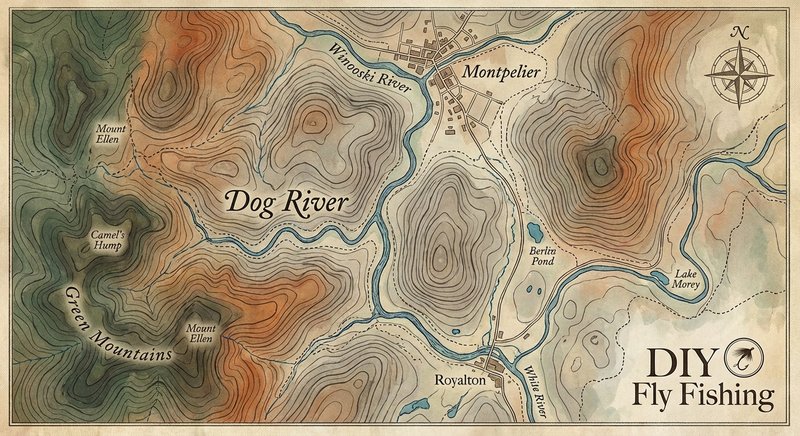
Dog River
Fly fishing in Vermont · Beginner · Best seasons: Spring, Summer, Fall
Target Species
Brook Trout, Brown Trout
About This Water
Central Vermont stream with wild brook and brown trout. Scenic rural fishing through pastoral farmland.
Fishing Recommendations
The Dog River is one of Vermont’s true gems. Flowing through the heart of the Green Mountains from Roxbury through Northfield and into Montpelier, it is widely considered one of the best wild trout fisheries in the state. Unlike many Vermont rivers that rely on stocking, the Dog is managed for wild trout, making it a "bucket list" destination for technical anglers who value wary, beautiful fish over easy catches.
🎣 Location Overview
The Dog River is a classic freestone stream characterized by its intimate size, crystal-clear water, and diverse structure. It offers a mix of tumbling pocket water, deep ledge pools, and long, glassy glides.
What makes it special is the resilience of its wild population. Despite significant damage from Tropical Storm Irene in 2011, the river has bounced back remarkably well. It feels like a "technical" river; the fish are smart, the wading can be slick, and the scenery—ranging from covered bridges to lush forests—is quintessential Vermont. It is a river that rewards stealth and precise presentation.
🐟 Target Species & Behavior
- Wild Brown Trout: The stars of the river. These fish are buttery-yellow with vibrant red spots. They are notoriously spooky. In the lower sections (Northfield to Montpelier), you’ll find the larger specimens, some pushing 16-18 inches, often tucked under undercut banks or deep in the "guts" of pools.
- Wild Brook Trout: More prevalent in the upper reaches (Roxbury/South Northfield) and the colder tributaries. They are aggressive but smaller, usually 6–10 inches, and prefer the faster oxygenated pocket water.
- Behavior: These are not "stockies." They are highly attuned to overhead shadows and heavy wading. During the day, they hold tight to structure. At dusk, the larger Browns move into the tailouts and shallow riffles to feed.
📅 Best Times to Fish
Spring (Late April – June)
- Windows: Post-runoff (late May) is prime.
- Conditions: High water means the fish are less spooky. This is the time for streamers and heavy nymphs. The Hendrickson hatch (mid-to-late May) is the first major dry fly event of the year.
Summer (July – August)
- Windows: Early morning (6 AM – 10 AM) and "the magic hour" before dark.
- Conditions: Water levels drop and clear up. Stealth is mandatory. Keep a thermometer handy; if water temps exceed 68°F, stop fishing to protect the wild trout. Look for "thermal refuges" where cold tributaries enter.
Fall (September – October)
- Windows: Mid-day as the sun warms the water.
- Conditions: This is the pre-spawn period for Browns. They become aggressive and territorial. The fall foliage provides a stunning backdrop, and the Blue Winged Olive (BWO) hatches can be prolific on overcast days.
🪰 Recommended Flies & Techniques
Dry Flies
- Hendricksons (Size 12-14): Late spring.
- Light Cahill (Size 14-16): Summer evenings.
- BWO (Size 18-22): Cloudy days in spring and fall.
- Terrestrials: Black Ants, Beetles, and Dave’s Hoppers (Size 10-14) are lethal in August along the grassy banks.
Nymphs
- Pheasant Tail & Hare’s Ear (Size 14-18): Year-round staples.
- Pat’s Rubber Legs (Size 8-12): Great for high water in the spring.
- Zebra Midge (Size 18-20): Essential for technical winter/early spring fishing.
Streamers
- Black or Olive Wooly Buggers: Work deep in the pools.
- Muddler Minnows: Greased up and skittered on the surface at night for big Browns.
Presentation Tips
- Long Leaders: Use 9-foot to 12-foot leaders tapered to 5X or 6X, especially in the summer.
- Upstream Approach: Always approach a pool from downstream. If you see the fish, they’ve likely already seen you.
💡 Pro Tips & Local Knowledge
- The "Railroad" Secret: Much of the Dog River follows the railroad tracks. While there are several formal pull-offs, walking the tracks (carefully and legally where permitted) can get you away from the bridge-dwellers and into less-pressured water.
- Shadow Management: The river is narrow. Be mindful of your shadow casting over a pool. In the late afternoon, the sun can put your silhouette right on the fish before you even make a cast.
- Micro-Nymphing: When the water is low in July, try a "Dry-Dropper" rig with a small klinkhammer and a tiny (size 20) midge dropper just 12 inches below. It’s often the only way to fool the pressured fish in Northfield.
- Northfield Falls: The area around the covered bridges is scenic but pressured. Hike 1/2 mile upstream or downstream from these landmarks to find the larger, undisturbed Browns.
⚠️ Important Information
- Regulations: The Dog River is managed under Special Regulations. From the mouth to the top, much of it is Catch and Release Only with artificial lures/flies only. Always check the current Vermont Fish & Wildlife Law Digest.
- Access: Much of the river flows through private land. Vermont has generous access laws, but always respect "Posted" signs. Most landowners are friendly if you ask permission or keep a low profile.
- Slippery Rocks: The Dog is notorious for its "greased bowling ball" rocks. Studded wading boots and a wading staff are highly recommended.
- Didymo (Rock Snot): Always clean, drain, and dry your gear to prevent the spread of invasive species.
Guide’s Final Word: The Dog River isn't about high fish counts; it’s about the quality of the hunt. Slow down, observe the water for five minutes before casting, and enjoy the rhythm of one of New England's finest wild trout streams.
Bug Hatches & Matching Flies
| Hatch | Type | Peak months | Time of day | Hook sizes | Matching flies |
|---|---|---|---|---|---|
| Blue Winged Olive Baetis | mayfly | April, May, September, October | Afternoon | #18-22 | RS2 #18-22, Parachute BWO #18-22, Pheasant Tail #18-20 |
| Hendrickson Ephemerella subvaria | mayfly | April, May | Afternoon | #12-14 | Red Quill #12-14, Hendrickson Emerger #12-14, Hare's Ear Nymph #12-14 |
| Grannom Caddis Brachycentrus | caddis | April, May | Morning/Afternoon | #14-16 | Elk Hair Caddis (Dark) #14-16, Deep Sparkle Pupa #14-16, Peacock Caddis #14-16 |
| March Brown Maccaffertium vicarium | mayfly | May, June | Afternoon | #10-12 | March Brown Western #10-12, Gold Ribbed Hare's Ear #10-12, March Brown Emerger #10-12 |
| Sulphur Ephemerella invaria | mayfly | June, July | Evening | #14-18 | Sulphur Parachute #14-18, Sulphur Cripple #14-16, Pheasant Tail #16-18 |
| Light Cahill Stenacron interpunctatum | mayfly | June, July | Evening | #12-14 | Light Cahill #12-14, Cream Usual #12-14 |
| Golden Stonefly Acroneuria | stonefly | June, July | Evening/Night | #8-12 | Golden Stone Nymph #8-12, Stimulator (Yellow) #8-12, Pats Rubber Legs #8-12 |
| Trico Tricorythodes | mayfly | July, August, September | Morning | #20-24 | Trico Spinner #20-24, Griffith's Gnat #20-22 |
| Ants and Beetles Formicidae/Coleoptera | terrestrial | July, August, September | All Day | #12-18 | Black Foam Ant #14-18, Cinnamon Ant #14-16, Joan Wulff’s Fat Albert #12-14 |
| Tan Caddis Hydropsyche | caddis | June, July, August | Evening | #14-18 | Elk Hair Caddis (Tan) #14-18, LaFontaine Sparkle Pupa #14-18, Holy Grail #14-16 |