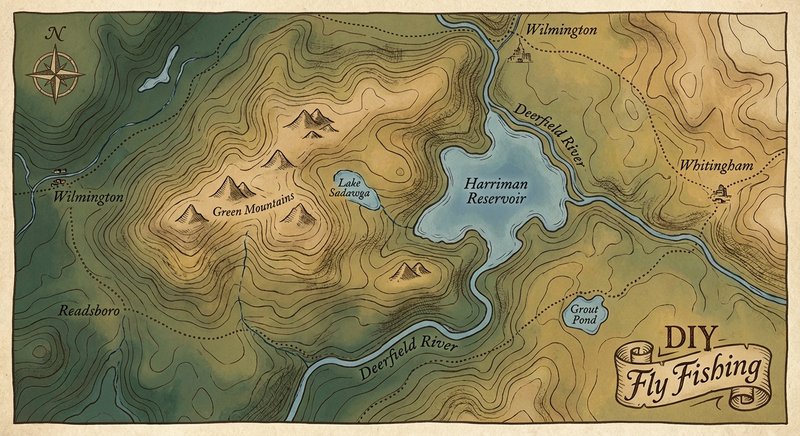
Harriman Reservoir
Fly fishing in Vermont · Intermediate · Best seasons: Spring, Fall
Target Species
Brown Trout, Rainbow Trout, Smallmouth Bass
About This Water
Large southern Vermont reservoir with brown and rainbow trout. Also known as Lake Whitingham.
Fishing Recommendations
Welcome to Harriman Reservoir, also known locally as Lake Whitingham. Located in the towns of Wilmington and Whitingham, this is the largest body of water located entirely within the state of Vermont. As a guide, I consider Harriman a "hidden gem" because while most anglers flock to the Battenkill or the Otter Creek, Harriman offers a unique, deep-water "fjord-like" experience that bridges the gap between mountain stream fishing and big-water tactics.
Here is your comprehensive guide to fly fishing Harriman Reservoir.
🎣 Location Overview
Harriman Reservoir is a 2,200-acre man-made impoundment of the Deerfield River. What makes it special is its cold-water habitat. Because it is exceptionally deep (up to 180 feet in spots), it maintains a "thermocline" that allows trout to survive and thrive even during the heat of summer.
The scenery is spectacular—undeveloped shorelines, steep wooded hills, and crystal-clear water. For the fly angler, it offers a diverse challenge: you can be casting streamers for aggressive Smallmouth one moment and stripping smelt patterns for holdover Rainbows the next. It’s a "storage" reservoir for hydroelectric power, meaning water levels fluctuate, creating a unique "bathtub ring" of rocky structure that Smallmouth love.
🐟 Target Species & Behavior
- Brown & Rainbow Trout: These are the "silver bullets" of Harriman. While some are stocked, many are holdovers that grow large by feeding on the abundant landlocked smelt population. In the spring and fall, they move into the top 10–15 feet of the water column and congregate near the mouths of tributary streams (like the Deerfield River inlet).
- Smallmouth Bass: Harriman is arguably one of the best Smallmouth fisheries in Southern Vermont. They are incredibly hardy here. They hold on rocky ledges, submerged timber, and drop-offs. They feed heavily on crayfish and juvenile yellow perch.
- Landlocked Salmon: Occasionally caught near the northern end. They behave similarly to the Rainbow trout, shadowing schools of baitfish in open water.
📅 Best Times to Fish
Optimal Seasons
- Spring (Ice-out through June): This is the prime window for trout. As soon as the ice breaks, trout are hungry and patrolling the shorelines and inlets.
- Fall (September through October): As water temperatures drop, trout move back to the surface. Brown trout become aggressive as they prepare for their fall spawning runs into the tributaries. Smallmouth fishing peaks in September as they gorge for winter.
Best Times of Day
- Low Light is King: Because the water is so clear, fish are wary. Dawn and dusk are the "golden hours."
- Overcast Days: A cloudy, slightly breezy day (the "Harriman Chop") is often better than a bluebird day, as it breaks up the surface and makes fish less spooky.
🪰 Recommended Flies & Techniques
Top Fly Patterns
- Smelt Imitations: The Gray Ghost, Black Ghost, or a Silver Bead-head Flashman. These are essential for trout.
- Streamers: Woolly Buggers (Olive, Black, and White) in sizes 4–8. Clouser Minnows (Chartreuse/White) for Smallmouth.
- Nymphs: Prince Nymphs, Pheasant Tails, and Copper Johns (Size 12–16) fished under an indicator near stream mouths.
- Topwater: Sneaky Petes or small Hard-body Poppers (Yellow or Bass Orange) for evening Smallmouth action in the shallows.
Effective Techniques
- The "Harriman Strip": Using a sinking tip line (Type 3 or 5), cast towards the rocky shorelines or drop-offs. Let it sink for 5–10 seconds, then use a rhythmic, erratic strip to mimic a wounded smelt.
- Inlet Dead-Drifting: At the northern end where the Deerfield River enters, use a floating line and drift nymphs or eggs. This is highly effective in early spring.
- The "Countdown" Method: When fishing the ledges for Smallmouth, count your fly down to different depths until you find where the fish are holding.
💡 Pro Tips & Local Knowledge
- Focus on the "Ledges": The western shore has several steep rocky faces. Smallmouth will often suspend right against these walls. Cast your fly inches from the rock and let it sink vertically.
- The Medburyville Inlet: The area where the Deerfield River flows into the reservoir (near Route 9) is a transition zone. Trout congregate here to take advantage of the highly oxygenated water and food being washed in.
- Bring a Watercraft: While there is some shore access near the dams and boat launches, Harriman is best fished by kayak, canoe, or motorboat. The best spots are often inaccessible by foot due to the steep terrain.
- Watch the Wind: Because of the valley orientation, wind can whip up quickly on Harriman. If you see whitecaps starting, head for the nearest cove or boat launch immediately.
⚠️ Important Information
- Access Points:
- Ward's Beach / Wardsboro Road: Good for hand-launching kayaks.
- Medburyville Picnic Area: Northern end, great for targeting the river inlet.
- Mountain Home Canoe Access: Easy access to the middle section.
- Regulations: Vermont state fishing regulations apply. A valid Vermont Fishing License is required. Be sure to check the VT Fish & Wildlife Law Digest for the specific season dates for trout (usually 2nd Saturday in April to Oct 31).
- Invasive Species: Always "Clean, Drain, and Dry" your gear and boat. Harriman is relatively pristine, and locals are very protective of preventing the spread of milfoil or other invasives.
- Fluctuating Levels: Be aware that the shoreline can be muddy or rocky depending on how much water Great River Hydro is drawing for power generation.
Tight lines, and enjoy the solitude of one of Vermont's most beautiful mountain reservoirs!
Bug Hatches & Matching Flies
| Hatch | Type | Peak months | Time of day | Hook sizes | Matching flies |
|---|---|---|---|---|---|
| Chironomids Family Chironomidae | midge | April, May, September | All Day | #18-24 | Zebra Midge #18-22, Griffith's Gnat #20-24, Brooks Sprout Midge #20-22 |
| Speckled Winged Dun Callibaetis spp. | mayfly | June, July, August | Late Morning | #12-16 | Callibaetis Cripple #14-16, Parachute Adams #12-16, Hare's Ear Nymph #14-16 |
| Giant Michigan Mayfly Hexagenia limbata | mayfly | June, July | Dusk/Night | #6-10 | Hexagenia Dun #6-8, Hexagenia Nymph #8-10 |
| Damselfly Enallagma spp. | other | June, July | Mid-day | #10-14 | Marabou Damsel Nymph #10-12, Adult Damsel #12-14 |
| Cinnamon Sedge Family Limnephilidae | caddis | July, August, September | Evening | #12-16 | Elk Hair Caddis #14-16, LaFontaine's Deep Pupa #14-16 |
| Black Carpenter Ants Camponotus pennsylvanicus | terrestrial | May, June, August | Afternoon | #10-16 | Black Foam Ant #12-16, Fur Ant #14-18 |
| Trico Tricorythodes spp. | mayfly | August, September | Early Morning | #20-24 | Trico Spinner #22-24, RS2 #20-22 |
| Japanese Beetle Popillia japonica | terrestrial | July, August | Mid-day/Afternoon | #12-14 | Foam Beetle #12-14, Coffee's Sparkle Beetle #14 |