Clyde River
Fly fishing in Vermont · Beginner · Best seasons: Summer, Fall
Target Species
Brook Trout
About This Water
Northeast Kingdom stream with wild brook trout. Remote fishing in beautiful unspoiled country.
Fishing Recommendations
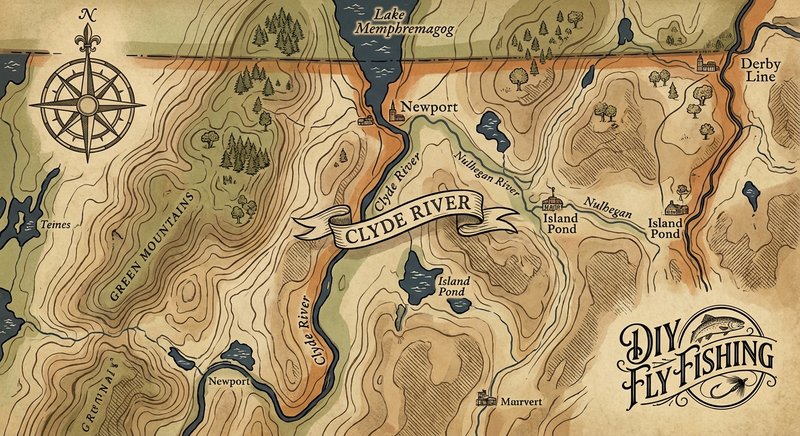
The Clyde River in Vermont’s Northeast Kingdom is a legendary waterway, steeped in New England fly fishing history. Flowing from Island Pond through several lakes before emptying into Lake Memphremagog at Newport, it offers a diverse range of water—from slow, meandering bog-like sections to rocky, quick-tumbling pocket water. While famous for its spring Landlocked Salmon run, it is the resident and "lake-run" Brook Trout that capture the hearts of wild-trout enthusiasts during the summer and fall.
🎣 Location Overview
The Clyde is unique because it is a "lake-connected" system. It flows through the Brighton Wetlands, Spectacle Pond, and Pensioner Pond. This connectivity allows for a mix of resident Brookies and larger fish that drop down from headwater ponds or move up from the deeper lakes when temperatures cool.
The river is characterized by its tea-colored (tannic) water, which provides excellent cover for trout but requires anglers to use flies with high visibility. The upper sections feel like a remote wilderness experience, surrounded by conifers and alders, while the lower sections near West Charleston and Salem offer more classic riffle-and-pool structures.
🐟 Target Species & Behavior
Brook Trout (Salvelinus fontinalis):
- Behavior: The Clyde’s Brookies are opportunistic but can be wary in the crystal-clear tailouts. During the summer, they hold in the "refrigerated" sections—near spring seeps or at the mouth of cold-water tributaries. In the fall, they become aggressive and territorial as they prepare for the spawn, moving into shallower, gravel-bottomed runs.
- Feeding: They focus heavily on aquatic macroinvertebrates (Stoneflies and Caddis) but are notorious for smashing terrestrial patterns (Ants and Beetles) dropped near the overhanging alder banks.
- Size: Resident fish average 6–10 inches, but "lake-run" fish moving up from the ponds in the fall can reach 14–16 inches and display spectacular spawning colors.
📅 Best Times to Fish
Summer (June – August)
- Window: Early morning and late evening are critical. Mid-day water temperatures can rise, so focus on the oxygenated water below riffles.
- Conditions: Look for "Trico" hatches in the early morning and heavy Caddis activity at dusk.
Fall (September – October)
- Window: This is the prime time for the Clyde. As water temperatures drop, fish become active throughout the day.
- Conditions: Overcast, drizzly days are best. This "gloomy" weather brings the larger Brookies out from under the undercut banks and log jams.
🪰 Recommended Flies & Techniques
Top Fly Patterns
- Dries:
- Royal Wulff (Size 12-16): The white wings are easy to track in tannic water.
- Elk Hair Caddis (Size 14-18): A staple for summer evenings.
- Black Ants & Foam Beetles (Size 14-16): Essential for summer "bank-slapping."
- Nymphs:
- Bead-head Prince Nymph (Size 12-16): The flash attracts fish in darker water.
- Pheasant Tail (Size 16-20): Mimics the prolific Mayfly population.
- Streamers:
- Black Ghost or Mickey Finn: Classic New England patterns that represent small baitfish or smelt.
- Woolly Bugger (Black or Olive, Size 8-10): The go-to for the larger fall Brookies.
Techniques
- The "Dapping" Method: In the tight, brush-choked upper sections, you often can't make a traditional backcast. Use a long rod to "dap" terrestrials under overhanging bushes.
- Short-Line Nymphing: The Clyde has many "pocket" sections. High-sticking through these pockets ensures a drag-free drift where Brookies wait behind boulders.
- Swing and Strip: In the fall, swing small streamers through the tails of pools. The aggressive strike of a Brookie in October is unmistakable.
💡 Pro Tips & Local Knowledge
- Focus on the "Wilderness" Stretch: The section between Island Pond and Spectacle Pond is rugged and less pressured. It requires some bushwhacking, but the reward is wild, uneducated fish.
- The "Five-Mile Square" Area: This stretch below West Charleston offers some of the best gravel runs for fall fishing.
- Tannic Vision: Because the water is dark, don't be afraid to use flies with a bit of "flash" (Krystal Flash or copper ribbing). The fish need to see the silhouette against the dark bottom.
- Cold Water Seeking: If the summer is particularly hot, look for the spots where small, unnamed mountain brooks enter the Clyde. The water there can be 5-10 degrees cooler, and Brookies will stack up in those plumes.
⚠️ Important Information
- Access: Much of the river is accessible via Route 105 and 111. There are several VFWD (Vermont Fish & Wildlife Department) parking areas. Always respect "Posted" signs, though many landowners allow access if you ask politely.
- Regulations:
- Check the Vermont Fish & Wildlife Law Digest annually.
- Note that certain sections may have different rules regarding Landlocked Salmon vs. Trout.
- Most of the Clyde is open to harvest, but Catch and Release is strongly encouraged to preserve the wild Brook Trout genetics of the Northeast Kingdom.
- Safety: The banks can be extremely muddy and slippery (the "Clyde Sludge"). Felt soles or studs are recommended, and a wading staff is a smart move in the swifter sections.
- Bear Country: This is remote Vermont. Be aware of your surroundings; black bears and moose are frequently sighted along the riverbanks.
Bug Hatches & Matching Flies
| Hatch | Type | Peak months | Time of day | Hook sizes | Matching flies |
|---|---|---|---|---|---|
| Hendrickson Ephemerella subvaria | mayfly | May | Afternoon | #12-14 | Red Quill #12-14, Hendrickson Emerger #14, Pheasant Tail #12-16 |
| Blue Winged Olive Baetis spp. | mayfly | May, September, October | Afternoon | #18-22 | RS2 #20-22, BWO Sparkle Dun #18-22, Barr's BWO Emerger #20 |
| Grannom Caddis Brachycentrus | caddis | May | Morning/Evening | #14-16 | Elk Hair Caddis (Black) #14-16, Holy Grail #14-16, Peacock Caddis Larva #14-16 |
| March Brown Maccaffertium vicarium | mayfly | June | Afternoon | #10-12 | March Brown Dry #10-12, Gold Ribbed Hare's Ear #10-12, March Brown Wet Fly #12 |
| Light Cahill Stenacron interpunctatum | mayfly | June, July | Evening | #14-16 | Light Cahill #14-16, Cream Usual #14-18 |
| Slate Drake Isonychia bicolor | mayfly | July, August, September | Afternoon/Evening | #10-12 | Prince Nymph #10-14, Isonychia Parachute #12, Zug Bug #10-12 |
| Cinnamon Sedge Hydropsyche | caddis | June, July, August | Evening | #14-18 | Tan Elk Hair Caddis #14-18, LaFontaine's Deep Sparkle Pupa #14-16 |
| Eastern Black Carpenter Ant Camponotus pennsylvanicus | terrestrial | July, August | Daytime | #12-16 | Chernobyl Ant #12-14, Black Foam Ant #14-16 |
| Alderfly Sialis hastata | other | June, July | Afternoon | #12-14 | Alder Fly #12, Black Wooly Bugger (small) #12 |