Deerfield River
Fly fishing in Vermont · Intermediate · Best seasons: Summer, Fall
Target Species
Brown Trout, Brook Trout
About This Water
Southern Vermont section above Somerset Reservoir. Wild brown and brook trout in remote waters.
Fishing Recommendations
The Deerfield River in Southern Vermont is one of the most reliable and scenic trout fisheries in the Northeast. While it eventually flows south into Massachusetts, the Vermont section offers a distinct, "mountain water" experience characterized by cold tailwater releases, rugged pocket water, and classic New England charm.
Here is your comprehensive guide to fly fishing the Vermont reaches of the Deerfield River.
🎣 Location Overview
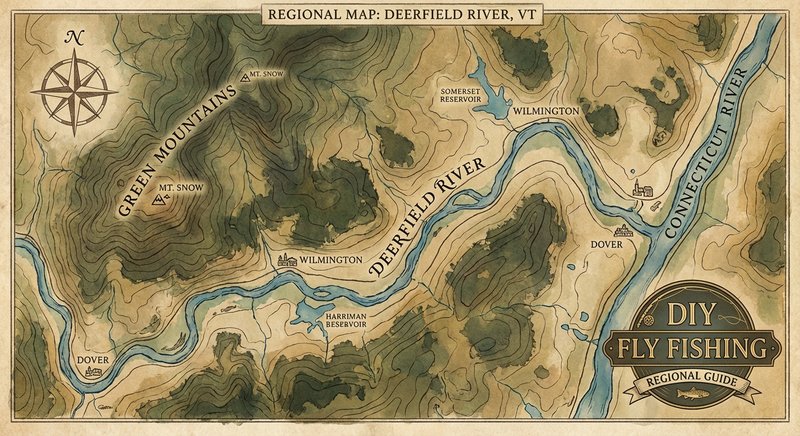
The Deerfield River begins in the Green Mountain National Forest near Stratton and flows through a series of reservoirs (Somerset, Searsburg, and Harriman). Because it is a bottom-release tailwater system, it stays significantly colder than other regional rivers during the heat of the summer, making it a sanctuary for trout.
The river is divided into several distinct sections:
- The Upper Deerfield (Somerset to Searsburg): A classic, high-gradient freestone-style run. It is remote, heavily forested, and full of pocket water.
- The Middle Section: Features larger boulders and deeper pools between the reservoirs.
- The Lower Vermont Section (Below Harriman/Whitingham): Transitioning into larger water as it heads toward the Massachusetts border.
Anglers love this water because it offers a "wild" feel. You aren’t fishing behind houses; you are fishing in the woods, often surrounded by moose, bear, and bald eagles.
🐟 Target Species & Behavior
Brown Trout
The Deerfield is famous for its hearty Brown Trout. In the Vermont sections, you will find a mix of wild and holdover fish.
- Behavior: Browns here love structure. Look for them in the "cushion" in front of large boulders, under undercut banks, and in the deep, dark slots of the gorge sections.
- Feeding: They are opportunistic but can be selective during a hatch. In the fall, they become highly aggressive and territorial.
Brook Trout
The "Jewel of the Green Mountains." While the main stem holds some large brookies, the tributaries and the section above Somerset Reservoir are prime territory for native Vermont Brook Trout.
- Behavior: They hold in the faster, highly oxygenated "bubble water" at the head of pools.
- Feeding: Generally less selective than browns; if you present a dry fly naturally in their lane, they will usually rise for it.
📅 Best Times to Fish
Summer (June – August)
While other rivers in Vermont (like the Battenkill or Otter Creek) may get too warm for safe trout handling, the Deerfield remains prime.
- Prime Window: Early morning (sunrise to 10:00 AM) and "the magic hour" before dark.
- Conditions: Focus on the tailwater releases. Cold water keeps the fish active even in July.
Fall (September – October)
This is arguably the best time for big Browns and stunning scenery.
- Prime Window: Mid-day (11:00 AM to 4:00 PM). As the water cools, the "hatch window" shifts to the warmest part of the day.
- Conditions: Pre-spawn behavior begins. Look for aggressive strikes on streamers as the leaves start to turn.
🪰 Recommended Flies & Techniques
Dry Flies (The Surface Game)
- Caddis: The Deerfield is a caddis factory. Carry Elk Hair Caddis (size 14–18) in Tan or Olive.
- Isonychia: In late summer and fall, "Isos" are a staple. A size 10–12 Iso Parachute is a must-have.
- Terrestrials: In August, don't overlook Ants and Beetles dropped tight to the banks.
Nymphs (The Bread & Butter)
- Perdigons & Euro Nymphs: Because of the fast pocket water, heavy, slim nymphs that sink quickly are most effective.
- Pheasant Tails: A classic for a reason. Size 16–20 works year-round.
- Pat’s Rubber Legs: Excellent for imitating the large stoneflies that live among the boulders.
Streamers (For the Big Browns)
- Woolly Buggers: Black or Olive with a bit of flash.
- Sculpin Patterns: The Muddler Minnow or Kelly Galloup’s Dungeon (in smaller sizes) work well in the deeper pools.
Technique Tip: Use a "Dry-Dropper" rig in the summer. A buoyant Stimulator on top with a small Pheasant Tail dropped 18 inches below is deadly in the pocket water.
💡 Pro Tips & Local Knowledge
- The "Release" Factor: The Deerfield is a working river. Power companies (Great River Hydro) release water for electricity. Always check the flow schedules. A sudden rise in water can be dangerous and will change the fishing from "dry fly" to "heavy streamer" instantly.
- Stealth Matters: In the clear summer water, these fish can be spooky. Avoid "lining" the fish (casting your fly line directly over their heads). Use longer leaders (9ft–12ft) and 5x or 6x fluorocarbon tippet.
- Studded Boots are Mandatory: The rocks in the Deerfield are notoriously "greasy" with algae and are often perfectly round and unstable. If you don't have studs, you will spend more time swimming than fishing.
- Focus on the "Pockets": Many anglers skip the fast, choppy water to get to the big, flat pools. In the summer, the fish are in the chop where the oxygen is high.
⚠️ Important Information
Access
- Upper Sections: Accessible via Somerset Road (a dirt road off Route 9). This is remote—ensure you have a full tank of gas and no expectation of cell service.
- Lower Sections: Access can be found along Route 8 and Route 100 near Whitingham and Readsboro.
Regulations
- License: A valid Vermont Fishing License is required.
- Standard Rules: Most of the VT section follows general state regulations, but always check the current Vermont Fish & Wildlife Law Digest for specific "Trophy Trout" or "Catch and Release" zones which can change year to year.
- Safety: If you hear a siren or notice the water becoming turbid or rising, exit the river immediately. This indicates a dam release.
Special Considerations
- Black Flies: In June and July, the bugs can be brutal. Bring heavy-duty repellent.
- Respect the Resource: This is a fragile ecosystem. Practice Catch and Release and keep the fish in the water as much as possible, especially during the warmer summer months.
Bug Hatches & Matching Flies
| Hatch | Type | Peak months | Time of day | Hook sizes | Matching flies |
|---|---|---|---|---|---|
| Blue Winged Olive Baetis / Pseudocloeon | mayfly | April, May, September, October | Mid-day/Afternoon | #18-22 | RS2 #20-22, BWO Parachute #18-22, Pheasant Tail Nymph #18-20 |
| Hendrickson Ephemerella subvariabilis | mayfly | May | Afternoon | #12-14 | Hendrickson Sparkle Dun #12-14, Red Quill #12-14, Hendrickson Wet Fly #12-14 |
| Sulphur Ephemerella invaria / dorothea | mayfly | June, July | Late Afternoon/Evening | #14-18 | Sulphur Parachute #14-18, Cdc Sulphur Emerger #16-18, Pheasant Tail #16-18 |
| March Brown Maccaffertium vicarium | mayfly | May, June | Mid-day | #10-12 | March Brown Emerger #10-12, Hare's Ear Nymph #10-12, Traditional March Brown #10-12 |
| Tan Caddis Hydropsyche | caddis | May, June, July, August | Evening | #14-18 | Elk Hair Caddis #14-18, LaFontaine's Deep Sparkle Pupa #14-16, Holy Grail #16-18 |
| Isonychia (Slate Drake) Isonychia bicolor | mayfly | August, September, October | Afternoon/Evening | #10-12 | Iso Parachute #10-12, Zug Bug #10-12, Prince Nymph #10-14 |
| Trico Tricorythodes | mayfly | July, August, September | Morning | #22-26 | Trico Spinner #22-26, Sunken Trico Spinner #22-24, Trico Parachute #22-24 |
| Yellow Sally Isoperla | stonefly | June, July | Afternoon/Evening | #14-16 | Yellow Stimulator #14-16, Little Yellow Stone Nymph #14-16, Yellow Sally Foam Run #14-16 |
| Zebra Midge Chironomidae | midge | January, February, March, April | All Day | #18-24 | Zebra Midge #18-22, Griffith's Gnat #18-22, Top Secret Midge #20-24 |