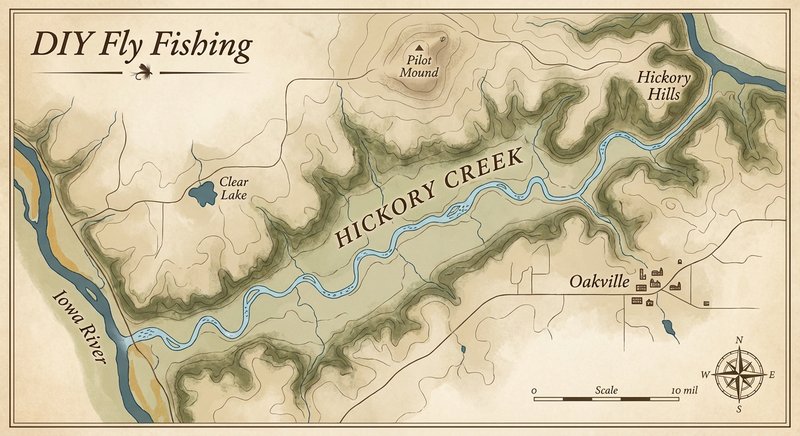
Hickory Creek
Fly fishing in Iowa · intermediate · Best seasons: spring, summer, fall
Target Species
Brown Trout, Brook Trout
About This Water
Allamakee County stream through state forest. Wild trout in primitive area.
Fishing Recommendations
Hickory Creek, located in Clayton County, Iowa, is one of the hidden gems of the Driftless Area. While many anglers flock to the more famous streams in Northeast Iowa like North Bear or Waterloo Creek, Hickory Creek offers a more intimate, rugged, and rewarding experience for those willing to do a bit of hiking. It is a classic spring-fed limestone stream that exemplifies the "big fish in small water" potential of Iowa’s trout country.
🎣 Location Overview
Hickory Creek is a tributary of the Yellow River. What makes it special is its transition from a meadow-style stream to a more forested, high-gradient environment. It benefits significantly from Cold Water Stream habitat improvement projects led by the Iowa DNR and Trout Unlimited.
The water is remarkably clear and stays cold year-round due to the numerous springs feeding it. The upper reaches are characterized by riffles, deep undercut banks, and limestone ledges. Anglers love Hickory because it feels "wilder" than many other Iowa streams; it requires a stealthy approach and precise casting, rewarding technical skill over brute force.
🐟 Target Species & Behavior
- Brown Trout (Primary): Hickory Creek is famous for its wild, self-sustaining population of Brown Trout. These fish are wary and highly attuned to their environment. They hold tightly against undercut banks and under fallen timber during the day.
- Brook Trout (Secondary): While Browns dominate the lower and middle stretches, you can find Brookies in the colder, spring-head sections. They are aggressive but easily spooked in the crystal-clear water.
Behavior: These fish are opportunistic but "educated." In the early morning and late evening, they move into the tailouts of pools to feed. During the heat of the day, they tuck deep into the shadows of the limestone bluffs or under the thick "lunker structures" (artificial wooden hides) installed by the DNR.
📅 Best Times to Fish
- Spring (April – June): This is the prime window. The aquatic insect life is at its peak. Look for the legendary Hendrickson and Blue-Winged Olive (BWO) hatches.
- Summer (July – August): This is "Terrestrial Season." While the water stays cold enough for the fish, the tall grasses along the banks are loaded with hoppers, crickets, and beetles.
- Fall (September – October): Pre-spawn activity makes the Brown Trout aggressive. This is your best chance to land a "wall-hanger" on a streamer. The fall foliage in Clayton County also makes for a stunning backdrop.
- Optimal Times: Early morning (dawn until 10:00 AM) and "the golden hour" (two hours before sunset). On cloudy, overcast days, the fishing can stay "hot" all day as the Brown Trout feel more comfortable venturing out of cover.
🪰 Recommended Flies & Techniques
Dry Flies
- Terrestrials: Dave’s Hopper (Size 10-14), Black Ants (Size 16-18), and Foam Beetles.
- Mayflies: Adams Parachute (Size 16-20), BWO Sparkle Dun (Size 18-22).
- Caddis: Elk Hair Caddis (Tan or Olive, Size 14-18) for the late afternoon riffle bites.
Nymphs (The Bread and Butter)
- Scuds: Olive or Pink Scuds (Size 14-18). Limestone streams are crawling with these crustaceans.
- Pheasant Tail: Beaded or non-beaded (Size 16-20).
- Zebra Midge: Black or Red (Size 18-22) – essential for winter or early spring.
Streamers
- Woolly Buggers: Black or Olive (Size 8-12).
- Muddler Minnows: Great for mimicking the sculpins that hide in the rocks.
Technique: Use a 4-weight or 3-weight rod (7.5 to 8.5 feet). The stream is narrow, so long casts are rarely needed; instead, focus on stealth and mending. A "Dry-Dropper" rig (a hopper with a scud suspended 18 inches below) is the most effective way to cover the water in Hickory Creek during the summer.
💡 Pro Tips & Local Knowledge
- Stay Low and Quiet: The fish in Hickory Creek can see you long before you see them. If the water is low and clear, kneel on the bank to keep a low profile.
- Fish the "Edges": Don't just cast into the middle of the pool. Most of the big Browns sit right against the mud banks or under the overhanging grass.
- The "Hickory Wiggle": When fishing streamers, don't just strip them. Let them tumble into the undercut banks and give them short, erratic twitches to mimic a wounded sculpin.
- Focus on the DNR Improvements: Look for the "Lunker Structures" (heavy wooden platforms buried under the bank). These are magnets for the largest trout in the creek.
⚠️ Important Information
- Access: Much of Hickory Creek is on private land, but there are significant Public Fishing Access areas managed by the Iowa DNR (look for the green "Public Fishing" signs). Always respect fences and stay within the stream corridor.
- Regulations:
- A valid Iowa Fishing License and a Trout Fee are required.
- Check current Iowa DNR regulations for any length limits or lure restrictions (some sections may be "Catch and Release only" or "Artificial Lures Only" depending on current management cycles).
- Gear: Waders are recommended, but in mid-summer, "wet wading" in quick-dry pants and wading boots is common. Beware of wild parsnip and stinging nettles along the banks—long pants are a must.
- Leave No Trace: This is a fragile ecosystem. Pack out what you pack in and handle fish with wet hands to protect their slime coating.
Bug Hatches & Matching Flies
| Hatch | Type | Peak months | Time of day | Hook sizes | Matching flies |
|---|---|---|---|---|---|
| Blue-Winged Olive Baetis | mayfly | April, May, September, October | Midday | #18-22 | RS2 #20-22, Parachute BWO #18-22, BWO Sparkle Dun #18-20 |
| Grannom Caddis Brachycentrus | caddis | April, May | Afternoon/Evening | #14-16 | LaFontaine's Deep Sparkle Pupa #14-16, Elk Hair Caddis (Dark) #14-16, Peacock Caddis #16 |
| Sulphur Ephemerella invaria | mayfly | May, June | Evening | #14-18 | Pheasant Tail #14-18, Sulphur Parachute #16-18, Sulphur Snowshoe Emerger #16 |
| Trico Tricorythodes | mayfly | July, August, September | Morning | #20-24 | Trico Spinner #20-24, Sunken Trico Spinner #20-22, Trico Parachute #20-22 |
| Scud Gammarus | crustacean | All Year | All Day | #12-18 | Ray Charles #14-18, Orange Scud #12-16, Pink Scud #14-18 |
| Light Cahill Stenacron | mayfly | June, July | Evening | #12-14 | Light Cahill Dry #12-14, Gold Ribbed Hare's Ear #12-14 |
| Zebra Midge Chironomidae | midge | January, February, March | Midday | #18-24 | Zebra Midge #18-22, Griffith's Gnat #18-22, Black Beauty #20-24 |
| Crane Fly Tipulidae | terrestrial | August, September | Afternoon | #10-14 | Daddy Long Legs #10-12, Crane Fly Larva #10-14 |
| Japanese Beetle Popillia japonica | terrestrial | July, August | Afternoon | #12-14 | Foam Beetle #12-14, Coffee's Sparkle Beetle #14 |