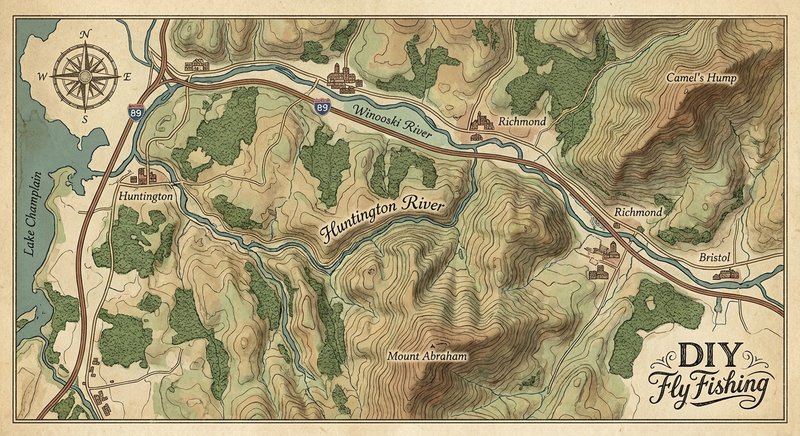
Huntington River
Fly fishing in Vermont · Intermediate · Best seasons: Spring, Summer, Fall
Target Species
Brook Trout, Brown Trout
About This Water
Green Mountain stream near Camel's Hump. Native brook trout in upper sections with browns below.
Fishing Recommendations
As an expert guide who has spent many seasons navigating the rocky pockets of the Green Mountains, I can tell you that the Huntington River is the quintessential Vermont freestone stream. It is a major tributary to the Winooski River, draining the western slopes of the Green Mountains near Camel’s Hump.
While it doesn't get the national press of the Battenkill, the Huntington is a favorite among locals for its rugged beauty, technical pocket water, and the chance to land a wild "Green Mountain Double"—a wild Brookie and a wild Brown in the same afternoon.
🎣 Location Overview
The Huntington River is a classic high-gradient freestone stream. It begins as a tumbling mountain brook in the Hanksville area and grows into a medium-sized river as it flows north through the towns of Huntington and Richmond before meeting the Winooski.
What makes this water special is its diversity of character. You’ll find everything from plunging waterfalls and deep "pot-hole" pools to long, glassy glides and classic boulder-strewn pocket water. It is a "bony" river, meaning it is full of rocks and cobble, requiring nimble wading and accurate casting. The scenery is spectacular, with much of the river shaded by hemlocks and maples, keeping the water cooler than many other Vermont lowland streams.
🐟 Target Species & Behavior
The Huntington is a tale of two river sections:
- Brook Trout (Salvelinus fontinalis): Found predominantly in the upper reaches (above Huntington village) and in the smaller plunge pools. These are mostly wild, vibrant fish. They are opportunistic and aggressive but spook easily in the crystal-clear water. They hold in the "cushion" in front of rocks and in the bubbly oxygenated water at the head of pools.
- Brown Trout (Salmo trutta): Dominant in the middle and lower sections. These fish are more calculated. Large wild browns (12–16 inches) hide in the deep undercut banks, beneath overhanging roots, or in the dark shadows of the river's larger boulders. During the day, they stay deep; at dusk, they move to the tail-outs of pools to feed.
📅 Best Times to Fish
- Spring (Late April – June): This is the prime window. Once the "snowmelt" (runoff) subsides in mid-May, the river comes alive. June is the pinnacle, featuring the best hatch activity and ideal water temperatures (55°F–62°F).
- Summer (July – August): The river can get low and clear. During heatwaves, the lower sections may become too warm for ethical trout fishing (above 68°F). Focus on the upper, shaded reaches or fish "The "Hoot Owl" hours—first light until 10:00 AM.
- Fall (September – October): A magical time. As temperatures drop, Brookies and Browns prepare for the spawn and become highly aggressive. The water is often very low, requiring long leaders and a stealthy approach. The scenery is world-class.
🪰 Recommended Flies & Techniques
The Huntington is a "buggy" river, but the fish aren't always picky about the specific species—they care more about presentation.
Top Fly Patterns
- Dry Flies: Elk Hair Caddis (Tan/Olive, #14-18), Stimulators (Orange or Yellow, #12-16) for Brookies, and the Ausable Wulff.
- Terrestrials (Summer/Fall): This is critical. Foam Ants (Black/Cinnamon, #16-18) and Cricket patterns are deadly along the grassy banks.
- Nymphs: Bead-head Pheasant Tails (#14-18), Prince Nymphs, and Pat's Rubber Legs (in the deeper runs).
- Streamers: Black or Olive Wooly Buggers (#8-10) worked through deep pools after a rain.
Techniques
- Dry-Dropper: This is the most effective way to fish the Huntington. Use a buoyant Stimulator or Chubby Chernobyl as your "indicator" and hang a small Pheasant Tail nymph 18-24 inches below it.
- The "Short Line" Nymphing: Because the river is so rocky, long drifts are rare. Use a tight-line or Euro-style approach to pick apart the "pockets" behind boulders.
- Stealth: Wear earthy colors. Because the water is clear, if you can see the fish, they have likely already seen you. Always approach a pool from downstream.
💡 Pro Tips & Local Knowledge
- The Gorge Factor: The Huntington Gorge is a famous (and dangerous) landmark. While beautiful, the water immediately around the Gorge is heavily trafficked by swimmers in the summer. For better fishing, head a mile upstream of the Gorge or further downstream toward the Richmond town line.
- The "Beane Road" Stretch: This area offers excellent public access and classic pocket water. It's a great place to spend a morning moving upstream.
- Look for Cold Water: In the heat of August, look for where small mountain "trickles" enter the main river. The trout will stack up in these cold-water plumes.
- Wading Safety: The Huntington is notorious for "greased bowling ball" rocks. Studded wading boots and a staff are highly recommended. The current is stronger than it looks in the narrow chutes.
⚠️ Important Information
- Access: Much of the Huntington flows through private land. Vermont has generous access laws, but always look for "Posted" signs. If a house is nearby, it’s always best to ask permission. The Audubon Center in Huntington offers some great accessible water.
- Regulations: Vermont state fishing regulations apply. The season generally runs from the second Saturday in April to October 31. Always check the VT Fish & Wildlife website for updated rules on "Catch and Release" sections or harvest limits.
- Leave No Trace: This is a fragile ecosystem. Pack out all tippet scraps and trash to keep Vermont's waters pristine.
Guide’s Final Word: The Huntington River rewards the "walker." Don't just fish the bridge pools. Put on your boots, hike a half-mile into the woods, and you’ll find wild trout that haven't seen a fly in weeks. Tight lines!
Bug Hatches & Matching Flies
| Hatch | Type | Peak months | Time of day | Hook sizes | Matching flies |
|---|---|---|---|---|---|
| Hendrickson Ephemerella subvaria | mayfly | May | Afternoon | #12-14 | Red Quill #12-14, Hendrickson Emerger #14, Pheasant Tail #12-14 |
| Blue Winged Olive Baetis | mayfly | April, May, September, October | Afternoon | #18-22 | BWO Parachute #18-22, RS2 #20, WD-40 #18-22 |
| Grannom Caddis Brachycentrus | caddis | May | Morning/Afternoon | #14-16 | Elk Hair Caddis (Dark) #14-16, LaFontaine's Deep Sparkle Pupa #14-16, Holy Grail #14-16 |
| March Brown Maccaffertium vicarium | mayfly | June | Afternoon/Evening | #10-12 | March Brown American #10-12, Hare's Ear Nymph #10-12, March Brown Wet Fly #12 |
| Light Cahill Stenacron / Stenonema | mayfly | June, July | Evening | #12-16 | Light Cahill #12-16, Cream Usual #14-16, Gold Ribbed Hare's Ear #14-16 |
| Slate Drake Isonychia bicolor | mayfly | July, August, September | Afternoon/Evening | #10-14 | Isonychia Parachute #12-14, Zug Bug #10-12, Prince Nymph #10-14 |
| Golden Stonefly Acroneuria | stonefly | June, July | Morning/Evening | #8-12 | Golden Stone #8-12, Pat's Rubber Leg #8-12, 20 Incher #10-12 |
| Cinnamon Caddis Hydropsyche | caddis | June, July, August | Evening | #16-18 | Tan Elk Hair Caddis #16-18, Caddis Larva (Tan/Green) #16, Iris Caddis #16-18 |
| Black Ants Formicidae | terrestrial | July, August, September | All Day | #16-22 | Black Foam Ant #16-20, Flying Ant #18, Fur Ant #16-22 |