Indian River
Fly fishing in New York · Beginner · Best seasons: Summer, Fall
Target Species
Brook Trout, Brown Trout
About This Water
Jefferson County stream with wild brook trout. Remote Adirondack foothills fishing.
Fishing Recommendations
The Indian River in the Adirondacks of New York is a gem of the North Country. While many anglers overlook it in favor of the nearby Ausable or Hudson, the Indian offers a unique "big water" experience in a wilderness setting. It is primarily known for its rugged character, boulder-filled pockets, and its role as a major tributary to the Upper Hudson River.
Here is your comprehensive guide to fly fishing the Indian River.
🎣 Location Overview
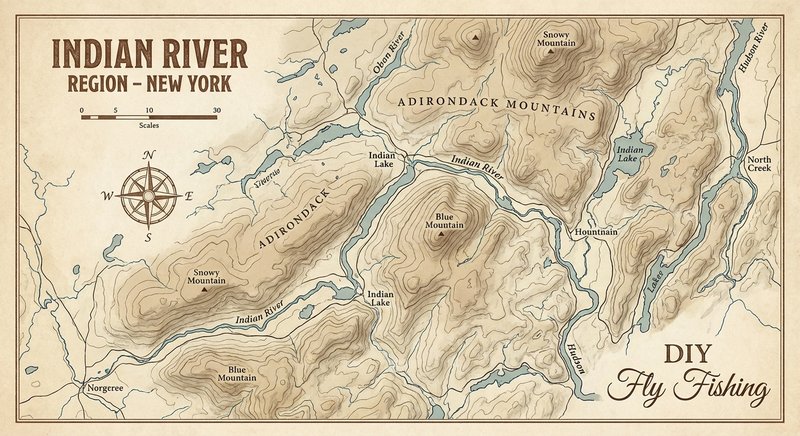
The Indian River is a classic Adirondack freestone river that drains Indian Lake and flows approximately 15 miles to its confluence with the Hudson River. What makes it special is its dual personality:
- The Tailwater Section: The first few miles below the Indian Lake Dam are influenced by water releases. This provides cooler water during the heat of summer and a consistent flow that supports healthy trout populations.
- The Wilderness Gorge: As it moves toward the Hudson, the river enters a remote, steep-walled gorge.
The water is characterized by dark, tannin-stained "tea" color, massive granite boulders, and deep, oxygenated plunge pools. Anglers love it because it offers a true backcountry experience where you are more likely to see a moose or a bald eagle than another fisherman.
🐟 Target Species & Behavior
Brook Trout (Native & Wild)
- Behavior: In the upper reaches and smaller tributaries, you’ll find wild Adirondack Brookies. They are opportunistic but wary.
- Holding Spots: They tucked behind "cushion" rocks, in the foam lines of plunge pools, and under overhanging undercut banks.
- Feeding: They focus heavily on terrestrial insects in the summer and small stoneflies in the fall.
Brown Trout (Stocked & Holdover)
- Behavior: The main stem holds some impressive Browns, including specimens that move up from the Hudson River. They are much more calculated than the Brookies.
- Holding Spots: Look for them in the "tail-outs" of long pools during the evening or deep in the shadows of the gorge during the day.
- Feeding: Large Browns here are piscivorous (fish-eaters). They target sculpins, dace, and even smaller trout.
📅 Best Times to Fish
Summer (June - August)
- The Window: This is the prime time for the "tailwater" section. While other Adirondack streams might get too warm, the bottom-release from Indian Lake keeps the upper miles fishable.
- Time of Day: Early morning (dawn until 10:00 AM) and "the magic hour" (the last 90 minutes of daylight).
- Conditions: Look for overcast days which bring the larger Browns out from under the boulders.
Fall (September - October)
- The Window: This is arguably the best time for trophy fish. As water temperatures drop, Brookies and Browns begin their pre-spawn movements.
- Time of Day: Mid-day becomes more productive as the sun warms the water slightly.
- Conditions: After a light rain, the river rises slightly and clears the leaves; this is the signal to swing large streamers for aggressive, colorful spawning-run fish.
🪰 Recommended Flies & Techniques
Dry Flies
- Patterns: Royal Wulff (size 12-14), Stimulator (Orange or Yellow, size 10-12), and Elk Hair Caddis.
- Summer Terrestrials: Black Ants and Foam Beetles are essential. In late summer, a Hopper dropped near the banks can be deadly.
Nymphs
- Patterns: Pheasant Tail (size 14-16), Hare’s Ear, and Stonefly Creepers (size 8-10).
- Technique: High-stick nymphing or "Euro" style is very effective here because of the complex currents around the boulders. You need heavy tungsten beads to get down into the deep pockets quickly.
Streamers (The Local Secret)
- Patterns: Black Woolly Buggers, Muddler Minnows, and Articulated Galloup-style streamers in olive or white.
- Technique: "Pound the banks." Cast tight to the structure and strip aggressively. In the fall, swing a streamer through the tail-outs of pools.
💡 Pro Tips & Local Knowledge
- Watch the Release: The Indian River is used for whitewater rafting releases (usually on Tuesdays, Thursdays, and weekends in the summer). These releases turn the river into a Class III+ torrent. Always check the release schedule before wading. Fishing is best on "off-release" days when the water is lower and wadeable.
- The "Shadow" Factor: Because the river sits in a deep valley/gorge, it loses direct sunlight earlier than the surrounding flats. Use this to your advantage—the "evening rise" often starts at 4:00 PM in the deep gorge sections.
- Dark Water, Bright Flies: Because of the tannin (tea-colored) water, flies with a bit of flash or high-visibility wings (like a Parachute Adams with a pink post) are much easier for both you and the fish to see.
- Stealth is Key: Despite the heavy water, these fish are spooked by shadows. Stay low and cast "upstream and across" to avoid lining the fish.
⚠️ Important Information
Access
- Chain Lakes Road: Provides access to the upper sections below the dam.
- Route 28: There are several pull-offs between the town of Indian Lake and North River.
- Hiking: To reach the best water, expect to hike. The confluence with the Hudson is a legendary spot but requires a significant trek or a raft/canoe trip.
Regulations & Permits
- A New York State Fishing License is required (available online or at local outfitters).
- Be sure to check the NY DEC Region 5 Regulations, as specific sections may have different size or creel limits. Many locals practice 100% catch and release to preserve the wild Brook Trout populations.
Safety
- Wading: The rocks in the Indian are notoriously slippery ("Adirondack Snot"). Felt soles (where legal) or studs are highly recommended. A wading staff is not optional here—it’s a necessity.
- Wildlife: This is bear country. Keep your lunch in a sealed container and be aware of your surroundings.
Guide’s Final Word: The Indian River rewards the physical angler. If you are willing to rock-hop and hike into the gorge on a non-release day in September, you will find some of the most beautiful, aggressive trout in the Northeast.
Bug Hatches & Matching Flies
| Hatch | Type | Peak months | Time of day | Hook sizes | Matching flies |
|---|---|---|---|---|---|
| Blue-Winged Olive Baetis spp. | mayfly | April, May, September, October | Mid-day/Afternoon | #18-22 | RS2 #20-22, Parachute BWO #18-20, Pheasant Tail Nymph #18-20 |
| Hendrickson Ephemerella subvaria | mayfly | May | Afternoon | #12-14 | Hendrickson Pink Lady #12-14, Red Quill #14, Hendrickson Emerger #12-14 |
| Grannom Caddis Brachycentrus spp. | caddis | April, May | All day | #14-16 | LaFontaine's Deep Pupa #14-16, Elk Hair Caddis (Dark) #14-16, Peacock Caddis #16 |
| March Brown Maccaffertium vicarium | mayfly | May, June | Morning/Afternoon | #10-12 | March Brown Dry #10-12, Gold Ribbed Hare's Ear #10-12, March Brown Wet #12 |
| Eastern Green Drake Ephemera guttulata | mayfly | June | Evening | #8-10 | Coffin Fly #8-10, Green Drake Cripple #8-10, Green Drake Nymph #8-10 |
| Light Cahill Stenacron interpunctatum | mayfly | June, July | Evening | #14-16 | Light Cahill Dry #14-16, Cream Usual #14-16, Light Cahill Wet #14 |
| Giant Golden Stonefly Hesperoperla pacifica | stonefly | June, July | Morning/Evening | #6-10 | Pats Rubber Legs #6-10, Golden Stone Dry #8-10, 20 Incher #8-12 |
| Cinnamon Caddis Hydropsyche spp. | caddis | June, July, August | Evening | #16-18 | Tan Elk Hair Caddis #16-18, Hydropsyche Larva #16, Z-Lon Midge/Caddis Emerger #16-18 |
| Black Ants & Beetles Formicidae / Coleoptera | terrestrial | July, August, September | Mid-day | #12-18 | Chernobyl Ant #10-14, Black Foam Beetle #14-18, Fur Ant #16-18 |