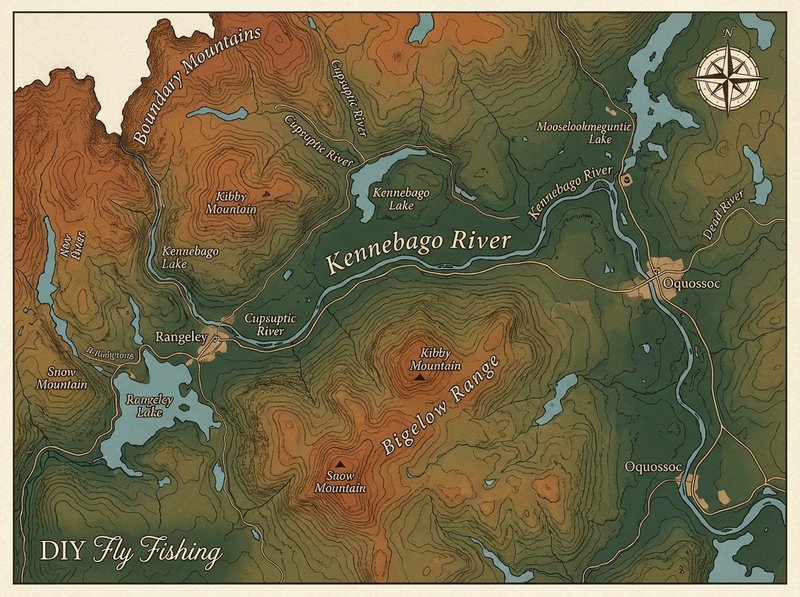
Kennebago River
Fly fishing in Maine · Intermediate · Best seasons: Summer, Fall
Target Species
Brook Trout
About This Water
Franklin County stream with wild brook trout. Fly fishing only special regulation.
Fishing Recommendations
The Kennebago River is widely considered the crown jewel of brook trout fishing in the Eastern United States. Located in the remote Rangeley Lakes region of Western Maine, this river is a "Fly Fishing Only" sanctuary that offers one of the last remaining opportunities to catch trophy-sized, wild, native Eastern Brook Trout in a riverine environment.
Here is your comprehensive guide to fishing the Kennebago.
🎣 Location Overview
The Kennebago is a legendary freestone river that flows through a gated, private forest (formerly owned by paper companies, now managed for conservation). What makes it special is its wildness. This isn't a stocked fishery; it is a self-sustaining ecosystem where the brook trout and landlocked salmon migrate from Mooselookmeguntic Lake up into the river to spawn or seek thermal refuge.
The water is remarkably clear and remains cooler than most Maine rivers due to the high elevation and heavy forest canopy. The river is divided into three distinct sections: the Upper Kennebago (above the lake), the Lower Kennebago (below the dam), and the Steep Bank area. Each offers a mix of classic pools, long runs, and oxygenated riffles.
🐟 Target Species & Behavior
- Eastern Brook Trout: These are the stars of the show. In the summer, you’ll find "resident" fish (6–10 inches), but the Kennebago is famous for its "runners"—massive lake-run brookies that can reach 18–20+ inches. They are opportunistic but can become extremely selective during hatches.
- Landlocked Salmon: While the prompt focuses on Brook Trout, you cannot fish the Kennebago without encountering Salmon. They behave like ghosts—moving quickly through the pools. They are aggressive hitters and acrobatic fighters.
- Behavior: During summer, fish hold in the deepest, coldest "holes" or right at the heads of pools where oxygen levels are highest. In the fall, they move into the shallower gravel runs to prepare for spawning, becoming more territorial and aggressive.
📅 Best Times to Fish
- Summer (July – August): This is the time for technical dry fly fishing. While water levels can get low, the Kennebago stays cooler than most rivers. Focus on early mornings and late evenings (the "magic hour").
- Fall (September – September 30th): This is the prime window. As the water cools and the days shorten, the big lake-run Brook Trout and Salmon move into the river in massive numbers. The fish take on their brilliant spawning colors—deep oranges and reds.
- Conditions: Overcast, drizzly days are often better than bright sunny days, as these wild fish are "spooky" and light-sensitive in the clear water.
🪰 Recommended Flies & Techniques
Dry Flies (Summer Focus)
- Humpy (Yellow or Royal): Excellent for the broken water at the head of pools.
- Hornberg: A Maine classic. Fish it as a dry fly, then let it sink and swing it like a streamer at the end of the drift.
- Elk Hair Caddis (#14-18): A staple for summer evenings.
- Blue Winged Olive (#18-22): Essential for cloudy days and late afternoon hatches.
Nymphs
- Pheasant Tail (#14-18): The gold standard here.
- Prince Nymph: Effective in the faster riffles.
- Copper John (Red or Black): Good for getting down deep in the pools.
Streamers (The "Big Fish" Secret)
- Grey Ghost or Black Ghost: These are traditional Maine patterns designed for these specific waters.
- Muddler Minnow: Mimics the sculpins and dace the big trout feed on.
- Wooly Bugger (Olive or Black): Never leave home without them, especially during higher fall flows.
Techniques
- The "Kennebago Twitch": When fishing a dry fly, give it a tiny, microscopic twitch to mimic an insect trying to take flight.
- Dead Drift to Swing: Cast a streamer upstream, let it dead-drift past the fish, then let it "swing" across the current. This often triggers an aggressive strike from a Salmon or a large Brookie.
💡 Pro Tips & Local Knowledge
- The Steep Bank: This is the most famous stretch of the river. It requires a bit of a hike, but the deep pools here hold the largest lake-run fish during the fall migration.
- Stealth is Key: Because the water is crystal clear, these fish can see you from a distance. Wear earthy tones (olive/brown), keep a low profile, and avoid splashing when wading.
- Long Leaders: Use 9-foot to 12-foot leaders, especially in the summer. If the fish are rising but ignoring your fly, drop down to 6x fluorocarbon tippet.
- Check the Logbook: If you stay at one of the local camps (like Bosebuck or Grant’s), check the fishing logbooks. These are gold mines of info on what has been hatching over the last 48 hours.
⚠️ Important Information
- Access: Much of the Kennebago is behind a gated road (Kennebago River Road). Access is generally restricted to those staying at the sporting camps (like Grant’s Kennebago Camps) or those who have a key. However, there is public access at the "Lower Bridge" and certain designated spots.
- Regulations: Fly Fishing Only (FFO). This is strictly enforced.
- Catch and Release: While regulations may allow for keeping fish in some Maine waters, catch and release is the culture on the Kennebago to preserve the wild genetics of these native trout.
- Permits: You need a valid Maine Freshwater Fishing License. You can purchase these online via the Maine Department of Inland Fisheries & Wildlife (IFW).
- Wildlife: This is moose and bear country. Keep your eyes open on the drive in and while hiking to the river.
Guide’s Final Word: The Kennebago is a place of tradition. Bring your favorite 4-weight or 5-weight rod, a box of classic Maine streamers, and a camera—the colors of a Kennebago Brookie in September are something you’ll want to remember forever.
Bug Hatches & Matching Flies
| Hatch | Type | Peak months | Time of day | Hook sizes | Matching flies |
|---|---|---|---|---|---|
| Blue-winged Olive Baetis spp. | mayfly | May, September, October | Late Morning/Afternoon | #18-22 | RS2 #18-22, BWO Sparkle Dun #18-20, Pheasant Tail Nymph #18-20 |
| Hendrickson Ephemerella subvaria | mayfly | May, June | Afternoon | #12-14 | Red Quill #12-14, Hendrickson Emerger #12-14, Gold Ribbed Hare's Ear #12-14 |
| Alderfly Sialis hastata | caddis | June, July | All Day | #10-12 | Alder Fly #10-12, Black Zebra Midge #18-20, Peacock Stimulator #12 |
| Green Drake Ephemera guttulata | mayfly | June | Evening | #8-10 | Green Drake Paradox #8-10, Coffin Fly #8-10, Green Drake Nymph #8-10 |
| Spotted Sedge Hydropsyche spp. | caddis | June, July, August | Evening | #14-16 | Elk Hair Caddis #14-16, LaFontaine's Deep Sparkle Pupa #14-16, Pulsating Caddis #14-16 |
| Quill Gordon Epeorus pluralis | mayfly | May | Mid-day | #12-14 | Quill Gordon #12-14, Iron Blue Dun #14, Dark Stonefly Nymph #12-14 |
| Golden Stonefly Acroneuria spp. | stonefly | June, July | Morning/Evening | #8-12 | Golden Stone Nymph #8-12, Rogue River Stone #10-12, Pat's Rubber Legs #8-12 |
| Light Cahill Stenacron interpunctatum | mayfly | July, August | Evening | #14-16 | Light Cahill #14-16, Cream Usual #14-16, Gold Ribbed Hare's Ear #14-16 |
| Flying Ants Formicidae | terrestrial | August, September | Afternoon | #16-22 | Black Foam Ant #16-20, Cinnamon Ant #18-22, Flying Ant #16-18 |