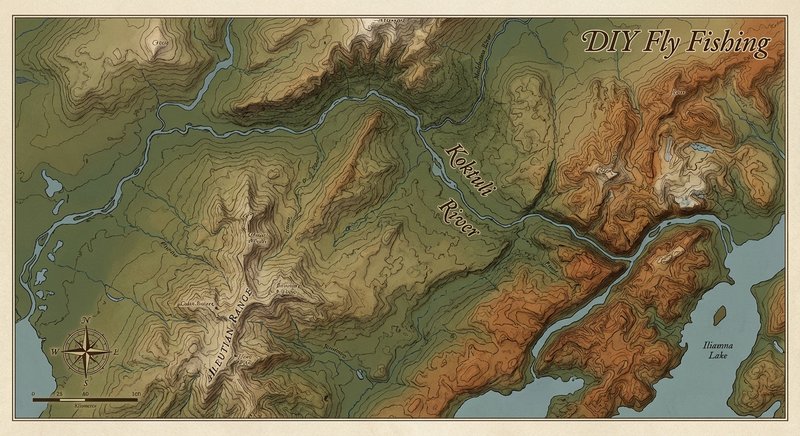
Koktuli River
Fly fishing in Alaska · Advanced · Best seasons: Summer, Fall
Target Species
Rainbow Trout, Sockeye Salmon, Arctic Grayling
About This Water
Remote Bristol Bay tributary with trophy rainbow trout. Pristine wilderness waters.
Fishing Recommendations
The Koktuli River is a remote, wild jewel of the Bristol Bay watershed. Flowing through the rolling tundra of Southwest Alaska, it is a primary tributary of the Stuyahok and Mulchatna Rivers. Known for its crystal-clear water, intimate size, and prolific runs of Pacific salmon, the Koktuli offers some of the finest "leopard" rainbow trout fishing in the world.
As an expert guide, here is your comprehensive breakdown for fishing the Koktuli.
🎣 Location Overview
The Koktuli is the epitome of Alaskan wilderness fishing. Unlike the massive, powerful rivers like the Kvichak or Naknek, the Koktuli is a mid-sized, wadable river characterized by gravel bars, tight braids, and sweeping oxbow bends.
What makes it special is its clarity. In normal conditions, it is "gin clear," allowing for incredible sight-fishing opportunities. The riverbed is primarily fine gravel and cobble, making it an ideal spawning ground for salmon, which in turn fuels the entire ecosystem. It is a classic "pool-and-riffle" river, manageable for both drift boats and rafts, but small enough that an angler can thoroughly pick apart a run on foot.
🐟 Target Species & Behavior
Rainbow Trout
These are the famous "Leopard" rainbows—heavily spotted, vibrant, and incredibly strong.
- Behavior: In early summer, they are predatory, feeding on out-migrating salmon fry and sculpins. By late summer, they become "bead-vacuuming" machines, positioning themselves directly behind spawning salmon to intercept stray eggs.
- Holding Water: Look for "drop-offs" behind active salmon redds (nests) and the deep, woody debris along the banks.
Sockeye Salmon
While the Koktuli has Kings, Chums, and Silvers, the Sockeye are a major draw.
- Behavior: Sockeye enter the river in massive pulses. They don't typically feed once they enter freshwater, but they are highly territorial and will "snap" at flies out of aggression.
- Holding Water: They prefer the "seams" of the main current and will stack in deep, slow-moving pools before moving onto the shallow gravel to spawn.
Arctic Grayling
The Koktuli holds world-class Grayling, often reaching 18–20 inches.
- Behavior: They are opportunistic and far less shy than trout. They will rise for dry flies even when there isn't a visible hatch.
- Holding Water: They love the "top" of the riffles and the back-eddies. If you see a bubble line, there is likely a Grayling under it.
📅 Best Times to Fish
Summer (Late June – July)
- The Draw: Dry fly fishing for Grayling and "mousing" for Rainbows.
- Conditions: Long daylight hours. Salmon begin to enter the system in July.
- Windows: Early July is prime for Sockeye being fresh and "bright."
Fall (August – September)
- The Draw: The "Egg Drop" and the Flesh bite. This is the peak for trophy Rainbows.
- Conditions: Cooler temps, shorter days, and often more rain.
- Windows: Late August to mid-September is the "Golden Window." This is when the salmon begin to die (creating "flesh") and the Rainbows are at their heaviest weight of the year.
🪰 Recommended Flies & Techniques
The "Egg" Game (Late July - Sept)
- Patterns: 6mm and 8mm plastic beads in "Peach Fuzz," "Mottled Orange," and "Dead Egg" colors.
- Technique: Nymphing under an indicator. You must "match the hatch" of the specific salmon species spawning at that moment.
- Pro Tip: Use a small amount of split shot to get the bead down to the "eye level" of the trout sitting behind the salmon.
Streamers & Flesh
- Patterns: Bunny Leeches (Black/Olive/White), Dolly Varden Llama, and "Articulated Flesh" patterns (pink/white/tan).
- Technique: The "Alaskan Swing." Cast across and down, allowing the fly to swing through the current. For flesh flies, a "dead drift" is often more effective than a swing.
Topwater (Mousing)
- Patterns: Mr. Hankey, Morrish Mouse.
- Technique: Cast tight to the overhanging grassy banks and "skitter" the mouse across the surface. It is the most violent strike you will ever experience in freshwater.
Dry Flies (Grayling)
- Patterns: Royal Wulff, Parachute Adams, Elk Hair Caddis (Size 12-16).
💡 Pro Tips & Local Knowledge
- Follow the Redds: If you find a patch of bright, clean gravel with Sockeye or Chum salmon on it, there will be big Rainbows behind them. Stay 20 feet back to avoid spooking the trout.
- The "Drop-Off" Secret: On the Koktuli, trout often hold in much shallower water than you’d expect when salmon are spawning. However, the biggest "hogs" sit in the dark water right where the gravel shelf drops off into a deep hole.
- Wading Safety: The gravel is relatively stable, but be wary of "quick-sand" silt in the slow oxbows. Always wear a wading belt.
- Bear Awareness: This is high-density Brown Bear country. They are there for the salmon. Always make noise, carry bear spray on your person (not in your pack), and never leave fish remains near your camp or boat.
⚠️ Important Information
Access
The Koktuli is remote. There are no roads. Access is via floatplane (usually DeHavilland Beavers or Otters) from Iliamna or Dillingham. Most anglers do this as a multi-day "float trip" (6-8 days) or stay at a high-end fly-out lodge.
Regulations & Permits
- License: You need a valid Alaska Sport Fishing License. If you are targeting King Salmon (seasonal), you need a King Stamp.
- Barbless Hooks: Most of this drainage is Catch and Release only for Rainbow Trout, and single barbless hooks are highly recommended (and often required—check the current ADF&G "Bristol Bay Sport Fishing" summary for the specific year).
- Land Ownership: Some areas surrounding the river are Alaska Native Corporation lands. If you plan to camp, ensure you have the proper land-use permits (e.g., from Bristol Bay Native Corp).
The "Pebble Mine" Context
The Koktuli is at the heart of the Pebble Mine controversy. It is a sensitive ecosystem. Practice strict Leave No Trace principles to preserve this pristine wilderness for future generations.
Bug Hatches & Matching Flies
| Hatch | Type | Peak months | Time of day | Hook sizes | Matching flies |
|---|---|---|---|---|---|
| Blue-Winged Olive Baetis spp. | mayfly | June, September | Afternoon | #16-20 | BWO Sparkle Dun #18-20, Pheasant Tail Nymph #16-20 |
| Giant Salmonfly Pteronarcys californica | stonefly | June, July | All Day | #4-8 | Chubby Chernobyl #6-8, Pat's Rubber Legs #4-8 |
| Spotted Sedge Hydropsyche | caddis | July, August | Evening | #12-16 | Elk Hair Caddis #14-16, LaFontaine's Deep Sparkle Pupa #14-16 |
| Yellow Sally Isoperla spp. | stonefly | July | Afternoon/Evening | #14-16 | Yellow Stimulator #14-16, Little Yellow Sloan #16 |
| March Brown Rhithrogena morrisoni | mayfly | June | Afternoon | #12-14 | March Brown Western Deceiver #12-14, Gold Ribbed Hare's Ear #12-14 |
| Chironomid Chironomidae | midge | June, July, August, September | All Day | #18-24 | Zebra Midge #18-22, Griffith's Gnat #20-22 |
| Black Fly Simuliidae | midge | July, August | All Day | #18-22 | Black Gnat #20, Beaded Black Larva #18-20 |
| Golden Stonefly Hesperoperla pacifica | stonefly | July | Morning/Evening | #8-12 | Golden Rogue Stone #8-10, 20-Incher Stone #8-12 |