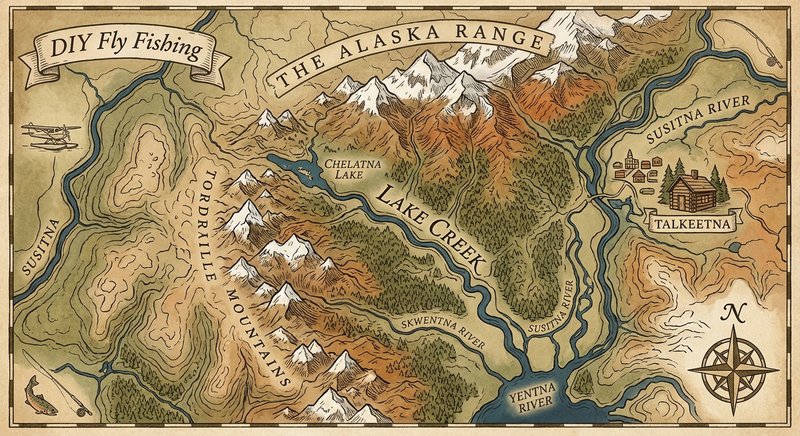
Lake Creek
Fly fishing in Alaska · Intermediate · Best seasons: Summer, Fall
Target Species
King Salmon, Rainbow Trout, Silver Salmon
About This Water
Yentna River tributary with five salmon species and rainbow trout. Popular fly-in destination.
Fishing Recommendations
Welcome to one of the crown jewels of the Susitna River drainage. As a guide, I consider Lake Creek to be the quintessential Alaskan fly-in experience. It flows out of Chelatna Lake and winds roughly 60 miles through the breathtaking scenery of the Matanuska-Susitna Valley before dumping into the Yentna River.
Here is your comprehensive guide to fishing Lake Creek.
🎣 Location Overview
Lake Creek is a classic "clearwater" tributary. Unlike the silty, glacial "milky" waters of the main Susitna or Yentna rivers, Lake Creek runs crystal clear most of the season. This clarity makes it a visual paradise for fly anglers; you can often sight-fish for massive Kings or watch a pod of Silvers chase your fly.
The river transitions from a rocky, fast-moving upper section near the lake to a meandering, braided lower section near the mouth. It is remote—accessible only by floatplane or a long jet boat run from Anchorage or Willow—which preserves its wild character. It’s famous for its "Grand Slam" potential (all five species of Pacific Salmon plus trophy trout).
🐟 Target Species & Behavior
King Salmon (Chinook)
The giants of the river. They enter the system in June. They are aggressive early in the run but become territorial as they settle into holding water.
- Holding: Deep pools, "tail-outs" of long runs, and behind large boulders.
- Behavior: They aren't feeding, but they strike out of aggression. You need to get your fly deep and right in their face.
Rainbow Trout
These are "leopard" rainbows—beautifully spotted and incredibly fat. They are opportunistic predators.
- Holding: In early summer, they are in the structure. Once the salmon begin to spawn (July/August), they move directly behind the salmon beds (redds) to gorge on eggs.
- Behavior: They are highly competitive. In the fall, they also target "flesh" (decaying salmon meat).
Silver Salmon (Coho)
The favorite of many fly anglers due to their acrobatic fights and willingness to take flies on the surface.
- Holding: Slack water, "froggy" sloughs, and the edges of the main current. They hate fast water and look for places to rest.
- Behavior: Highly aggressive. They will often chase a fly for 10 feet before smashing it.
📅 Best Times to Fish
- King Salmon: Mid-June through July 13th. (Note: The season for Kings usually closes by regulation on July 13th to protect spawners). Peak is typically the last week of June.
- Rainbow Trout: June through September.
- June: Great for streamers and mice.
- August/September: Peak "Egg and Flesh" season—this is when the biggest trout are caught.
- Silver Salmon: August through early September. The "Fresh" fish start pushing in early August. By late August, the river is teeming with them.
- Prime Conditions: Overcast days are superior, especially for Silvers, as they are less "light shy" and will stay active in shallower water.
🪰 Recommended Flies & Techniques
For King Salmon
- Patterns: Large Intruders (Pink/Orange or Blue/Black), Bunny Leeches, and the "Fat Fred."
- Technique: Use a 9 or 10-weight rod with a heavy sink tip (T-14 or T-17). Use a "Skagit" style cast, swinging the fly through deep runs. The key is a slow, deep swing.
For Silver Salmon
- Patterns: Pink Skykomish Sunrise, Dolly Varden (the fly), and the Pink Hare’s Ear. For topwater, use Pink Polliwogs.
- Technique: A 7 or 8-weight rod. If they are in sloughs, use a "strip-strip-pause" retrieve. In moving water, a traditional swing works wonders.
For Rainbow Trout
- Patterns:
- Early: Sculpin patterns and Mice (Mr. Hankey or Morrish Mouse).
- Late: 6mm and 8mm Beads (mottled orange, peach, or "dead egg" white) and Flesh Flies (white/ginger rabbit strips).
- Technique: High-stick nymphing or indicator fishing. When using beads, you must peg the bead 2 inches above the hook—this is the "Alaskan setup" that prevents deep hooking.
💡 Pro Tips & Local Knowledge
- The "Mouse" Factor: In June and early July, Lake Creek rainbows are exceptionally aggressive toward mice. Skating a mouse pattern across a woody cut-bank is the most exciting way to catch a 24-inch trout.
- The Mouth vs. The Canyon: The lower 2 miles (the Mouth) gets the most jet boat traffic. If you want solitude, fly into Chelatna Lake and raft down. The "Canyon" section has some of the best pocket water for trout you’ll ever see.
- Color Palette: In Alaska, if it ain't pink, it's probably not working for Silvers. For Kings, think "Dark Day, Dark Fly; Bright Day, Bright Fly."
- The "Egg Drop": When fishing behind spawning salmon for trout, stay 10-15 feet behind the salmon. Walking through the redds (spawning beds) destroys eggs and is considered poor etiquette.
⚠️ Important Information
Access
- Floatplane: Most anglers fly in from Lake Hood (Anchorage) or Willow.
- Jet Boat: Lodges at the mouth of the creek offer transport, but navigating the Yentna can be tricky for novices due to shifting sandbars.
Regulations & Permits
- License: You need a standard Alaska fishing license PLUS a King Salmon Stamp if you are targeting Kings.
- Emergency Orders: The Alaska Department of Fish & Game (ADF&G) often issues "Emergency Orders" (EOs) mid-season. They may change the bag limit or switch the river to "Catch and Release only" with very little notice. Always check the Northern Cook Inlet regulatory area updates before you fly.
Special Considerations
- Bears: This is high-density Brown Bear (Grizzly) and Black Bear country. Always carry bear spray or a firearm, keep a clean camp, and never fish alone.
- Gear: 100% waterproof waders and a high-quality rain jacket are non-negotiable. Even in "summer," Alaska can be 45 degrees and raining for three days straight.
Guide’s Final Word: Lake Creek is a power-hitter's river. Whether it's the thumb-burning run of a King or the savage strike of a leopard trout on a mouse, come prepared for a fight. Tight lines!
Bug Hatches & Matching Flies
| Hatch | Type | Peak months | Time of day | Hook sizes | Matching flies |
|---|---|---|---|---|---|
| Blue Winged Olive Baetis spp. | mayfly | May, June, September | Late Morning/Afternoon | #16-20 | RS2 #18-20, Parachute Adams #16-18, Pheasant Tail Nymph #16-20 |
| Giant Salmonfly Pteronarcys californica | stonefly | June, July | All Day | #4-8 | Rogue River Stone #4-6, Pat's Rubber Legs #6-8, Stimulator #8 |
| American Grannom Brachycentrus occidentalis | caddis | June | Afternoon/Evening | #14-16 | Peacock Caddis #14-16, Deep Sparkle Pupa #14-16, Elk Hair Caddis #14-16 |
| Yellow Sally Isoperla spp. | stonefly | July, August | Late Afternoon/Evening | #12-16 | Yellow Sally #14-16, Little Yellow Stone Nymph #14-16 |
| Pale Morning Dun Ephemerella inermis | mayfly | July | Late Morning/Afternoon | #14-18 | PMD Sparkle Dun #16, Mercer's Poxyback PMD #14-16 |
| Chironomid Chironomidae | midge | May, June, September | All Day | #18-24 | Zebra Midge #18-22, Griffith's Gnat #20-22 |
| Spotted Sedge Hydropsyche spp. | caddis | July, August | Evening | #12-16 | Godzilla Caddis #12, LaFontaine's Emergent Pupa #14-16 |
| Black Beetle Carabidae | terrestrial | July, August | Afternoon | #10-14 | Foam Beetle #12-14 |