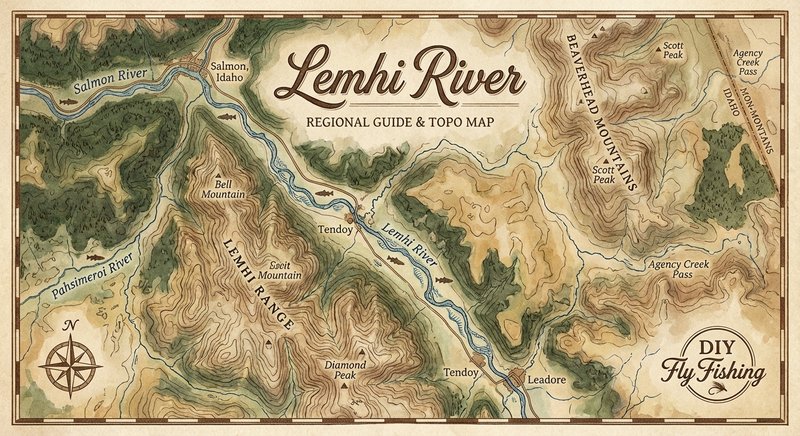
Lemhi River
Fly fishing in Idaho · Beginner · Best seasons: Summer, Fall
Target Species
Rainbow Trout, Cutthroat Trout
About This Water
Lewis and Clark route with wild rainbow and cutthroat. Historic fishing near Salmon.
Fishing Recommendations
The Lemhi River is one of Idaho’s true "hidden gems." Often overshadowed by its famous neighbors—the Salmon River to the west and the Big Lost to the south—the Lemhi is a high-desert spring-fed stream that meanders through a lush agricultural valley between the Lemhi and Beaverhead mountain ranges.
As your guide, I consider the Lemhi a technical but rewarding fishery. It is a "meandering meadow" stream characterized by undercut banks, tight bends, and dense willows. It’s not a river for long, hero casts; it’s a river for stealth, accuracy, and understanding "micro-water."
🎣 Location Overview
The Lemhi is a major tributary to the Salmon River, flowing roughly 60 miles from Leadore to Salmon, Idaho. What makes it special is its productivity. Because it is largely fed by springs and irrigation return flows, the water remains relatively stable and nutrient-rich compared to freestone rivers.
Anglers love the Lemhi because it offers a "private" feel. Much of it flows through private ranch land (which requires navigation knowledge), but the fish are wild, colorful, and surprisingly strong. The water is generally clear, requiring fine tippets and a cautious approach. It is classic "creek style" fishing on a slightly larger scale.
🐟 Target Species & Behavior
- Rainbow Trout: These are the primary residents. They are exceptionally hardy and favor the faster oxygenated water at the heads of pools and deep slots against undercut banks.
- Cutthroat Trout (Westslope): You will find beautiful Westslopes, particularly in the upper reaches. They are opportunistic but wary.
- Mountain Whitefish: Plentiful and often large; they hold in the deeper, slower buckets.
- Behavior: Fish here are "bank oriented." Because the river is narrow, trout spend their lives looking at the banks for terrestrial insects or hovering near the bottom in deep bends. They are easily spooked by shadows or heavy wading.
📅 Best Times to Fish
While the river is open year-round in many sections, the Summer and Fall windows are the gold standard.
- Summer (July – August): This is Terrestrial Season. As the surrounding hay fields are cut, grasshoppers, ants, and beetles are blown into the water. This provides some of the most exciting dry-fly fishing in Idaho.
- Fall (September – October): This is arguably the best time. The crowds (which are already small) disappear, the cottonwoods turn gold, and the fish become aggressive before winter. You’ll see excellent Blue Winged Olive (BWO) hatches.
- Time of Day: In summer, fish early (dawn to 11 AM) and late (6 PM to dusk) to avoid the midday heat. In the fall, the "sweet spot" is 11 AM to 4 PM when the water warms slightly.
🪰 Recommended Flies & Techniques
Top Fly Patterns
- Dries:
- Hopper Patterns: Pink or Tan Morrish Hoppers, Fat Alberts (Size 8-12).
- Mayflies: Parachute Adams, Purple Craze, and Sparkle Duns (Size 14-18).
- Terrestrials: Black Ants with a high-vis indicator wing, Foam Beetles.
- Nymphs:
- Classics: Bead-head Pheasant Tails, Hare’s Ear (Size 14-16).
- Attractors: Rainbow Warriors, Zebra Midges (Red or Black), and Pat’s Rubber Legs (for deeper holes).
- Streamers:
- Small Wooly Buggers (Olive or Brown) or Sparkle Minnows.
Effective Techniques
- Hopper-Dropper: This is the bread and butter of the Lemhi. Run a buoyant hopper on top and a weighted nymph (like a Pheasant Tail) 18-24 inches below it.
- Tight-Line Nymphing: In the deeper bends where the current is swift, a Euro-style or short-line nymphing rig is deadly.
- Stealth Drying: Look for rising fish in the "oil slicks" (flat water) behind boulders. Use a long leader (9-12 feet) tapered to 5X.
💡 Pro Tips & Local Knowledge
- Mind the Undercuts: The biggest fish in the Lemhi are almost always tucked under the bank. If your fly isn't within six inches of the grass, you’re out of the zone.
- The "Crawl": Because the banks are often high, trout can see your silhouette from a distance. Get low—sometimes even on your knees—before you make your cast.
- The Salmon Connection: The Lemhi is a vital spawning corridor for Chinook Salmon and Steelhead. While you cannot target these ESA-listed species, their presence in the fall means trout will often be keyed in on egg patterns behind spawning beds (redds). Note: Always stay off the gravel redds to protect the next generation of salmon.
- Wading: The bottom can be silty in spots and very slick in others. Use a wading staff.
⚠️ Important Information
- Access: This is the most critical part of fishing the Lemhi. Much of the river is flanked by private property. Idaho law allows you to fish private land if you stay within the ordinary high-water mark, but you must enter through public access points (bridges or BLM land).
- Navigation: The river is small and full of "sweepers" (fallen trees) and fences. Floating is extremely difficult and dangerous; the Lemhi is primarily a walk-and-wade fishery.
- Regulations: Check the current Idaho Fishing Planner before you go. Regulations regarding bait, barbless hooks, and harvest can change by section.
- Bears & Wildlife: You are in North Central Idaho. Carry bear spray, as both black bears and the occasional grizzly frequent the river bottoms.
Guide’s Final Word: The Lemhi reward patience over power. Slow down, observe the water for five minutes before casting, and enjoy the silence of one of Idaho's most beautiful valleys.
Bug Hatches & Matching Flies
| Hatch | Type | Peak months | Time of day | Hook sizes | Matching flies |
|---|---|---|---|---|---|
| Blue-Winged Olive Baetis | mayfly | March, April, September, October | Late Morning/Afternoon | #18-22 | Parachute Adams #18-22, RS2 #20-22, Pheasant Tail #18-20 |
| Salmonfly Pteronarcys californica | stonefly | June | All Day | #4-8 | Rogue River Stone #4-8, Pats Rubber Legs #4-8, Chubby Chernobyl #6-10 |
| Golden Stone Hesperoperla pacifica | stonefly | June, July | Morning/Evening | #8-12 | Golden Stimulator #8-12, 20 Incher Stone #10-12 |
| Pale Morning Dun Ephemerella excrucians | mayfly | June, July | Morning/Early Afternoon | #14-18 | PMD Sparkle Dun #16-18, Split Case PMD #16-18, Trigger Finger PMD #14-16 |
| Spotted Sedge Hydropsyche | caddis | June, July, August | Evening | #14-18 | Elk Hair Caddis #14-18, LaFontaine's Deep Sparkle Pupa #14-16, Iris Caddis #16-18 |
| Trico Tricorythodes | mayfly | August, September | Morning | #20-24 | Trico Spinner #22-24, Sunken Trico Spinner #22-24 |
| Grasshopper Acrididae | terrestrial | August, September | Mid-day/Afternoon | #8-12 | Morrish Hopper #10-12, Rainy's Grand Hopper #8-10 |
| Midge Chironomidae | midge | January, February, March, November | Late Morning | #18-24 | Zebra Midge #18-22, Griffith's Gnat #20-24, Palomino Midge #20-22 |