Little Lost River
Fly fishing in Idaho · Beginner · Best seasons: Summer, Fall
Target Species
Rainbow Trout
About This Water
Central Idaho stream with wild rainbow trout. Less pressured than nearby waters.
Fishing Recommendations
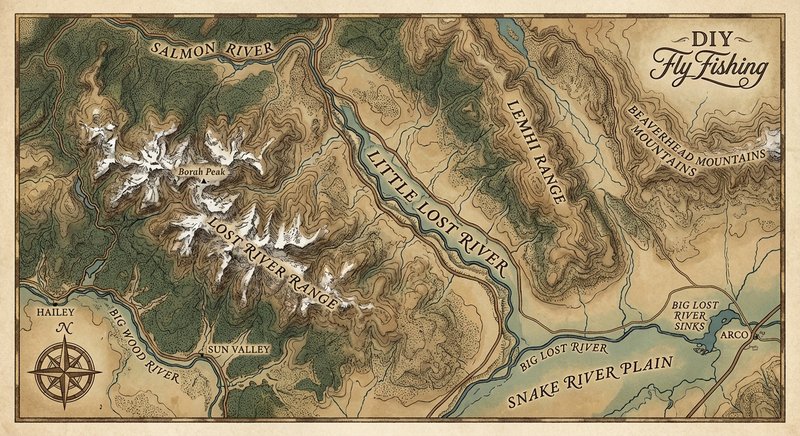
The Little Lost River is one of Idaho’s true "hidden gems." Tucked between the towering Lemhi and Lost River Ranges, this is a high-desert spring-fed system that eventually disappears into the desert floor (the "Sinks"). It offers a quintessential small-stream experience: wild fish, stunning scenery, and technical challenges that reward the observant angler.
🎣 Location Overview
The Little Lost River is a unique terminal drainage. Unlike most rivers that flow to the ocean, the Little Lost flows onto the lava plains of the Snake River Plain and vanishes underground.
The river is characterized by its relatively small size, crystal-clear water, and diverse structure. You’ll find everything from tight willow-lined banks and deep undercut bends to wide, shallow riffles. What makes it special is the solitude. While the Big Lost River across the mountains gets the glory, the Little Lost offers a rugged, "big sky" feel where you are more likely to see an antelope than another angler.
🐟 Target Species & Behavior
Rainbow Trout (The Main Attraction)
The rainbows here are wild and remarkably hardy. Due to the high-elevation desert environment, they have a short growing season and are often opportunistic feeders.
- Behavior: They are "water-column" feeders. In the summer, they are highly focused on terrestrials and active hatches. In the fall, they move into deeper holes to conserve energy.
- Where they hold: Look for the "prime real estate"—the heads of pools where oxygen is high, and tight against the undercut banks. Because the water is so clear, these fish are extremely spooky; if they see your shadow, the pool is "done" for an hour.
- Bull Trout: While the focus is Rainbows, the Little Lost is one of the few places you may encounter native Bull Trout (ESU protected). If you hook one, keep it in the water and release it immediately.
📅 Best Times to Fish
Summer (July – August)
- Conditions: The water has dropped after runoff, and the "Green Drake" and "Pale Morning Dun" hatches are in full swing.
- Time of Day: Early morning for tricos; mid-day to afternoon for terrestrials (grasshoppers).
Fall (September – October)
- Conditions: This is many guides' favorite time. The cottonwoods turn gold, the air is crisp, and the fish are aggressively feeding to bulk up for winter.
- Time of Day: 11:00 AM to 4:00 PM. As the water warms slightly, the Blue Winged Olives (BWO) start popping.
🪰 Recommended Flies & Techniques
Top Fly Patterns
- Dries:
- Chubby Chernobyl (Size 10-14) in tan or purple—acts as a great hopper and a high-vis float for a dropper.
- Parachute Adams (Size 14-20) – the ultimate "match everything" fly here.
- Purple Haze (Size 16-18) – remarkably effective in the Idaho high desert.
- Morrish Hopper (Size 10-12) – during August and September.
- Nymphs:
- Bead Head Pheasant Tail (Size 16-20).
- Zebra Midge (Size 18-22) in red or black.
- Pat’s Rubber Legs (Size 10-12) for the deeper holes.
- Streamers:
- Small Wooly Buggers (Size 8-12) in olive or black.
Techniques
- Dry-Dropper: This is the bread and butter of the Little Lost. Use a buoyant hopper or Chubby on top and hang a small Pheasant Tail 18–24 inches below it.
- Crouch and Cast: Because the banks are often low and the water clear, you must stay low. Knee pads are a legitimate piece of gear here.
- Upstream Presentation: Always fish upstream. Approaching from behind the fish is the only way to get close enough for a cast without spooking the pool.
💡 Pro Tips & Local Knowledge
- Focus on the Willows: Many anglers avoid the "bushy" spots because they are hard to cast in. This is a mistake. The biggest rainbows sit directly under the willow overhangs waiting for beetles and ants to drop. Learn the "bow-and-arrow" cast.
- The "Sinks" Area: As you move further downstream toward the desert, the water warms and the habitat changes. The upper reaches (near the Sawtooth National Forest boundary) generally offer cooler water and more consistent trout fishing during heat waves.
- Wind Management: The Little Lost valley is a wind tunnel. If the wind picks up, don't go home—switch to a heavier leader and fish streamers or large terrestrials tight to the banks.
⚠️ Important Information
- Access: Much of the river is flanked by BLM (Bureau of Land Management) or National Forest land, but there are significant private "islands" of ranch land. Always look for "Posted" signs. Use an app like OnX Maps to ensure you are on public ground.
- Regulations: Idaho Fish & Game regulations can change. Generally, the Little Lost has specific rules regarding bait and harvest to protect the native Bull Trout and the wild Rainbow population. Check the current IDFG seasons and rules before heading out.
- Safety: This is a remote area. Cell service is non-existent. Ensure you have a full tank of gas, a spare tire, and plenty of water. Watch for rattlesnakes in the lower rocky sections during the summer.
- Wading: The river is generally easy to wade, but the bottom can be "mucky" in the slower bends. Felt soles or studs are helpful but not strictly necessary.
Guide’s Final Word: The Little Lost isn't about catching a 25-inch trophy; it's about the beauty of a wild 14-inch Rainbow taking a dry fly in a place where you can't hear a single car. Bring a 4-weight rod, a box of hoppers, and your sense of adventure.
Bug Hatches & Matching Flies
| Hatch | Type | Peak months | Time of day | Hook sizes | Matching flies |
|---|---|---|---|---|---|
| Blue Winged Olive Baetis | mayfly | April, May, September, October | Late Morning/Afternoon | #18-22 | BWO Parachute #18-22, RS2 #20-22, Pheasant Tail #18-20 |
| Pale Morning Dun Ephemerella infrequens | mayfly | June, July | Morning/Early Afternoon | #16-18 | PMD Sparkle Dun #16-18, Quigley Cripple #16-18, Mercer's Poxyback PMD #16-18 |
| Trico Tricorythodes | mayfly | August, September | Early Morning | #20-24 | Trico Spinner #20-24, Sunken Trico #22-24 |
| Mother's Day Caddis Brachycentrus | caddis | May | Afternoon/Evening | #14-16 | Elk Hair Caddis #14-16, LaFontaine's Deep Sparkle Pupa #14-16 |
| Golden Stonefly Hesperoperla pacifica | stonefly | June, July | All Day/Evening | #8-12 | Chubby Chernobyl (Gold) #8-12, Pat's Rubber Leg #8-12 |
| Spotted Sedge Hydropsyche | caddis | July, August, September | Evening | #14-18 | X-Caddis #14-18, Peeking Caddis #14-16, Iris Caddis #16-18 |
| Grasshopper Acrididae | terrestrial | August, September | Midday/Afternoon | #8-12 | Morrish Hopper #10-12, Parachute Hopper #10-14 |
| Midge Chironomidae | midge | February, March, November | Late Morning | #20-24 | Griffith's Gnat #20-22, Zebra Midge #20-22, Trailing Shuck Midge #22-24 |