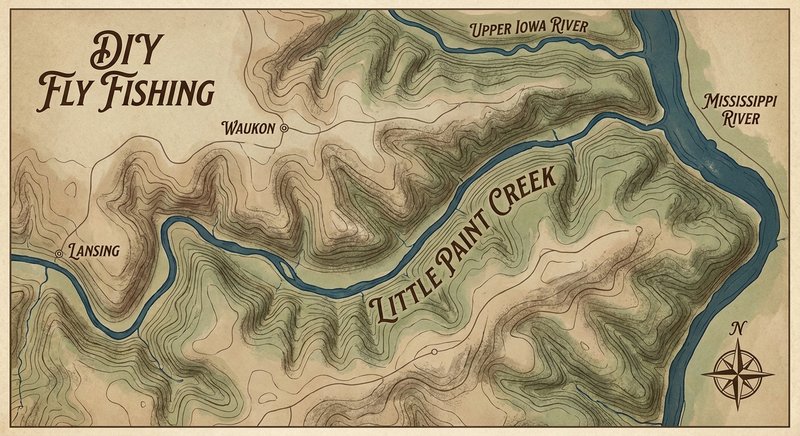
Little Paint Creek
Fly fishing in Iowa · intermediate · Best seasons: spring, summer, fall
Target Species
Brown Trout, Brook Trout
About This Water
Allamakee County tributary with wild trout. Small stream through state forest.
Fishing Recommendations
Welcome to the Yellow River State Forest, home to one of Iowa’s true hidden gems: Little Paint Creek. As a guide in the Driftless Area, I consider Little Paint one of the most scenic and rewarding technical streams in the Midwest. While its neighbor, Big Paint Creek, gets more foot traffic due to its size and accessibility, Little Paint offers a more intimate, "wild" experience.
Here is your comprehensive guide to fly fishing Little Paint Creek.
🎣 Location Overview
Little Paint Creek is located in Allamakee County within the Yellow River State Forest. Unlike many Iowa trout streams that meander through cow pastures, Little Paint is nestled in a deep, heavily timbered valley flanked by dramatic limestone bluffs.
The water is a classic limestone spring creek: cold, nutrient-rich, and remarkably clear. It is smaller and more brush-lined than Big Paint, creating a "small stream" feel that rewards stealthy anglers and accurate casters. The creek benefits from significant habitat improvement projects, including "Lunker Structures" (artificial undercut banks) that provide overhead cover for trophy-sized fish.
🐟 Target Species & Behavior
- Brook Trout: Little Paint is one of the premier streams in Iowa for Brookies. They are found primarily in the cooler, upper reaches. They are opportunistic but extremely "spooky." Look for them in the tail-outs of pools and near woody debris.
- Brown Trout: You’ll find both stocked and wild-reared Browns here. The Browns own the deeper holes and the dark shadows under the limestone ledges. They are notoriously wary; once they see your silhouette, the game is over for an hour.
- Feeding Habits: Because this is limestone water, the biomass is huge. Fish feed heavily on scuds (freshwater shrimp) and sowbugs year-round. During hatches, they transition to the surface, but a significant portion of their diet is subsurface.
📅 Best Times to Fish
- Spring (March – May): The "Golden Era." As the water warms, the Blue Winged Olives (BWO) and Hendricksons begin to pop. This is the best time for dry fly action.
- Summer (June – August): While other Iowa streams may warm up too much, the heavy forest canopy over Little Paint keeps the water temperatures stable. This is Terrestrial Season. Think ants, beetles, and crickets.
- Fall (September – November): The most beautiful time to be in the forest. Brown trout become aggressive and territorial ahead of the spawn. Streamer fishing can be electric during October.
- Prime Window: Early morning and the "magic hour" before dusk are best, especially in the heat of summer. On overcast, drizzly days, the fishing can stay hot all day long as the low light gives fish confidence to leave their overhead cover.
🪰 Recommended Flies & Techniques
Dry Flies
- Terrestrials: Foam Ants (size 16-18), Hippie Stompers, and Dave’s Hoppers (size 12).
- Mayflies: Adams (Parachute or traditional), BWO (size 18-22), and Elk Hair Caddis (size 14-16).
- Attractors: Royal Wulff or Stimulators for the faster, oxygenated riffles.
Nymphs
- Scuds & Sowbugs: This is the "bread and butter." Gray or Olive Scuds (size 14-18) are essential.
- Classics: Bead-head Pheasant Tails and Zebra Midges (black or red).
- The "Drop": A dry-dropper rig is highly effective here to avoid spooking fish with a heavy indicator.
Streamers
- Woolly Buggers: Black or Olive (size 8-10).
- Muddler Minnows: Great for imitating the sculpins that dart between rocks.
Presentation Tips
- The "Creeper" Approach: Stay low. If you can see the fish, they have likely already seen you. Knee pads are highly recommended for crawling into casting position.
- Short Casts: You rarely need to cast more than 20 feet. Accuracy and a drag-free drift are more important than distance.
💡 Pro Tips & Local Knowledge
- Walk Away from the Campgrounds: The sections of Little Paint near the campgrounds are stocked frequently and get pressured. If you want the wild Brookies and big Browns, hike a half-mile upstream or downstream away from the easy access points.
- Fish the "Lunker Structures": The DNR has installed wooden overhead cover along the banks. These look like simple boardwalks or reinforced banks. Drift your nymph as close to the edge of these structures as possible; the big Browns are tucked 2 feet under the bank.
- Watch for Stinging Nettles: In the summer, the banks are thick with stinging nettles and wild parsnip. Wear long pants even if it’s hot, or you’ll be itching for a week.
- The "Side-Arm" Cast: The overhanging branches are relentless. Practice your side-arm and roll casts before you arrive.
⚠️ Important Information
- Access: Little Paint Creek is largely contained within the Yellow River State Forest. It is public land, but always be mindful of boundary signs.
- Regulations:
- You must have a valid Iowa Fishing License and a Trout Fee.
- Special Regulation: Parts of the Yellow River State Forest streams have specific "Catch and Release" or "Artificial Lure Only" segments. Check the most recent Iowa DNR Trout Fishing Map/Regulations as these can change annually.
- Gear: A 3-weight or 4-weight rod (7.5 to 8.5 feet) is perfect. Anything longer will get tangled in the trees. Use 5X or 6X fluorocarbon tippet due to the extreme water clarity.
Guide’s Final Word: Little Paint is a "thinking man's" stream. Don't rush. Spend five minutes observing a pool before you make your first cast. The rewards for your patience will be some of the most vibrant Brookies in the Midwest. Tight lines!
Bug Hatches & Matching Flies
| Hatch | Type | Peak months | Time of day | Hook sizes | Matching flies |
|---|---|---|---|---|---|
| Blue-Winged Olive Baetis spp. | mayfly | March, April, September, October | Late Morning/Afternoon | #18-22 | RS2 #20-22, Parachute Adams #18-22, Pheasant Tail Nymph #18-20 |
| Grannom Caddis Brachycentrus spp. | caddis | April, May | Midday/Evening | #14-16 | Elk Hair Caddis (Dark) #14-16, Peacock Caddis #14-16, Deep Sparkle Pupa #14-16 |
| Sulphur Ephemerella invaria | mayfly | May, June | Evening | #14-16 | Sulphur Parachute #14-16, CDC Sulphur Emerger #16, Gold Ribbed Hare's Ear #14-16 |
| Trico Tricorythodes spp. | mayfly | July, August, September | Early Morning | #20-24 | Trico Spinner #20-24, Sunken Trico Spinner #22, Griffith's Gnat #20-22 |
| Cinnamon Caddis Hydropsyche spp. | caddis | June, July, August | Evening | #14-18 | Tan Elk Hair Caddis #16-18, LaFontaine's Emergent Sparkle Pupa #16, Frenchie #14-16 |
| Terrestrials Formicidae, Orthoptera | terrestrial | July, August, September | All Day | #12-18 | Black Foam Ant #16-18, Dave's Hopper #12-14, Hi-Vis Beetle #14-16 |
| Little Black Stonefly Allocapnia spp. | stonefly | February, March | Midday | #16-18 | Early Girl Stonefly #16-18, Black Zebra Midge #18-20, Prince Nymph #16-18 |
| Midges Chironomidae | midge | January, February, December | Midday | #20-26 | Zebra Midge #20-24, Morgan's Midge #22-24, Mercury Midge #20-22 |