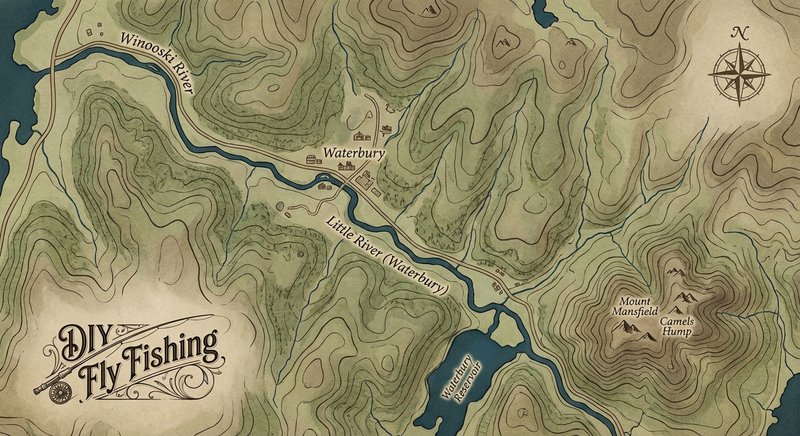
Little River (Waterbury)
Fly fishing in Vermont · Beginner · Best seasons: Spring, Summer, Fall
Target Species
Rainbow Trout, Brown Trout
About This Water
Below Waterbury Reservoir with consistent cold water releases. Good rainbow and brown trout throughout the season.
Fishing Recommendations
The Little River in Waterbury, Vermont, is a quintessential New England trout stream. While it may be smaller than its neighbor, the Winooski River, it offers some of the most consistent and scenic fly fishing in the Green Mountain State. It is essentially divided into two distinct personalities: the freestone mountain stream above the Waterbury Reservoir and the cold-water tailwater section below the dam.
🎣 Location Overview
The Little River is a gem of Central Vermont, flowing from the slopes of Mount Mansfield through Stowe and eventually into the Waterbury Reservoir. What makes this river special is the Waterbury Dam tailwater. Because the water is released from the bottom of the reservoir, the river below the dam remains cold and oxygenated even during the "dog days" of August when other Vermont rivers become too warm to fish safely.
The water characteristics vary from high-gradient pocket water and plunge pools in the upper reaches to classic riffle-run-pool sequences in the lower tailwater. Anglers love it for its accessibility, the stunning backdrop of the Worcester Range, and the ability to find rising fish even in mid-summer.
🐟 Target Species & Behavior
The Little River is home to both Wild and Stocked Rainbow Trout and Brown Trout.
- Rainbow Trout: Found predominantly in the faster "bubbly" water. They hold in the heads of pools and in the pocket water behind mid-stream boulders. They are opportunistic feeders and often the first to smash a dry fly.
- Brown Trout: The "kings" of the deeper, slower pools and undercut banks. In the tailwater section, large browns often hold in the shadows of overhanging trees or along the rip-rap near the dam. They are more nocturnal and cautious, often requiring a stealthy approach and precise nymphing.
- Bonus Species: In the spring and fall, you may occasionally encounter Landlocked Atlantic Salmon moving out of the Winooski River or down from the reservoir, though they are less common than the trout.
📅 Best Times to Fish
- Spring (Late April – June): This is prime time. Once the snowmelt (mud season) subsides in mid-May, the Hendrickson and Mother’s Day Caddis hatches provide world-class dry fly action.
- Summer (July – August): While many Vermont rivers shut down due to heat, the tailwater section below the dam stays productive. Focus on early mornings and late evenings when the Trico and light Cahill hatches occur.
- Fall (September – October): This is the best time for trophy Brown Trout. As temperatures drop, the fish become aggressive before the spawn. The foliage makes this the most scenic time to be on the water.
- Prime Windows: 7:00 AM – 10:00 AM for nymphing; 6:00 PM – Dusk for dry fly activity.
🪰 Recommended Flies & Techniques
Top Fly Patterns
- Dry Flies: Elk Hair Caddis (Tan/Olive #14-18), Adams Parachute (#12-16), Royal Wulff (#12-14) for pocket water, and Blue Winged Olives (BWO) (#18-22) for overcast days.
- Nymphs: Bead-head Pheasant Tail (#14-18), Gold-ribbed Hare’s Ear (#12-16), and Pat’s Rubber Legs (#8-12) for the high-water periods.
- Streamers: Woolly Bugger (Black or Olive #6-10) and Muddler Minnows. These are deadly in the deeper pools below the dam.
Effective Techniques
- Tight-Line Nymphing: The "pocket water" nature of the upper Little River is perfect for European-style nymphing or high-sticking. Keep as much fly line off the water as possible to avoid drag.
- The "Caddis Swing": During an evening hatch, casting a caddis imitation across and slightly downstream, allowing it to skate across the surface at the end of the drift, often triggers violent strikes.
- Dry-Dropper: A high-visibility Stimulator with a small Pheasant Tail nymph dropped 18 inches below is the "standard" rig for exploring the river's riffles.
💡 Pro Tips & Local Knowledge
- The Tailwater Secret: Access the river via the Little River Road off Route 100. Park near the hydro station. The first half-mile below the dam is cold all year. If the Winooski is too warm or blown out, the Little River tailwater is your "insurance policy."
- The Upper Reaches: For a more "wild" experience, head into Little River State Park. There are miles of blue-ribbon quality water that require a bit of hiking. The further you walk from the designated camping areas, the better the fishing gets.
- Watch the Flow: The tailwater section is subject to dam releases. If the water looks "milky" or is rising rapidly, move to the sections above the reservoir.
- Stealth is Key: In the summer low-water periods, the fish become very "spooky." Wear natural colors (greens/browns), stay low, and try to avoid splashing when wading.
⚠️ Important Information
- Access: Much of the river is within Little River State Park or accessible via public pull-offs on Little River Road. Respect "Private Property" signs near the confluence with the Winooski.
- Regulations: Vermont state fishing regulations apply. Ensure you have a valid Vermont Fishing License. As of the current season, the Little River follows "General Fishing Regulations" for trout (5 fish or 5lbs, no size limit), but many local anglers practice 100% Catch and Release to preserve the wild population.
- Safety: The rocks in the Little River are notoriously slippery. Felt-soled boots or studs are highly recommended. Always check the USGS gauge for "Little River near Waterbury" before heading out.
- Special Considerations: Be mindful of "Didymo" (rock snot). Always clean, drain, and dry your gear to prevent the spread of invasive species between Vermont waterways.
Bug Hatches & Matching Flies
| Hatch | Type | Peak months | Time of day | Hook sizes | Matching flies |
|---|---|---|---|---|---|
| Blue Winged Olive Baetis | mayfly | April, May, September, October | Midday | #18-24 | RS2 #20-22, BWO Parachute #18-22, Pheasant Tail #18-20 |
| Hendrickson Ephemerella subvaria | mayfly | May | Afternoon | #12-14 | Hendrickson Sparkle Dun #12-14, Red Quill #14, Hare's Ear #12-14 |
| Grannom Caddis Brachycentrus | caddis | May | All day | #14-16 | Elk Hair Caddis (Green body) #14-16, Pupa-Peep #14-16, LaFontaine's Deep Pupa #14-16 |
| Sulphur Ephemerella dorothea | mayfly | June, July | Evening | #16-18 | Sulphur Parachute #16-18, Comparadun #16-18, Sulphur Soft Hackle #16-18 |
| Tan Caddis Hydropsyche | caddis | June, July, August | Late Afternoon/Evening | #14-18 | X-Caddis #14-18, Z-Lon Caddis #14-16, Holy Grail #14-16 |
| Isonychia (Slate Drake) Isonychia bicolor | mayfly | July, August, September | Late Afternoon | #10-12 | Iso Parachute #10-12, Prince Nymph #10-12, Zug Bug #10-12 |
| Trico Tricorythodes | mayfly | July, August, September | Early Morning | #22-26 | Trico Spinner #22-26, Trico Dun #22-24 |
| Golden Stonefly Hesperoperla pacifica | stonefly | June, July | All day | #8-12 | Golden Stone Nymph #8-12, Stimulator (Yellow) #10-12, Pat's Rubber Leg #8-12 |