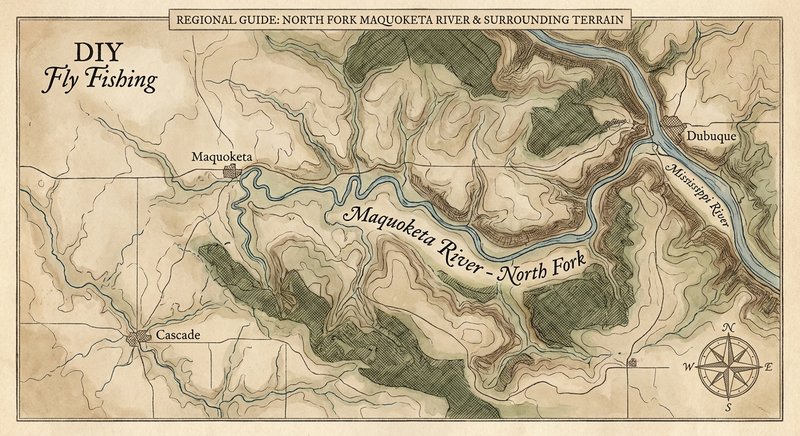
Maquoketa River - North Fork
Fly fishing in Iowa · beginner · Best seasons: spring, summer, fall
Target Species
Rainbow Trout, Brown Trout
About This Water
Delaware County stream with stocked and wild trout. Good public access points.
Fishing Recommendations
Welcome to the Driftless Area of Iowa. While many anglers head to Northeast Iowa for the famous Decorah streams, the North Fork of the Maquoketa River—specifically the section near Backbone State Park—is a true gem of the Hawkeye State. This is one of Iowa’s premier "Put-and-Grow" and "Put-and-Take" fisheries, offering a unique blend of rugged limestone bluffs and classic spring-fed water.
Here is your comprehensive guide to fly fishing the North Fork of the Maquoketa.
🎣 Location Overview
The North Fork of the Maquoketa, particularly within and around Backbone State Rock, is characterized by its dramatic limestone cliffs and cold, spring-fed tributaries. Unlike the muddy, slow-moving rivers often associated with the Midwest, this stretch features clear water, rocky riffles, deep undercut banks, and cool temperatures maintained by Richmond Springs.
What makes it special is the accessibility combined with the scenery. You are fishing at the foot of Iowa’s oldest state park. The water is narrow and intimate, requiring stealthy approaches and accurate casting, making it a favorite for those who enjoy "technical" small-stream trout fishing.
🐟 Target Species & Behavior
The Iowa DNR heavily manages this area to ensure a high-quality experience.
- Rainbow Trout: These are frequently stocked and are very active. They tend to hold in the faster water at the heads of pools or in the main current seams. They are aggressive and often the first to rise to a dry fly.
- Brown Trout: The North Fork holds some surprisingly large, wary Brown Trout. These fish are more secretive, often holding under the limestone ledges, fallen timber, or deep undercut banks. Unlike the Rainbows, Browns here are more nocturnal and predatory, often requiring a well-placed streamer to coax out.
- Behavior: During the day, fish are opportunistic feeders on midges, scuds, and sowbugs. During hatches (especially in May and June), they will move into the shallow tail-outs to sip duns.
📅 Best Times to Fish
Optimal Seasons
- Spring (April – June): This is the prime window. The water is high but clear, and the insect life is peaking. This is when you'll see the best dry fly action.
- Fall (September – November): The Brown Trout become more aggressive as they prepare for the spawn. The crowds thin out, and the fall foliage against the limestone cliffs is spectacular.
- Summer (July – August): Fishing remains viable due to the cold spring water, but it is best to stick to early mornings or late evenings to avoid the midday heat and the recreational crowds in the park.
Best Times of Day
- Early Morning: Best for nymphing before the sun hits the water.
- Late Evening: The "Magic Hour" is real here; caddis swarms often occur just before dark.
🪰 Recommended Flies & Techniques
Top Fly Patterns
- Nymphs:
- The Zebra Midge (Size 18-22): A staple year-round.
- Ray Charles or Scud (Size 14-18): Pink or grey. The Maquoketa is rich in crustaceans.
- Pheasant Tail (Size 14-18): A classic for a reason; mimics the local Baetis.
- Dry Flies:
- Elk Hair Caddis (Size 14-16): Perfect for the riffles.
- Adams (Size 16-20): Great for general hatches.
- Trico / BWO: For technical morning hatches.
- Streamers:
- Woolly Bugger (Black or Olive): Drag these through deep pools for big Browns.
Techniques
- Euro Nymphing / Tight-Line: This is incredibly effective here due to the varied current speeds and deep pockets.
- Dry-Dropper: A high-visibility foam hopper or terrestrial with a small midge dropped 18 inches below is the "go-to" setup for summer afternoons.
- Stealth: The water is clear. Use 5X or 6X fluorocarbon tippet and avoid wearing bright colors.
💡 Pro Tips & Local Knowledge
- Focus on Richmond Springs: The area directly below the spring outflow stays cold year-round. If the main river feels too warm in mid-July, head to the spring head.
- The "Backbone" Structure: Use the limestone formations to your advantage. Fish often tuck right against the rock walls where the current has carved out deep troughs.
- Avoid the Crowds: Backbone State Park is popular with hikers and picnickers. To find the best fishing, hike away from the main parking lots and picnic shelters. The further you walk, the less pressured the fish are.
- Terrestrials: In late summer, don't ignore the banks. Ant and beetle patterns dropped right against the grass can trigger explosive strikes from fish that are tired of seeing standard nymphs.
⚠️ Important Information
- Access: Most fishing occurs within Backbone State Park near Dundee, Iowa. There are several parking areas along the main park road with well-marked trails to the river.
- Regulations:
- An Iowa Fishing License AND a Trout Fee are required.
- Check current Iowa DNR regulations regarding "catch and release" sections vs. "harvest" sections, as these can change periodically.
- Wading: The North Fork is generally easy to wade, but the limestone can be slick. Felt soles or studs are highly recommended.
- Conservation: Practice "Keepemwet" principles. These spring-fed ecosystems are fragile; handle fish with care, especially during the warmer summer months.
Guide's Final Word: The North Fork of the Maquoketa is Iowa’s best-kept secret for those who want a "mountain stream" feel in the heart of the Midwest. Tight lines!
Bug Hatches & Matching Flies
| Hatch | Type | Peak months | Time of day | Hook sizes | Matching flies |
|---|---|---|---|---|---|
| Blue-Winged Olive (BWO) Baetis / Pseudocloeon | mayfly | April, May, September, October | Midday | #18-22 | RS2 #18-22, Parachute BWO #18-22, Pheasant Tail #18-22 |
| Grannom Caddis Brachycentrus | caddis | April, May | Afternoon/Evening | #14-16 | Peacock Caddis #14-16, Deep Sparkle Pupa #14-16, Elk Hair Caddis (Dark) #14-16 |
| Sulfur / Pale Evening Dun Ephemerella invaria/dorothea | mayfly | May, June | Late Afternoon/Evening | #14-18 | Sulfur Parachute #16-18, Sulfur Cripple #14-16, Hare's Ear Nymph #14-16 |
| Tan Caddis Hydropsyche | caddis | June, July, August | Evening | #14-18 | Elk Hair Caddis (Tan) #14-18, LaFontaine's Emergent Pupa #16-18, Soft Hackle Hare's Ear #14-16 |
| Trico Tricorythodes | mayfly | July, August, September | Early Morning | #20-24 | Trico Spinner #20-24, Zebra Midge #20-22, Trico Dun #20-22 |
| Light Cahill Stenonema / Stenacron | mayfly | June, July | Evening/Night | #12-14 | Light Cahill #12-14, Gold Ribbed Hare's Ear #12-14, Cream Usual #14 |
| Terrestrials (Hoppers/Ants) Orthoptera / Formicidae | terrestrial | July, August, September | Midday | #10-18 | Dave's Hopper #10-14, Black Foam Ant #14-18, Beetle (Foam) #12-16 |
| Midges Chironomidae | midge | January, February, March, December | Midday | #18-24 | Griffith's Gnat #18-22, Zebra Midge (Red/Black) #18-24, Mercury Midge #20-22 |