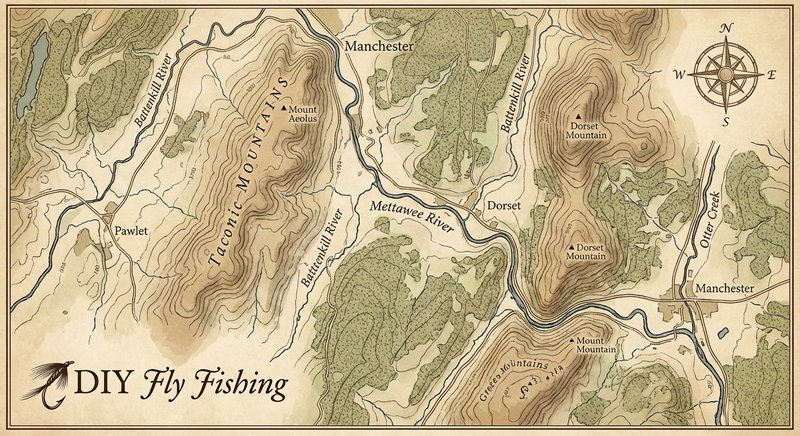
Mettawee River
Fly fishing in Vermont · Intermediate · Best seasons: Spring, Summer, Fall
Target Species
Brown Trout, Brook Trout
About This Water
Southern Vermont stream flowing to the Battenkill. Good brown and brook trout in less pressured waters.
Fishing Recommendations
The Mettawee River in Southwestern Vermont is one of the state’s best-kept secrets. Flowing through the picturesque Taconic Mountains and the fertile valley of Dorset and Pawlet, it offers a unique experience that differs from the classic "mountain freestone" streams of the Green Mountains.
As your guide, here is the comprehensive breakdown of how to fish the Mettawee.
🎣 Location Overview
The Mettawee is a fascinating river because of its limestone influence. While most Vermont rivers are acidic and freestone, the Mettawee flows through marble and limestone deposits. This creates a higher pH level, which translates to incredible bug life and faster fish growth.
The river is characterized by its crystal-clear water, winding S-curves through hay fields, and a mix of deep "blue holes," technical riffles, and classic undercut banks. It feels like a mix between a Montana meadow stream and a classic New England creek. It is intimate, beautiful, and requires a "stalker’s" mentality.
🐟 Target Species & Behavior
- Brown Trout: The stars of the show. The Mettawee is famous for its wild, buttery-yellow Brown Trout. They are notoriously spooky. They hold tight to undercut banks, submerged logs, and the deep "pockets" carved into the slate bedrock.
- Brook Trout: Found more predominantly in the upper reaches (Dorset area) and the colder tributaries. They are opportunistic but smaller than the Browns.
- Behavior: Because the water is exceptionally clear, these fish are "upward-looking." They are very sensitive to overhead movement and heavy wading. If you can see them, they have likely already seen you.
📅 Best Times to Fish
- Spring (Late April – June): This is the prime window. Once the spring runoff subsides (usually mid-May), the hatches are prolific.
- Summer (July – August): Unlike many Vermont rivers that get too warm to fish, the Mettawee’s spring-fed nature keeps certain stretches cooler. However, you should still carry a thermometer. Stick to early mornings (dawn until 10:00 AM) and "the magic hour" before dark.
- Fall (September – October): A fantastic time for trophy Browns. As they prepare to spawn, they become aggressive. The foliage backdrop in the Pawlet valley is world-class.
- Optimal Conditions: Overcast, drizzly days are best for the Mettawee. The low light masks your presence and brings the larger Browns out from under the banks.
🪰 Recommended Flies & Techniques
Top Fly Patterns
- Dry Flies:
- Hendrickson (Size 12-14): Late May.
- Sulfurs (Size 16-18): June evenings. This is the river's most famous hatch.
- Tricos (Size 20-24): Late summer mornings.
- Terrestrials: Fat Albert, Dave’s Hopper, and Black Ants (Size 14-18) in the meadow stretches.
- Nymphs:
- The Scud: Because of the limestone, the Mettawee has a high population of scuds. A size 14-16 olive or tan scud is a year-round producer.
- Pheasant Tail & Walt’s Worm: Classic Vermont patterns that mimic the various mayflies and caddis.
- Streamers:
- Black or Olive Wooly Buggers: Swing these through deep pools during high water or at dusk.
Effective Techniques
- Dry-Dropper: This is the most effective way to cover the Mettawee’s riffles. Use a buoyant hopper or foam caddis with a small unweighted nymph (like a Pheasant Tail) 18 inches below it.
- Stealth Nymphing: If you are nymphing deep holes, use a long, light leader (9–12 feet) to avoid spooking fish with your fly line.
- The "Crawl": In the meadow sections, stay low. Sometimes you literally need to fish from your knees to avoid being silhouetted against the sky.
💡 Pro Tips & Local Knowledge
- The Limestone Advantage: Because of the water chemistry, the fish here are often more "educated" than those in the high-mountain streams. Use 5X or 6X fluorocarbon tippet; 4X is usually too thick for these wary Browns.
- Focus on the "Tail-outs": In the evening, big Browns move from the deep heads of pools to the shallow tail-outs to feed on emerging insects. Don't wade right into the bottom of a pool without scanning it first.
- The Pawlet "S-Turns": The water around the town of Pawlet is classic meadow water. It looks slow, but the undercut banks are deep. Fish your fly inches from the grass edge.
- Wading Caution: The Mettawee has many sections of smooth, tilted slate bedrock. It is incredibly slippery. Felt soles or studs are highly recommended.
⚠️ Important Information
- Access: Much of the Mettawee flows through private farmland. However, Vermont has an excellent relationship between landowners and the Fish & Wildlife department. Look for the "Fishing Access" signs or the yellow VFWD placards.
- Note: Always close gates if you pass through a cow pasture and never trample standing hay.
- Regulations: Most of the Mettawee is under general Vermont trout regulations (open second Saturday in April to Oct 31), but always check the current Vermont Fishing Guide as rules on "Catch and Release" sections can change.
- NY State Line: The Mettawee flows into New York. If you cross the state line (near Granville), you must have a New York fishing license. The regulations change significantly once you enter NY.
Guide’s Final Word: The Mettawee rewards the patient angler. If you rush, you'll see a lot of "V-wakes" as fish flee. If you move slowly and watch the water, you'll discover one of the finest wild trout fisheries in the Northeast.
Bug Hatches & Matching Flies
| Hatch | Type | Peak months | Time of day | Hook sizes | Matching flies |
|---|---|---|---|---|---|
| Blue-Winged Olive (BWO) Baetis spp. | mayfly | April, May, September, October | Mid-day/Afternoon | #18-22 | RS2 #18-22, Parachute BWO #18-22, Pheasant Tail Nymph #18-20 |
| Hendrickson Ephemerella subvaria | mayfly | May | Afternoon | #12-14 | Red Quill #12-14, Hendrickson Emerger #12-14, Gold Ribbed Hare's Ear #12-14 |
| Grannom Caddis Brachycentrus | caddis | April, May | Late Morning/Afternoon | #14-16 | Peacock Caddis #14-16, LaFontaine's Deep Sparkle Pupa #14-16, Elk Hair Caddis (Dark) #14-16 |
| Sulphur Ephemerella invaria/dorothea | mayfly | June, July | Evening | #14-18 | Sulphur Parachute #14-18, CDC Sulphur Emerger #16-18, Pheasant Tail #16-18 |
| Light Cahill Stenacron interpunctatum | mayfly | June, July | Evening | #12-14 | Light Cahill #12-14, Cream Usual #12-14 |
| Slate Drake Isonychia bicolor | mayfly | June, September | Afternoon/Evening | #10-12 | Prince Nymph #10-12, Isonychia Parachute #10-12, Zug Bug #10-12 |
| Trico Tricorythodes spp. | mayfly | July, August, September | Early Morning | #22-26 | Trico Spinner #22-24, Trico Parachute #22-24 |
| Tan/Cinnamon Caddis Hydropsyche | caddis | June, July, August | Evening | #14-16 | Elk Hair Caddis (Tan) #14-16, Holy Grail #14-16, Pupa #14-16 |
| Terrestrials Formicidae / Coleoptera | terrestrial | July, August, September | All Day | #12-18 | Black Foam Ant #16-18, Crowe Beetle #14-16, Dave's Hopper #10-12 |