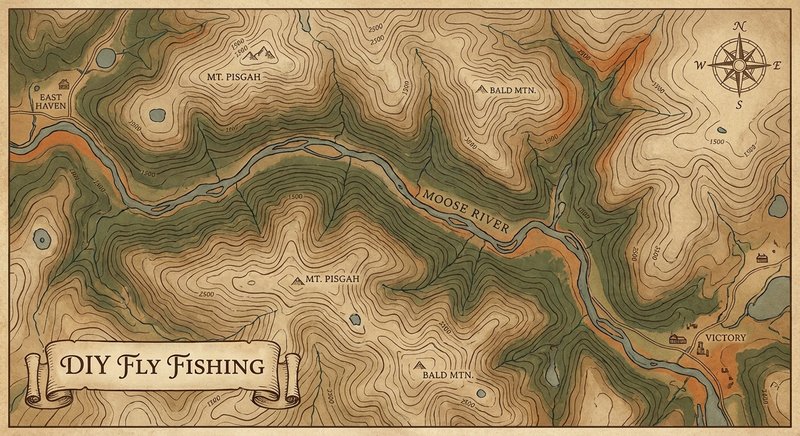
Moose River
Fly fishing in Vermont · Intermediate · Best seasons: Summer, Fall
Target Species
Brook Trout
About This Water
Northeast Kingdom stream with wild brook trout. Remote fishing in Victory Basin Wildlife Management Area.
Fishing Recommendations
The Moose River in Vermont’s Northeast Kingdom (NEK) is a hidden gem for the purist seeking a quintessential North Country experience. It is a rugged, tannin-stained tributary of the Passumpsic River that drains the wild forests of Essex and Caledonia counties. Unlike the wide-open meadow streams of southern Vermont, the Moose is intimate, forested, and rewards the stealthy angler.
🎣 Location Overview
The Moose River is characterized by its diversity. In its upper reaches, it is a classic freestone stream with plunge pools, boulders, and tight overhead cover. As it flows toward St. Johnsbury, it transitions into longer runs and deeper pools.
What makes it special is the wildness. The water is often "tea-colored" due to natural tannins from the surrounding cedar and spruce bogs. This coloration allows trout to feel secure even in shallower water, but it requires anglers to use high-visibility dry flies or sensitive contact nymphing techniques. It is a place where you are more likely to see a moose or a bald eagle than another angler.
🐟 Target Species & Behavior
The primary draw here is the Wild Brook Trout. While the lower reaches near the confluence with the Passumpsic may hold some brown trout, the heart of the Moose is a Brookie stronghold.
- Behavior: These are opportunistic but wary fish. In the cold, oxygenated water, they hold in "pocket water"—the small slack-water spots behind boulders or in the seams of current.
- Feeding: Because the Moose is relatively nutrient-poor compared to limestone creeks, the Brookies are aggressive feeders. They have a short growing season and will often strike at anything that looks like a high-calorie meal, provided the presentation doesn't spook them.
📅 Best Times to Fish
Summer (June – August)
This is prime time for the Moose. While other Vermont rivers might get too warm, the Moose stays cooler longer due to its high-elevation headwaters and heavy forest canopy.
- Optimal Window: Early morning and the last two hours of "magic hour" before dark.
- Conditions: Low, clear water requires long leaders and a "one-cast" approach.
Fall (September – October)
This is arguably the most beautiful time to be on the river.
- Behavior: Brook trout become highly aggressive as they prepare to spawn. Their bellies turn a fiery orange, and they move out of the deep summer holes into the gravelly runs.
- Conditions: Be mindful of water temperatures; once they drop significantly in late October, the fish become lethargic.
🪰 Recommended Flies & Techniques
Dry Flies
The "Attractor" strategy is king here. You don’t always need a perfect match, but you need buoyancy and visibility.
- Royal Wulff or Royal Coachman (Size 12-16): The white wings are easy to track in the dark water.
- Stimulators (Orange or Yellow, Size 10-14): Great for imitating the large stoneflies found in the NEK.
- Elk Hair Caddis (Tan, Size 14-18): A staple for summer evenings.
Nymphs
- Pheasant Tail (Size 14-18): Best for general mayfly imitations.
- Prince Nymph (Size 12-16): The "flash" works well in the tannin-stained water.
- Bead-Head Hare’s Ear: A classic for a reason; it looks like everything and nothing at once.
Streamers
In the fall, don't be afraid to go big to trigger a territorial strike.
- Muddler Minnow: A classic that imitates sculpins or large grasshoppers.
- Black or Olive Wooly Buggers (Size 8-10): The most effective way to pull a larger "trophy" Brookie out of a deep pool.
Techniques
- Bow and Arrow Cast: Essential for the tight, brush-lined upper sections.
- High-Sticking: Minimal fly line on the water to avoid drag in the complex currents of pocket water.
💡 Pro Tips & Local Knowledge
- The "Tannin Secret": Because the water is dark, trout are less likely to see your shadow than in a crystal-clear spring creek, but they are very sensitive to vibrations. Wade slowly and quietly; the "crunch" of felt soles on gravel can spook a pool before you even cast.
- Focus on Victory Hill: The stretch around the Victory Basin Wildlife Management Area offers some of the most scenic and productive wild trout water.
- Look for Cold Seeps: In the heat of August, look for areas where small, cold feeder brooks enter the main stem. Brook trout will congregate there by the dozens to find thermal refuge.
⚠️ Important Information
Access
- Route 2: Provides easy access to the lower sections between Concord and St. Johnsbury.
- Victory Road: This is the gateway to the wilder, upper sections. Be prepared for dirt roads that can be muddy in the spring or after heavy rains.
Regulations & Permits
- License: A valid Vermont Fishing License is required. You can purchase these online via the Vermont Fish & Wildlife website.
- Rules: The Moose River generally follows general trout season rules (Second Saturday in April through October 31st). However, always check the current Vermont Fishing Guide & Regulations for specific length limits or "Catch and Release only" sections, as these can change annually.
Special Considerations
- Black Flies: In June and July, the biting insects can be brutal. Bring heavy-duty repellent or a head net.
- Safety: This is remote country. Cell service is spotty at best in the Victory Basin. Let someone know where you are going and when you plan to return.
Bug Hatches & Matching Flies
| Hatch | Type | Peak months | Time of day | Hook sizes | Matching flies |
|---|---|---|---|---|---|
| Blue-Winged Olive Baetis / Pseudocloeon | mayfly | April, May, September, October | Afternoon | #18-22 | RS2 #20-22, BWO Sparkle Dun #18-22, Pheasant Tail Nymph #18-20 |
| Hendrickson Ephemerella subvaria | mayfly | May | Afternoon | #12-14 | Hendrickson Dark #12-14, Red Quill #14, Hendrickson Nymph #12-14 |
| Grannom Caddis Brachycentrus | caddis | May | Morning/Afternoon | #14-16 | Elk Hair Caddis (Olive) #14-16, LaFontaine's Deep Pupa #14-16 |
| March Brown Maccaffertium vicarium | mayfly | May, June | Afternoon | #10-12 | March Brown American #10-12, Gold Ribbed Hare's Ear #10-12 |
| Sulphur Ephemerella invaria | mayfly | June, July | Evening | #14-18 | Sulphur Parachute #16-18, Sulphur Emerger #16-18 |
| Golden Stonefly Acroneuria | stonefly | June, July | Evening | #6-10 | Golden Stimulator #8-10, Pat's Rubber Legs #6-10 |
| Light Cahill Stenacron interpunctatum | mayfly | June, July, August | Evening | #12-14 | Light Cahill #12-14, Light Cahill Nymph #12-14 |
| Cinnamon Caddis Hydropsyche | caddis | June, July, August, September | Evening | #14-18 | Elk Hair Caddis (Tan/Brown) #14-18, Caddis Larva (Green) #14-16 |
| Ants and Beetles Formicidae / Coleoptera | terrestrial | July, August, September | All Day | #12-18 | Black Foam Ant #14-18, Chernobyl Ant #10-12, Black Gnat #16-18 |