Naknek River
Fly fishing in Alaska · Intermediate · Best seasons: Summer, Fall
Target Species
Sockeye Salmon, Rainbow Trout, Arctic Char
About This Water
Bristol Bay river with the world's largest sockeye salmon run. Trophy rainbow trout fishing after salmon spawn.
Fishing Recommendations
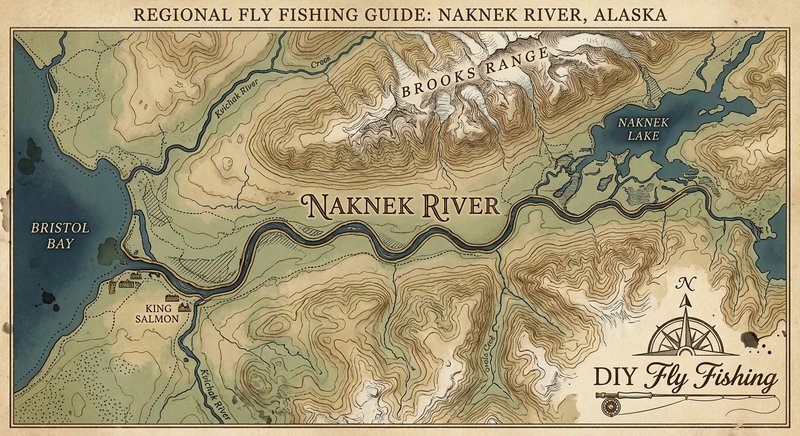
Welcome to the "Home of the Giants." As a guide who has spent seasons on the Bristol Bay watershed, I can tell you that the Naknek River is arguably the finest trophy Rainbow Trout destination on the planet. Flowing out of Naknek Lake and into Kvichak Bay, this river is a massive, powerful artery of life that supports millions of salmon and the massive predators that follow them.
🎣 Location Overview
The Naknek is not your average trout stream; it is a "big water" experience. Located near the town of King Salmon, Alaska, it serves as the gateway to Katmai National Park. The river is characterized by its wide, turquoise-tinted flows and deep glacial runs.
What makes the Naknek legendary is the biomass. Because it is a lake-fed system, the water stays slightly warmer and clearer than many glacial rivers, allowing for incredible insect life, massive salmon smolt migrations, and a staggering amount of salmon eggs and "flesh" (decaying salmon). This high-protein diet produces Rainbow Trout that look more like Steelhead—thick-shouldered, powerful, and often exceeding 30 inches.
🐟 Target Species & Behavior
Rainbow Trout (The Main Event)
Naknek Rainbows are world-class.
- Behavior: In early summer, they are aggressive predators chasing salmon smolt migrating to the sea. By late summer and fall, they become "egg-eating machines," positioning themselves directly behind spawning salmon.
- Holding Water: They hold in deep walking-speed runs, behind gravel bars where salmon spawn, and in the "Rapids" section of the upper river.
Sockeye Salmon (The Lifeblood)
The Naknek sees one of the largest Sockeye runs in the world.
- Behavior: They move in massive "schools" or "lines" along the river banks to avoid the heavy current. They do not actively feed in freshwater, but they are highly territorial.
- Holding Water: Very close to the bank in shallow water (often within 3–10 feet of the shore).
Arctic Char & Dolly Varden
- Behavior: These species follow the salmon closely. They are often found in the same runs as the trout but tend to congregate in massive numbers near the outlet of Naknek Lake.
- Appearance: In the fall, they take on spectacular "spawning colors"—deep oranges, reds, and white-tipped fins.
📅 Best Times to Fish
- June 8 – July 15 (Smolt & Sockeye): This is "Smolt Season." Rainbows are keyed into out-migrating salmon fry. Late June also sees the arrival of the Sockeye. This is the best time for aggressive streamer takes.
- August (The Egg Drop): As Sockeye begin to spawn, the "Bead Fishing" season begins. This is the most consistent time for high numbers of fish.
- September – October (Trophy Season): This is when the legendary 10lb+ Rainbows are caught. The salmon are dying (Flesh Season), and the trout are at their fattest, bulking up for winter. The weather is harsh, but the rewards are greatest.
🪰 Recommended Flies & Techniques
Techniques
- Beading (Indicator Nymphing): The most effective way to catch Rainbows and Char. You use a 6mm–10mm plastic bead (mimicking a salmon egg) pegged 2 inches above a hook.
- Swinging Streamers: Using a Spey rod or a heavy single-hand rod with a sink tip to swing leeches or smolt patterns.
- The "Alaska Floss": Specifically for Sockeye. Using a long leader and a weighted fly to intercept the fish's mouth as they breathe/travel.
Top Fly Patterns
- For Rainbows (Early): Sculpzilla (Olive/Black), Thunder Creek Smolt, Articulated Leech (Black/Blue).
- For Rainbows (Late): Beads (Colors: Mottled Roe, Dark Roe, Orange Clear), Flesh Flies (Rabbit strips in ginger, white, or "dirty" peach).
- For Sockeye: Sockeye Special, Montana Red Machine, or simple sparsely tied Coho flies in pink/charcoal.
💡 Pro Tips & Local Knowledge
- The "Rapids" Section: The upper river, known as the Naknek Rapids, is the most productive water for fly anglers. It has the most gravel and the highest concentration of spawning Sockeye.
- Match the Egg: Not all eggs are the same. Early in the season, use small, bright 6mm beads. As the season progresses and eggs "die" in the water, switch to larger 8mm or 10mm "washed out" (pale pink or white) beads.
- Don't Over-Wade: Sockeye move right along the bank. If you wade out to your waist immediately, you are likely standing on top of the fish you're trying to catch.
- Spey Casting: The Naknek is a dream for Spey casters. Because of its width and the wind, a 7-weight or 8-weight Spey rod allows you to cover water that bank anglers can't reach.
⚠️ Important Information
Access
- Getting There: You must fly from Anchorage to King Salmon (AKN) via Alaska Airlines or Ravn Alaska.
- Transportation: The river is largely accessed by jet boat. While there is some "bank" access near the town of King Salmon, hiring a guide with a boat is highly recommended to reach the best water.
Regulations & Permits
- License: You need an Alaska State Fishing License and a King Salmon Stamp (if targeting Kings).
- Catch & Release: Most of the upper Naknek is strictly Catch and Release for Rainbow Trout. This is why the fishery remains world-class. Use barbless hooks and keep the fish in the water for photos.
Safety
- Bears: You are in the heart of Brown Bear country. They are focused on the salmon, but you must remain "Bear Aware." Never leave fish or food on the bank.
- Wading: The Naknek is deep and powerful. A wading staff and a life jacket (PFD) are essential, especially in the Rapids section.
Guide’s Final Word: Bring the best rain gear you can afford. The Naknek will test your equipment and your resolve, but when you hook into a 30-inch Rainbow that jumps five times before peeling 100 yards of backing off your reel, you'll know why this is the holy grail of fly fishing.
Bug Hatches & Matching Flies
| Hatch | Type | Peak months | Time of day | Hook sizes | Matching flies |
|---|---|---|---|---|---|
| Chironomids Chironomidae | midge | May, June, September | All Day | #18-24 | Zebra Midge #18-22, Griffith's Gnat #20-22, Ice Bud Midge #18-20 |
| Grannom Caddis Brachycentrus | caddis | June, July | Afternoon/Evening | #14-16 | Elk Hair Caddis #14-16, Peacock Caddis Larva #14-16, Holy Grail Caddis #14-16 |
| Blue Winged Olive Baetis | mayfly | August, September | Mid-day/Afternoon | #18-22 | RS2 #20-22, Parachute Adams #18-22, Pheasant Tail #18-20 |
| Golden Stonefly Hesperoperla pacifica | stonefly | June, July | Afternoon | #8-12 | Pats Rubber Legs #8-10, Chubby Chernobyl #8-12, Golden Demon #10-12 |
| March Brown Rhithrogena morrisoni | mayfly | May, June | Afternoon | #12-14 | March Brown Nymph #12-14, Western March Brown #12-14, Hare's Ear #12-16 |
| Giant Black Stonefly Pteronarcys californica | stonefly | June, July | Evening | #4-8 | Black Rubber Legs #4-8, Rogue River Stone #6-8 |
| Spotted Sedge Hydropsyche | caddis | July, August | Evening | #12-16 | Hydropsyche Larva #12-14, Sparkle Pupa #14-16, X-Caddis #14-16 |
| Pale Morning Dun Ephemerella | mayfly | July, August | Late Morning/Afternoon | #14-18 | PMD Sparkle Dun #16-18, Military Mayfly #16-18 |