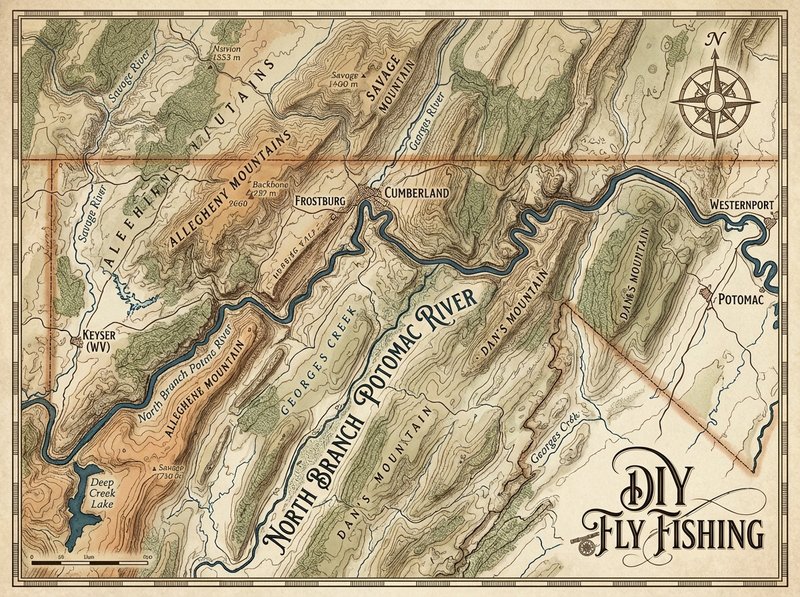
North Branch Potomac River
Fly fishing in Maryland · Intermediate · Best seasons: Spring, Summer, Fall, Winter
Target Species
Brown Trout, Rainbow Trout
About This Water
Western Maryland tailwater below Jennings Randolph Lake. Excellent brown and rainbow trout.
Fishing Recommendations
The North Branch Potomac River (NBPR) is one of the most remarkable conservation success stories in the Eastern United States. Once severely impacted by acid mine drainage, it has been transformed into a premier tailwater and freestone fishery that rivals famous Western rivers. Stretching along the border of Maryland and West Virginia, it offers rugged scenery, cold water releases from Jennings Randolph Lake, and some of the best trout fishing in the Mid-Atlantic.
🎣 Location Overview
The North Branch is a tailwater fishery characterized by its diversity. It transitions from a classic mountain freestone stream in its upper reaches to a powerful, wide river below the Jennings Randolph Dam.
What makes it special is the Barnum and Westernport reaches. Thanks to the dam's multi-port release system, the river receives cold, oxygenated water year-round, creating a "tailwater effect" that allows trout to thrive even in the heat of summer. The riverbed is primarily large cobblestones and boulders, creating pocket water, deep runs, and massive pools. It is a big-water experience that requires careful wading but rewards anglers with wild-behaving fish in a stunning wilderness setting.
🐟 Target Species & Behavior
- Brown Trout: The North Branch is famous for its wild and holdover Brown Trout. These fish are predatory and territorial. They often hold in the slower "inside" seams or right against the heavy bank cover. Larger Browns are notorious for tucked-away lies under overhanging branches or behind massive boulders.
- Rainbow Trout: Maryland and West Virginia both stock the river heavily, but many fish hold over and become quite "educated." Rainbows tend to favor the faster "bubbly" water—the heads of riffles and the heavy oxygenated runs.
- Behavior: Because the water is cold, these fish stay active. They are opportunistic but can become selective during major hatches (like the Sulphurs or Blue Winged Olives).
📅 Best Times to Fish
Spring (April – June)
- Prime Window: This is the pinnacle of North Branch fishing. As water temperatures hit the 50s, the hatches begin in earnest.
- Conditions: High water is common; check gauges. If the flow is between 150–500 CFS, it’s game on.
Summer (July – August)
- Prime Window: While other Maryland rivers get too warm, the NBPR tailwater stays in the 50s and 60s.
- Conditions: Early morning and late evening are best. This is "Terrestrial Season"—think beetles and ants.
Fall (September – November)
- Prime Window: October is spectacular. The Brown Trout become aggressive as they prepare for the spawn.
- Conditions: Lower, clearer flows make for technical fishing but beautiful dry fly opportunities with Blue Winged Olives.
Winter (December – March)
- Prime Window: Sunny afternoons when the water temperature bumps up a few degrees.
- Conditions: Focus on the deepest pools with slow-moving nymphs or streamers. Midge hatches can happen on warmer days.
🪰 Recommended Flies & Techniques
Top Fly Patterns
- Nymphs: Zebra Midges (#18-22), Pheasant Tails (#14-18), Pat’s Rubber Legs (Black/Brown #8-12), and the Walts Worm or Sexy Walt (#14-16).
- Dry Flies: Sulphurs (#14-18), Blue Winged Olives (#18-22), Elk Hair Caddis (#14-16), and Dave’s Hopper or Black Ants for summer.
- Streamers: Wooly Buggers (Olive/Black), Sex Dungeon (White or Tan for big Browns), and the Sparkle Minnow.
Techniques
- European Nymphing: This is arguably the most effective way to fish the NBPR. The river’s heavy currents and pocket water make a tight-line approach ideal for getting flies deep quickly.
- Indictor Nymphing: Use a "Hopper-Dropper" rig in the summer to cover two columns of water at once.
- Streamer Stripping: On overcast days or when the water is slightly stained, swinging or stripping streamers through deep holes can produce trophy-sized Browns.
💡 Pro Tips & Local Knowledge
- The "Barnum" Stretch: This is the most popular access. Fish the "Wall" (a steep cliff side) where the water is deep and cool.
- Watch the Gauges: The North Branch is flow-dependent. Check the USGS gauge at Barnum, WV.
- Under 150 CFS: Very technical, clear water.
- 200–500 CFS: Ideal wading and fishing conditions.
- Over 800 CFS: Dangerous to wade; better for float fishing if you have a raft.
- The "Westernport" Reach: Further downstream, the river picks up more nutrients. It’s wider and holds some massive fish, but it can be harder to read. Look for the "seams" where fast and slow water meet.
- Stealth Matters: Despite the big water, the fish are pressured. Long leaders (9–12ft) and 5X or 6X fluorocarbon tippet are often necessary during low water.
⚠️ Important Information
Access & Parking
- Barnum Whitewater Area (WV side): The primary access point with plenty of parking and a well-maintained trail running downstream.
- Lostland Run (MD side): Provides access to the wilder, more remote sections of the Potomac State Forest. Requires a bit of a hike.
Regulations & Permits
- Reciprocal Agreement: Maryland and West Virginia have a reciprocal agreement for the North Branch. Generally, a valid fishing license from either state allows you to fish the river from the bank or while wading. However, always check the current MD/WV DNR regulations as specific "Catch and Release" or "Trophy Trout" zones are strictly enforced.
- Safety: The North Branch is a tailwater. Water levels can rise rapidly without warning. If you see the water starting to rise or get muddy, exit the river immediately.
Special Considerations
- Wading Gear: This is a slippery river. Felt soles (where legal) or studded rubber boots and a wading staff are highly recommended.
- Cell Service: Extremely spotty in the gorge. Download your maps for offline use before heading out.
Bug Hatches & Matching Flies
| Hatch | Type | Peak months | Time of day | Hook sizes | Matching flies |
|---|---|---|---|---|---|
| Blue Winged Olive Baetis spp. | mayfly | March, April, October, November | Mid-day | #18-22 | RS2 #20-22, BWO Sparkle Dun #18-20, Pheasant Tail Nymph #18-22 |
| Sulphur Ephemerella invaria/dorothea | mayfly | May, June | Evening | #14-18 | Sulphur Parachute #14-18, Comparison Dun #16, Sulphur Soft Hackle #16 |
| Tan Caddis Hydropsyche spp. | caddis | May, June, September | Evening/Late Afternoon | #14-18 | Elk Hair Caddis #14-16, LaFontaine's Deep Sparkle Pupa #14-18, Holy Grail Caddis #16 |
| Golden Stonefly Acroneuria spp. | stonefly | June, July | Afternoon/Evening | #8-12 | Pat's Rubber Leg #8-12, Golden Stimulator #10-12, Kaufmann's Stone #8-10 |
| Green Drake Ephemera guttulata | mayfly | May, June | Evening | #8-12 | Coffin Fly #10-12, Green Drake Cripple #10-12, Peeping Caddis (Drake substitute) #10-12 |
| Trico Tricorythodes spp. | mayfly | July, August, September | Early Morning | #20-24 | Trico Spinner #22-24, Sunken Trico Spinner #22, Griffith's Gnat #20-24 |
| Little Black Stonefly Allocapnia spp. | stonefly | February, March | Mid-day | #14-18 | Black Stimulator #14-16, Zebra Midge #18-20, Early Girl Stone #16 |
| Terrestrials Formicidae/Coleoptera | terrestrial | July, August, September | All Day | #12-18 | Cinnamon Ant #16-18, Black Foam Beetle #14-16, Dave's Hopper #10-12 |