Pack River
Fly fishing in Idaho · Beginner · Best seasons: Summer, Fall
Target Species
Cutthroat Trout, Bull Trout
About This Water
Tributary of Lake Pend Oreille with cutthroat and bull trout. Northern Idaho gem.
Fishing Recommendations
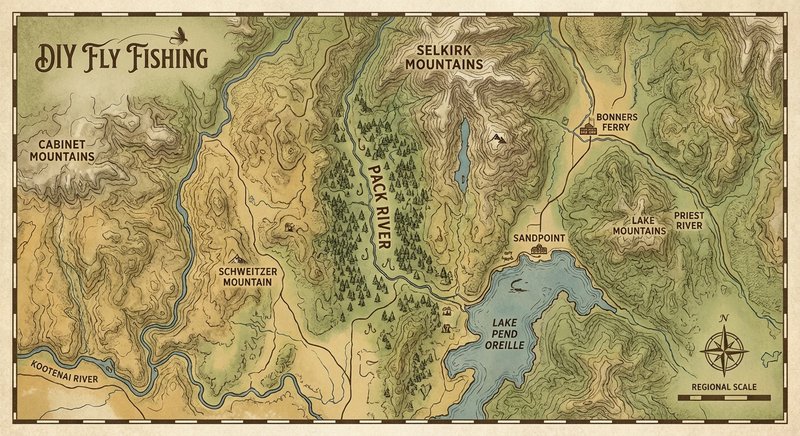
The Pack River in North Idaho is a hidden gem of the Selkirk Mountains. Flowing through the rugged Panhandle National Forest and emptying into the northern end of Lake Pend Oreille, it offers a classic "freestone" experience. It is a river of two personalities: the steep, tumbling upper reaches and the slow, meandering "delta" flats. For the fly angler, it represents some of the most scenic and rewarding Westslope Cutthroat fishing in the state.
🎣 Location Overview
The Pack River is characterized by crystal-clear water, granite boulders, and a relatively remote feel despite being near Sandpoint, Idaho. What makes it special is its connectivity. Because it feeds into Lake Pend Oreille, it serves as a critical spawning and migratory corridor for adfluvial fish (fish that live in lakes but spawn in rivers).
Anglers love the Pack because it is rarely as crowded as the nearby Coeur d'Alene or St. Joe rivers. The upper sections feature classic pocket water, deep emerald pools, and long runs that scream "dry fly territory." As you move downstream toward the lake, the river slows, providing a different challenge in the lower marshes.
🐟 Target Species & Behavior
Westslope Cutthroat Trout
These are the stars of the show. They are opportunistic feeders but can be wary in the clear, shallow summer flows.
- Behavior: They hold in the "seams" between fast and slow water. In the heat of summer, look for them in the oxygenated water at the heads of pools.
- Feeding: They are highly focused on terrestrial insects in late summer and aquatic hatches (Mayflies/Caddis) in the mornings and evenings.
Bull Trout
The "ghosts" of the Pack River. Bull Trout are a protected, migratory species here.
- Behavior: These are apex predators. They often follow the Kokanee salmon or Cutthroat runs. They hold in the deepest, darkest holes during the day, often under woody debris or cut banks.
- Feeding: They are almost exclusively piscivorous (fish-eaters). While you cannot specifically "target" them for harvest, you will often hook them while swinging large streamers for Cutthroat.
📅 Best Times to Fish
Optimal Seasons
- Summer (July - August): This is prime time. Once the spring runoff subsides (usually by late June), the river becomes wadeable. The dry fly action is consistent.
- Fall (September - October): Perhaps the best time for larger fish. As temperatures drop, fish become more active before winter, and the fall colors in the Selkirks are world-class.
Best Times of Day
- Summer: Early morning (6 AM – 10 AM) and "the magic hour" (the last two hours of light). Mid-day can be slow unless there is significant canopy cover.
- Fall: Mid-day becomes the sweet spot (11 AM – 4 PM) as the water needs time to warm up to trigger insect activity.
🪰 Recommended Flies & Techniques
Dry Fly Fishing (The Gold Standard)
The Cutthroat in the Pack are known for looking up.
- Patterns:
- Terrestrials: Chernobyl Ants, Pink Alberts, and Dave’s Hoppers (Sizes 8-12).
- Attractors: Royal Wulff, Purple Haze, and Stimulators (Orange or Yellow).
- Mayflies: Parachute Adams (Sizes 14-18) for the morning hatches.
Nymphing
When the sun is high and fish move to the bottom of the pools.
- Patterns: Gold-ribbed Hare’s Ear, Pheasant Tail, and Pat’s Rubber Legs (the "Stonefly" of the West).
- Technique: Use a "Dry-Dropper" rig. Hang a small nymph 18-24 inches below a buoyant foam hopper.
Streamer Stripping
Best for targeting the larger, more aggressive residents and moving Bull Trout.
- Patterns: White or Olive Sculptum-style streamers, Wooly Buggers, or Sparkle Minnows.
- Technique: Swing through deep pools or strip rapidly along undercut banks.
💡 Pro Tips & Local Knowledge
- Go Higher for Solitude: Most casual anglers fish the lower access points near the bridges. If you have a high-clearance vehicle, head further up the Forest Service roads toward the upper canyon. The fish are slightly smaller, but the pressure is non-existent.
- The "Shadow" Cast: Because the water is so clear, your shadow will spook fish instantly. Always approach a pool from downstream and cast "up" into the tail of the pool first before working your way to the head.
- Watch the Flows: The Pack is a freestone river, meaning it is rain and snowmelt-fed. In late August of a dry year, it can get very low. If the water temperature hits 68°F, give the fish a break and stop fishing to prevent mortality.
⚠️ Important Information
Access
- Upper Pack River Road: Follow Highway 95 north from Sandpoint, then turn onto Upper Pack River Road. There are numerous pull-offs on Forest Service land.
- The Delta: Accessible via boat or kayak from Lake Pend Oreille or the Hope, Idaho area.
Regulations & Permits
- License: A valid Idaho Fishing License is required.
- Bull Trout: It is illegal to target Bull Trout specifically in many parts of the system, and they are Catch and Release ONLY throughout Idaho. If you hook one, keep it in the water, remove the hook quickly, and release it immediately.
- Barbless Hooks: Highly recommended to preserve the delicate mouths of the Westslope Cutthroat.
- Check the IDFG Manual: Always check the current Idaho Fish and Game Seasons and Rules before heading out, as specific reach-based restrictions can change annually.
Special Considerations
- Bear Country: You are in Grizzly and Black Bear territory. Always carry bear spray, keep it accessible on your hip or chest, and know how to use it.
- Wading: The rocks can be incredibly slick (granite with a layer of algae). Felt-soled boots or studs are highly recommended.
Bug Hatches & Matching Flies
| Hatch | Type | Peak months | Time of day | Hook sizes | Matching flies |
|---|---|---|---|---|---|
| Blue Winged Olive Baetis tricaudatus | mayfly | March, April, September, October | Late Morning/Afternoon | #18-22 | RS2 #20-22, Parachute Adams #18-20, BWO Sparkle Dun #18-20 |
| Salmonfly Pteronarcys californica | stonefly | June | All Day | #4-8 | Pats Rubber Legs #6-8, Rogue River Stone #4-6, Chubby Chernobyl #6-10 |
| Golden Stonefly Hesperoperla pacifica | stonefly | June, July | Afternoon/Evening | #8-12 | Golden Twenty Incher #10-12, Norm Wood Special #8-10, Yellow Stimulator #10-12 |
| Pale Morning Dun Ephemerella excrucians | mayfly | June, July, August | Late Morning | #14-18 | Pheasant Tail Nymph #14-16, PMD Sparkle Dun #16-18, Parachute PMD #16-18 |
| Western Green Drake Drunella doddsii | mayfly | June, July | Afternoon | #10-12 | Green Drake Cripple #10-12, Hairy Fodder #10-12, Hare's Ear Nymph #10-12 |
| Spotted Sedge Hydropsyche | caddis | July, August, September | Evening | #14-16 | Elk Hair Caddis #14-16, LaFontaine's Deep Sparkle Pupa #14-16, X-Caddis #14-16 |
| Yellow Sally Isoperla spp. | stonefly | July, August | Afternoon/Evening | #14-16 | Yellow Sally Foam Stone #14-16, Little Yellow Sloan #14-16, Yellow Stimulator #14-16 |
| Terrestrials Orthoptera / Formicidae | terrestrial | August, September | Late Morning/Afternoon | #10-16 | Morrish Hopper #10-12, Carpenter Ant #14-16, Terrestrial Beetle #14-16 |