Pahsimeroi River
Fly fishing in Idaho · Intermediate · Best seasons: Summer, Fall
Target Species
Rainbow Trout, Steelhead
About This Water
Central Idaho stream with wild rainbow and steelhead. Remote fishing near Challis.
Fishing Recommendations
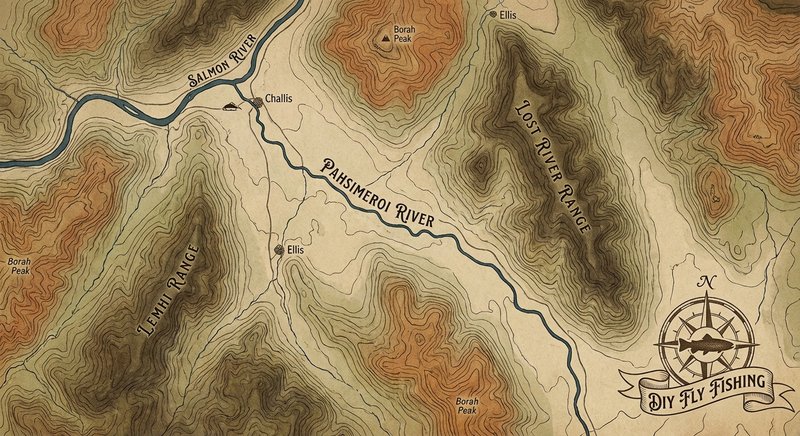
The Pahsimeroi River is one of Idaho’s hidden gems, a high-desert spring-fed tributary of the Salmon River. Located in the shadows of the Lost River Range near Challis and Ellis, it is a river of contrasts—intimate, technical, and incredibly productive.
As a guide, I view the Pahsimeroi as a "miniature version" of the Henry’s Fork. It meanders through private ranchlands, offering stable water temperatures and a rich biomass that produces healthy, hard-fighting fish.
🎣 Location Overview
The Pahsimeroi is a low-gradient, meandering stream that flows through a broad valley. Unlike the crashing whitewater of the main Salmon, the Pahsimeroi is characterized by gentle riffles, deep undercut banks, and slow, glassy glides.
What makes it special is its spring-fed nature. Many of its upper reaches are fed by massive underground aquifers, keeping the water clear and relatively cool even in the heat of August. This creates a fertile environment for aquatic insects, leading to some of the best dry-fly fishing in Central Idaho for those who can handle technical presentations.
🐟 Target Species & Behavior
Rainbow Trout
The resident Rainbows here are wild and spunky. They are typical of spring creek fish: highly observant and easily spooked.
- Holding Water: Look for them tight against undercut banks, in the "buckets" behind mid-stream boulders, and at the tail-outs of long pools during a hatch.
- Feeding: They are opportunistic but can become highly selective during a Trico or BWO hatch.
Steelhead (A-Run)
The Pahsimeroi is home to a major Idaho Department of Fish and Game (IDFG) hatchery, making it a primary destination for A-run Steelhead.
- Holding Water: Steelhead utilize the lower river as they move toward the hatchery. Look for "walking speed" water, usually 3–6 feet deep. They love the transition zones where a riffle enters a deeper pool.
- Behavior: These fish are on a mission to spawn. While they aren't actively feeding, they strike out of aggression or instinct.
📅 Best Times to Fish
Summer (July – August)
This is the "Dry Fly Paradise" window.
- Conditions: Clear water and stable flows.
- Best Time: Early mornings for Tricos; late afternoons and evenings for Caddis and Terrestrials.
Fall (September – November)
This is arguably the best all-around window for both Rainbows and the arrival of the first Steelhead.
- Rainbows: Fall brings the Blue Winged Olive (BWO) hatches. On cloudy days, the dry fly fishing is world-class.
- Steelhead: The run usually begins hitting the lower Pahsimeroi in October and peaks in November before the winter freeze-up.
- Best Time: 10:00 AM to 4:00 PM (as the water warms slightly).
🪰 Recommended Flies & Techniques
For Rainbow Trout
- Dry Flies:
- Hopper patterns: Pink or Tan Morrish Hoppers (Size 10-12) in late summer.
- Tricos: Female Trico Spinners (Size 20-24) for the morning "blizzard" hatches.
- BWO: Sparkle Duns or Parachute Adams (Size 18-22).
- Nymphs:
- Bead-head Pheasant Tails (Size 16-18) and Zebra Midges (Red or Black, Size 18-22).
- Technique: Use a Reach Cast. The complex currents in the bends of the Pahsimeroi will create drag instantly. A 9-foot 4-weight or 5-weight rod with a long leader (12ft 5X) is standard.
For Steelhead
- Fly Patterns:
- Swinging: Purple Perils, Green Butt Skunks, or Hobo Speys.
- Nymphing: Egg patterns (Glo-bugs), San Juan Worms, and heavy Rubber Leg Stoneflies.
- Technique: Nymphing under an indicator is the most productive method here due to the river's narrow width. However, swinging a fly in the lower mile near the confluence with the Salmon can be very rewarding.
💡 Pro Tips & Local Knowledge
- The Stealth Factor: The water is exceptionally clear. If you can see the trout, they have likely already seen you. Wear drab clothing (earth tones), keep a low profile, and avoid splashing.
- Focus on the Lower River: The first 2 miles above the confluence with the Salmon River hold the highest concentration of Steelhead and some of the largest "transient" Rainbows moving out of the main Salmon.
- The "Hopper-Dropper": In August, a Chubby Chernobyl with a small ($16) perdigon or pheasant tail dropped 2 feet below it is the "meat and potatoes" rig for covering water quickly.
- Mind the Wind: The Pahsimeroi Valley can act as a wind tunnel. If the wind kicks up, don't head home—switch to a heavier streamer (like a Small Olive Wooly Bugger) and fish the undercut banks.
⚠️ Important Information
Access Information
This is the most critical point: The Pahsimeroi flows almost entirely through private ranch land.
- Public Access: Use the designated IDFG access points. There are several scattered along the Pahsimeroi River Road and at bridge crossings.
- Idaho Stream Access Law: You must stay within the ordinary high-water marks. If you step above the high-water line onto a rancher's field, you are trespassing. Always be respectful to the local landowners.
Regulations & Permits
- Steelhead: You must have a valid Idaho Fishing License AND a Steelhead Permit. Barbless hooks are required when fishing for Steelhead.
- Trout: Generally, standard Idaho limits apply, but always check the IDFG Season & Rules before heading out, as rules regarding bait and harvest can change annually.
- Bull Trout: If you catch one, it must be released immediately without being removed from the water.
Special Considerations
- Cowboy Etiquette: You are in cattle country. If you go through a gate, leave it exactly as you found it (open or closed).
- Rattlesnakes: In the summer months, the sagebrush flats surrounding the river are prime rattlesnake habitat. Watch your step when walking to the bank.
Bug Hatches & Matching Flies
| Hatch | Type | Peak months | Time of day | Hook sizes | Matching flies |
|---|---|---|---|---|---|
| Blue Winged Olive Baetis tricaudatus | mayfly | March, April, September, October | Late Morning/Afternoon | #18-22 | RS2 #18-22, Parachute Adams #18-20, Pheasant Tail #18-22 |
| Trico Tricorythodes | mayfly | July, August, September | Early Morning | #20-24 | Trico Spinner #20-24, Sunken Trico Spinner #20-22, WD-40 #20-22 |
| Pale Morning Dun Ephemerella excrucians | mayfly | June, July | Morning/Early Afternoon | #16-18 | PMD Sparkle Dun #16-18, Split Case PMD #16-18, Quill Gordon #16 |
| Mother's Day Caddis Brachycentrus occidentalis | caddis | May | All Day | #14-16 | Peacock Caddis #14-16, Z-Wing Caddis #14-16, Elk Hair Caddis #14-16 |
| Grasshoppers Caelifera | terrestrial | July, August, September | Afternoon | #8-12 | Chubby Chernobyl #8-12, Morrish Hopper #10-12, Joe's Hopper #10-14 |
| Midges Chironomidae | midge | February, March, April | Late Morning | #18-24 | Griffith's Gnat #18-22, Zebra Midge #18-22, Top Secret Midge #20-24 |
| Yellow Sally Isoperla | stonefly | June, July | Evening | #14-16 | Little Yellow Sloan #14-16, Yellow Sally Nymph #14-16, Stimulator #14-16 |
| Cranefly Tipulidae | other | August, September | Afternoon/Evening | #10-14 | Crane Fly Larva #10-12, Daddy Long Legs #10-12 |