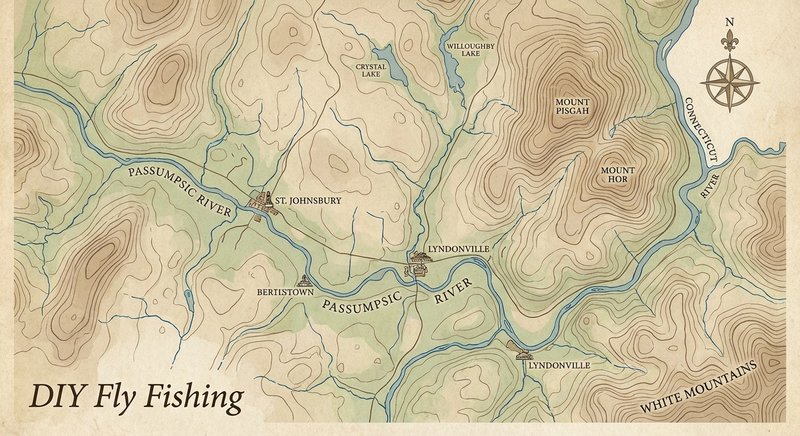
Passumpsic River
Fly fishing in Vermont · Intermediate · Best seasons: Spring, Summer, Fall
Target Species
Rainbow Trout, Brown Trout
About This Water
Northeast Kingdom river with rainbow and brown trout. Good hatches and scenic mountain views.
Fishing Recommendations
The Passumpsic River, located in Vermont’s rugged Northeast Kingdom (NEK), is one of the state’s most underrated trout fisheries. Formed by the confluence of its East and West Branches in Lyndonville, it flows south to join the Connecticut River. It offers a diverse mix of classic New England freestone water and tailwater-influenced runs, providing a home for both hard-fighting stocked fish and wily, holdover "trophy" trout.
🎣 Location Overview
The Passumpsic is a river of contrasts. In its upper reaches and branches, it feels like a classic mountain stream with boulders and pocket water. As it moves through Lyndonville and St. Johnsbury, it widens into a medium-sized river characterized by deep pools, long runs, and several hydroelectric dams.
What makes the Passumpsic special is its resilience. While many Vermont rivers warm up significantly in the heat of July, certain sections of the Passumpsic—particularly below the dams and near the confluences of cold-water tributaries—remain fishable. It is a river that rewards the "reader of water," as the fish move frequently based on water temperature and oxygen levels.
🐟 Target Species & Behavior
- Rainbow Trout: These are the "gymnasts" of the Passumpsic. You’ll find them in the oxygenated "white water"—the heads of pools, riffles, and heavy runs. They are opportunistic feeders and will often rise to bushy dry flies even when no hatch is visible.
- Brown Trout: The "kings" of the deeper, slower water. The Passumpsic holds some surprisingly large browns (18”+), particularly in the deeper holes near St. Johnsbury. They are light-shy and structure-oriented; look for them under overhanging banks, submerged timber, or in the shadows of the old stone bridge abutments.
📅 Best Times to Fish
- Spring (Late April – June): This is prime time. Once the spring runoff (the "mud season") subsides in mid-May, the insect activity explodes. Early season requires heavy nymphs, but by June, the dry fly fishing is world-class.
- Summer (July – August): Focus on the early morning (sunrise to 10:00 AM) and late evening. During heatwaves, target the "Trophy Section" or areas immediately below dams where water is aerated.
- Fall (September – October): Perhaps the most beautiful time to fish. As water temperatures drop, the Brown Trout become aggressive and territorial ahead of their spawning season. This is the best window for trophy hunting with large streamers.
🪰 Recommended Flies & Techniques
Nymphing (The Consistency King)
The majority of a Passumpsic trout's diet is subsurface.
- Patterns: Bead-head Pheasant Tails (#14-18), Prince Nymphs (#12-16), and Pat’s Rubber Legs (#8-12) in black or variegated brown to mimic the river’s large stoneflies.
- Technique: High-sticking or European-style nymphing through the pocket water is deadly here. Use enough weight to tick the bottom; if you aren't snagging occasionally, you aren't deep enough.
Dry Flies (The Match-the-Hatch)
- Patterns: Hendricksons (#12-14) in late May, Elk Hair Caddis (#14-16) all summer, and Blue Winged Olives (#18-22) on drizzly autumn afternoons.
- Technique: Use a 9-foot 5x leader. The Passumpsic has many micro-currents; a "reach cast" is essential to prevent drag and get a natural drift.
Streamers (The Trophy Hunter)
- Patterns: Woolly Buggers (Olive or Black), Black Ghosts, and articulated patterns like the Kelly Galloup’s Dungeon.
- Technique: "Swing and strip." Cast toward the opposite bank, let the current swing the fly into the soft water behind boulders, and give it erratic twitches.
💡 Pro Tips & Local Knowledge
- The "Trophy Section": There is a designated specialized fishing area in Lyndonville (from the Great Falls Dam downstream to the Blake Dam). This area is managed for larger fish—spend your time here if you want a wall-hanger.
- The Dam Factor: The hydroelectric dams on the Passumpsic can cause water levels to rise suddenly. Not only is this a safety concern, but the "pulse" of water often kicks nymphs loose, triggering a feeding frenzy. If you see the water start to rise slightly, switch to a larger nymph or a flashy streamer immediately.
- Look for Cold Influx: In mid-summer, use a stream thermometer. If the main stem hits 70°F, find where the small, cold-water brooks enter the river. The trout will stack up in these "thermal refuges."
⚠️ Important Information
- Access: Route 5 parallels much of the river, providing excellent access. Many pull-offs exist between Lyndonville and St. Johnsbury. Look for "Fishing Access" signs maintained by the Vermont Fish & Wildlife Department.
- Regulations: Vermont fishing regulations can be complex. The Passumpsic has sections that are Catch and Release Only and others with specific size/creel limits. Always check the current Vermont Fish & Wildlife Law Digest before your trip.
- Safety: The riverbed can be very slippery with "snot rock" (algae). Felt-soled wading boots or studs are highly recommended. Always be mindful of the dams and fluctuating water levels.
- License: You must have a valid Vermont Fishing License, which can be purchased online or at local bait shops in Lyndonville.
Guide’s Final Word: The Passumpsic isn't as famous as the Battenkill or the White River, and that is its greatest strength. You will often have productive, beautiful water all to yourself. Respect the river, watch the temps, and hold on tight—these NEK trout pull hard!
Bug Hatches & Matching Flies
| Hatch | Type | Peak months | Time of day | Hook sizes | Matching flies |
|---|---|---|---|---|---|
| Hendrickson Ephemerella subvariabilis | mayfly | May | Afternoon | #12-14 | Red Quill #12-14, Hendrickson Emerger #12-14, Pheasant Tail #12-14 |
| Blue-Winged Olive Baetis spp. | mayfly | April, May, September, October | Afternoon | #18-22 | RS2 #20-22, BWO Sparkle Dun #18-20, Barr's BWO Emerger #18-22 |
| Grannom Caddis Brachycentrus | caddis | May | Mid-day to Evening | #14-16 | Elk Hair Caddis (Olive) #14-16, LaFontaine's Deep Sparkle Pupa #14-16, Holy Grail Caddis #14-16 |
| March Brown Maccaffertium vicarium | mayfly | June | Afternoon | #10-12 | March Brown Parachute #10-12, Gold Ribbed Hare's Ear #10-12, March Brown Wet Fly #12 |
| Light Cahill Stenacron candidum | mayfly | June, July | Evening | #14-16 | Light Cahill #14-16, Cream Usual #14-16, Cahill Nymph #14-16 |
| Spotted Sedge Hydropsyche spp. | caddis | June, July, August | Evening | #14-18 | Tan Elk Hair Caddis #14-18, Pulsating Caddis Pupa #16-18, Prince Nymph #14-18 |
| Trico Tricorythodes | mayfly | July, August, September | Early Morning | #22-26 | Trico Spinner #22-24, Trico Parachute #22-24, Zebra Midge #20-22 |
| Golden Stonefly Acroneuria | stonefly | June, July | Morning/Evening | #8-12 | Golden Stone Nymph #8-12, Pats Rubber Legs #8-12, Stimulator (Yellow) #10-12 |
| Black Ant Formicidae | terrestrial | July, August, September | Mid-day | #14-20 | Cinnamon Ant #16-18, Black Foam Ant #14-20, Fur Ant #16-18 |