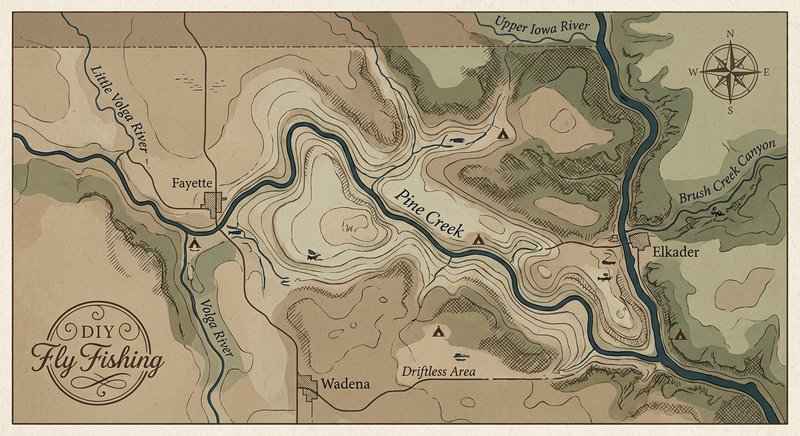
Pine Creek
Fly fishing in Iowa · intermediate · Best seasons: spring, summer, fall
Target Species
Brown Trout
About This Water
Winneshiek County stream with wild brown trout. Scenic valley with good access.
Fishing Recommendations
Pine Creek, located in the heart of the Driftless Area in Winneshiek County (near Decorah), is a quintessential Iowa trout stream. Unlike the flat cornfields often associated with the state, this region is defined by limestone bluffs, deep valleys, and cold, spring-fed waters.
As your guide, here is the breakdown for tackling the wild and weary Brown Trout of Pine Creek.
🎣 Location Overview
Pine Creek is a tributary of the Upper Iowa River and is widely considered one of the most scenic "meadow-style" streams in the state. What makes it special is its limestone karst geology. The water is enriched with calcium carbonate, which fosters a massive biomass of insects and crustaceans, allowing trout to grow quickly and maintain vibrant colors.
The stream is characterized by a mix of tight, woody corridors and open pasture stretches. It features classic "S-curves" with deep undercut banks, riffle-run-pool sequences, and significant woody debris. Anglers love it because it offers a "technical" experience—it rewards stealth and precise casting rather than long, hero casts.
🐟 Target Species & Behavior
The primary draw here is the Brown Trout. While the Iowa DNR does stock portions of the creek, there is a significant and healthy population of wild, stream-bred Browns.
- Behavior: Pine Creek Browns are notorious for being "bank-tight." They spend the daylight hours tucked deep under overhanging sod banks or buried in submerged root balls.
- Feeding: They are opportunistic but cautious. They rely heavily on scuds and sowbugs year-round. During hatches, they will move into the "feeding lanes" (the seam where fast water meets slow water), but they rarely stray far from cover.
- The "Big Fish" Factor: Large predator Browns (18"+) are present but are almost exclusively nocturnal or low-light feeders, often keyed in on smaller trout, crayfish, or sculpins.
📅 Best Times to Fish
- Spring (April – early June): This is the prime window. Water levels are usually stable, and the major hatches (Caddis and Blue-winged Olives) begin. The trout are hungry after the winter lean period.
- Summer (Late June – August): Focus on the early morning (sunrise to 10 AM) or the "magic hour" before dark. Terrestrial fishing (hoppers/ants) is at its peak during the heat of the day, but the water can get low and clear, making the fish extremely spooky.
- Fall (September – October): My personal favorite. The Brown Trout begin their pre-spawn aggression. They become more territorial and are more likely to chase a streamer. The fall colors in the Driftless are world-class.
- Optimal Conditions: A "cloudy day with a light drizzle" is the best possible weather for Pine Creek. It cuts the glare on the water and gives the trout a sense of security, pulling them out from under the banks.
🪰 Recommended Flies & Techniques
Top Fly Patterns
- Nymphs:
- The Pink Squirrel (Size 14-16): A Driftless staple. The flash and pink bead are irresistible here.
- Scuds/Sowbugs (Gray or Olive, Size 14-18): Fish these deep.
- Pheasant Tail (Size 16-20): Best for imitating the natural mayfly nymphs.
- Dry Flies:
- Elk Hair Caddis (Size 14-16): Great for the frequent evening caddis swarms.
- Hippie Stomper (Size 12-14): An excellent attractor/terrestrial that floats high and is easy to see.
- Tricos (Size 22-24): For the technical angler in late summer mornings.
- Streamers:
- Woolly Bugger (Black or Olive, Size 8-10): The gold standard for Iowa Browns.
- Near Nuff Sculpin: Mimics the bottom-dwelling forage fish.
Presentation Tips
- The "Reach Cast": Essential for getting your fly to the bank without your line crossing different current speeds, which causes "drag."
- Tight-Line Nymphing: Because the creek is small, a traditional indicator can sometimes spook fish. Using a weighted nymph with a sighter (Euro-style) is incredibly effective in the deeper runs.
💡 Pro Tips & Local Knowledge
- Stay Out of the Water: The biggest mistake anglers make on Pine Creek is wading too much. The vibrations from your boots travel through the limestone bedrock. If you can cast from the bank while staying low or kneeling, do it.
- Focus on the "V": Look for where the current narrows into a "V" shape at the head of a pool. The biggest fish often sit right at the tip of that V, waiting for food to be funneled to them.
- The "Canoe Creek" Connection: If Pine Creek is crowded, Canoe Creek is just a short drive away and offers very similar water and fish populations.
- Local Secret: Use 5X or 6X fluorocarbon tippet. The water is exceptionally clear, and these wild Browns have excellent eyesight. If you aren't getting hits on a nymph, drop your tippet size before changing your fly.
⚠️ Important Information
- Access: Much of Pine Creek flows through private land. However, there are several segments with public fishing easements or within Wildlife Management Areas (WMA). Always look for the green "Public Fishing" signs.
- Regulations: You must have a valid Iowa Fishing License and a Trout Fee.
- Landowner Relations: If you are on an easement, stay within the designated corridor (usually 33 feet from the stream bank). Close all gates behind you and do not disturb livestock.
- Gear Recommendation: A 7.5 to 8.5-foot 4-weight rod is the perfect tool for this water. It's short enough to manage the brush but has enough backbone to turn a 15-inch Brown away from a log jam.
Guide’s Final Word: Pine Creek isn't about high numbers; it's about the quality of the hunt. Approach each pool like a predator, keep your shadow off the water, and you’ll find why this is one of Iowa's crown jewels.
Bug Hatches & Matching Flies
| Hatch | Type | Peak months | Time of day | Hook sizes | Matching flies |
|---|---|---|---|---|---|
| Blue-Winged Olive Baetis tricaudatus | mayfly | March, April, September, October | Late Morning/Afternoon | #18-22 | RS2 #18-22, Parachute BWO #18-22, Pheasant Tail #18-20 |
| Hendrickson Ephemerella subvaria | mayfly | April, May | Afternoon | #12-14 | Hendrickson Sparkle Dun #12-14, Red Quill #14, Gold Ribbed Hare's Ear #12-14 |
| Grannom / Mother's Day Caddis Brachycentrus occidentalis | caddis | April, May | All Day | #14-16 | Elk Hair Caddis (Olive) #14-16, LaFontaine's Deep Sparkle Pupa #14-16, Peacock Caddis #16 |
| Sulphur Ephemerella invaria / dorothea | mayfly | May, June | Late Afternoon/Evening | #14-18 | Sulphur Parachute #16-18, Pale Morning Dun Nymph #16-18, Sulphur Spinner #14-18 |
| Spotted Sedge Hydropsyche | caddis | June, July, August | Evening | #14-18 | Caddis Variant #14-16, Z-Lon Caddis #16-18, Hydropsyche Larva #14-16 |
| Trico Tricorythodes | mayfly | July, August, September | Early Morning | #20-24 | Trico Spinner #20-24, Griffith's Gnat #20-22, Trico Emerger #22 |
| Light Cahill Stenacron interpunctatum | mayfly | June, July | Evening | #12-14 | Light Cahill #12-14, Hare's Ear (Light) #12-14 |
| Terrestrials Formicidae / Coleoptera | terrestrial | July, August, September | All Day | #12-18 | Black Foam Ant #16-18, Flash Beetle #14-16, Dave's Hopper #12 |
| Zebra Midge Chironomidae | midge | January, February, March, December | Midday | #18-22 | Zebra Midge #18-22, Morgan's Midge #20-22, Palomino Midge #20 |