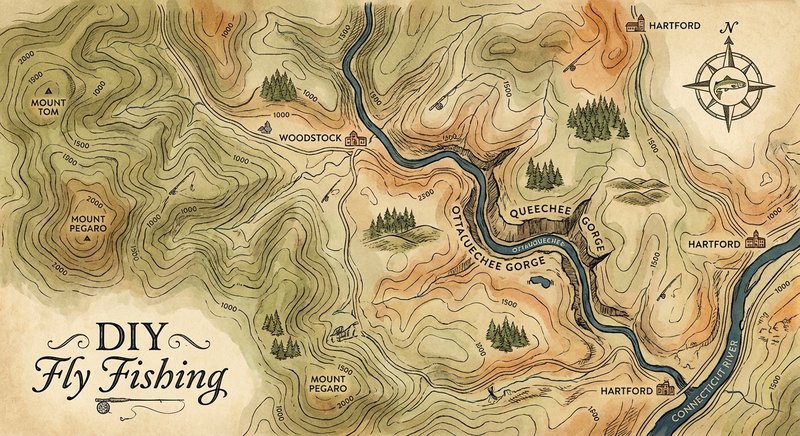
Queechee Gorge
Fly fishing in Vermont · Advanced · Best seasons: Spring, Summer, Fall
Target Species
Brown Trout, Rainbow Trout
About This Water
Dramatic section of the Ottauquechee River. Brown and rainbow trout in Vermont's deepest gorge.
Fishing Recommendations
As an expert fly fishing guide, I’m pleased to walk you through the specifics of one of Vermont’s most dramatic geological features: Quechee Gorge on the Ottauquechee River. While thousands of tourists look down from the Route 4 bridge, very few anglers actually make the trek into the canyon. Those who do are rewarded with some of the most scenic pocket-water fishing in New England.
🎣 Location Overview
Quechee Gorge, often called "Vermont’s Little Grand Canyon," was carved by the Ottauquechee River over 13,000 years ago. The river here is a tailwater-influenced fishery (fed by the North Hartland Lake dam further downstream, but more importantly controlled by the Dewey’s Mills Dam upstream).
The water within the gorge is characterized by dramatic plunges, deep emerald pools, and complex pocket water littered with massive schist boulders. Because the walls are 165 feet high, the riverbed receives limited direct sunlight, which helps keep water temperatures slightly cooler than other valley rivers, though it still requires monitoring in mid-summer. Anglers love it for the technical challenge and the sheer "wilderness" feel just minutes away from Woodstock.
🐟 Target Species & Behavior
The Ottauquechee is a classic Vermont trout stream with a mix of stocked and wild fish.
- Rainbow Trout: These are the primary residents of the faster water. They hold in the "heavy" water—the heads of pools, the seams next to whitewater, and oxygenated riffles. They are opportunistic and will often rise to a well-presented dry fly even if no hatch is visible.
- Brown Trout: The "kings" of the gorge. Large, wary Browns hide in the shadows of the massive boulders and the deep, slow-moving tail-outs of the larger pools. They are more predatory here, often feeding on sculpins and smaller brook trout or dace.
- Behavior: During high sun, fish in the gorge tuck deep under ledges. Because the water is clear, they are "spooky." Stealthy approaches and long leaders are often necessary.
📅 Best Times to Fish
- Spring (Late May – June): This is the prime window. Once the spring runoff subsides and the water clears, the insect activity is at its peak. The water levels are high enough to fill the pocket water, giving trout plenty of places to hide.
- Summer (July – August): Focus on the early morning (6:00 AM – 10:00 AM) or the "magic hour" before dark. Note: Always carry a thermometer. If the water exceeds 68°F, trout become stressed; if it hits 70°F, please stop fishing to protect the resource.
- Fall (September – October): A spectacular time to be in the gorge. Brown trout become aggressive as they prepare for spawning. Low water levels make the river easier to wade, though the fish become more concentrated and wary.
🪰 Recommended Flies & Techniques
Top Fly Patterns
- Dry Flies: Elk Hair Caddis (#14-18) in tan or olive; Parachute Adams (#14-20); Stimulators (#10-14) for high-water visibility.
- Nymphs: Bead-head Pheasant Tails (#14-18); Pat’s Rubber Legs (#8-12) in coffee/black; Prince Nymphs; and Perdigons for fast-sinking in the plunge pools.
- Streamers: Black or Olive Woolly Buggers; Muddler Minnows; and small Sparkle Minnows to mimic dace.
Techniques
- High-Sticking/Euro Nymphing: The gorge is a maze of conflicting currents. Traditional across-body casting leads to instant drag. Using a long rod and keeping your line off the water to "dead-drift" nymphs through pockets is the most effective way to score numbers.
- Dry-Dropper: A high-visibility Stimulator with a small Pheasant Tail dropped 24 inches below is deadly in the riffles.
- The "Swing": In the larger pools below the dam, swinging a small streamer or a wet fly (like a Partridge & Orange) can trigger aggressive strikes from Browns.
💡 Pro Tips & Local Knowledge
- Go Deep and Stay Late: The biggest Browns in the gorge are notorious night feeders. If you can safely navigate the trail back up in the twilight, fishing large streamers in the deep holes just at dusk is your best chance at a 16"+ fish.
- The "Shadow" Factor: Because of the gorge walls, parts of the river fall into shadow much earlier than the surrounding hills. Track the shadows; trout will move from the deep structure into the shallow riffles as soon as the sun leaves the water.
- Look for "Micro-Pockets": In the gorge, even a pocket the size of a hula-hoop behind a rock can hold a 12-inch Rainbow. Don't just fish the big pools; pick apart the boulder fields.
- The Dewey's Mills Section: If the gorge is too crowded or the water is too high, head just upstream of the dam. It’s slower, more like a pond, and holds some surprisingly large trout and even the occasional smallmouth bass.
⚠️ Important Information
- Access: The primary access is via the Quechee State Park trails. The hike down is steep but well-maintained. Be prepared for a workout on the way back up with wet waders!
- Safety: The rocks in the gorge are notoriously slippery and often unstable. Felt-soled boots or studs are highly recommended. Cell service can be spotty at the bottom of the canyon.
- Regulations: Vermont state fishing regulations apply. Ensure you have a valid VT fishing license. Most of this stretch is open to general "Harvest" rules, but many locals practice Catch and Release to maintain the quality of the fishery in this high-traffic area.
- Water Levels: Check the USGS gauge for the Ottauquechee River at North Hartland (though this is downstream, it gives a trend). Be wary of sudden water rises if there is heavy rain upstream, as the gorge can become a funnel.
Enjoy the "Little Grand Canyon"—keep your backcast high to avoid the rock walls, and tight lines!
Bug Hatches & Matching Flies
| Hatch | Type | Peak months | Time of day | Hook sizes | Matching flies |
|---|---|---|---|---|---|
| Blue Winged Olive (BWO) Baetis spp. | mayfly | April, May, September, October | Mid-day/Afternoon | #18-22 | RS2 #18-22, Parachute Adams #18-22, Pheasant Tail Nymph #18-20 |
| Hendrickson Ephemerella subvaria | mayfly | May | Afternoon | #12-14 | Hendrickson Dark #12-14, Red Quill #12-14, Hare's Ear Nymph #12-14 |
| Grannom Caddis Brachycentrus | caddis | May | Morning/Afternoon | #14-16 | Elk Hair Caddis (Olive) #14-16, Holy Grail #14-16, Deep Sparkle Pupa #14-16 |
| Sulfur Ephemerella invaria / dorothea | mayfly | June, July | Evening | #14-18 | Sulfur Parachute #14-18, Sulfur Cripple #16-18, Pheasant Tail (Flashback) #14-18 |
| Golden Stonefly Acroneuria spp. | stonefly | June, July | Evening/Night | #8-12 | Pat's Rubber Legs #8-12, Stimulator (Yellow) #8-12, Golden Stone Nymph #10-12 |
| Light Cahill Stenacron / Stenonema | mayfly | June, July | Evening | #12-14 | Light Cahill #12-14, Gold Ribbed Hare's Ear #12-14 |
| Slate Drake Isonychia bicolor | mayfly | July, August, September | Late Afternoon | #10-12 | Isonychia Nymph #10-12, Parachute Slate Drake #10-12, Zug Bug #10-12 |
| Trico Tricorythodes spp. | mayfly | July, August, September | Early Morning | #22-26 | Trico Spinner #22-26, Trico Parachute #22-24 |
| Cinnamon Caddis Hydropsyche | caddis | June, July, August | Evening | #14-18 | Tan Elk Hair Caddis #14-18, LaFontaine Emerger #16-18, Caddis Larva (Green/Tan) #14-16 |
| Terrestrials Formicidae / Coleoptera | terrestrial | July, August, September | All Day | #12-18 | Black Foam Ant #16-18, Chernobyl Ant #10-14, Crowe Beetle #14-16 |