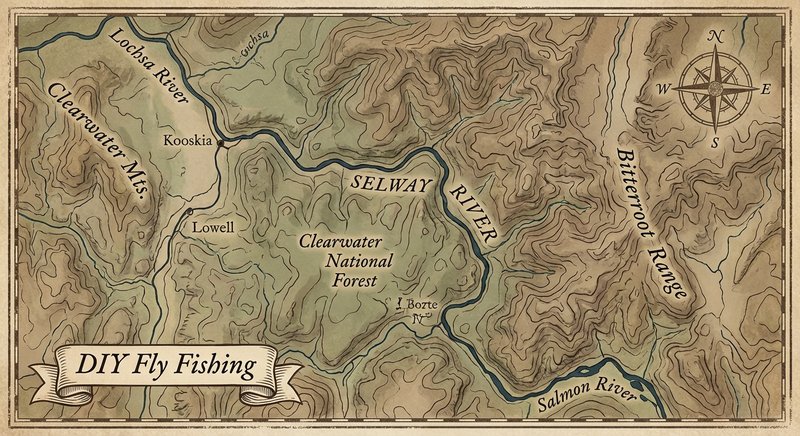
Selway River
Fly fishing in Idaho · Advanced · Best seasons: Summer, Fall
Target Species
Cutthroat Trout, Rainbow Trout
About This Water
Remote wilderness river in the Selway-Bitterroot. Native westslope cutthroat in pristine water.
Fishing Recommendations
The Selway River is the crown jewel of the "Big Three" wild rivers in Idaho (alongside the Salmon and the Clearwater). Flowing through the heart of the Selway-Bitterroot Wilderness—the third-largest wilderness area in the lower 48—it is one of the most pristine, remote, and challenging-to-access rivers in the United States.
For the fly angler, the Selway represents the pinnacle of "Westslope Cutthroat" fishing. It is a rugged, boulder-choked, crystal-clear freestone river that offers a true wilderness experience.
🎣 Location Overview
The Selway is famous for its Wild and Scenic designation. What makes it special is the lack of development; for much of its length, there are no roads, no cell service, and very few people. The water is exceptionally clear, often looking like liquid gin flowing over colorful metamorphic river rock.
The river is characterized by massive granite boulders, deep "blue" pools, and high-gradient pocket water. Anglers love it because the fish are 100% wild and notoriously "grabby" for dry flies. This is bucket-list water for those who value solitude and the raw beauty of the Northern Rockies.
🐟 Target Species & Behavior
- Westslope Cutthroat Trout: The star of the show. They are opportunistic, beautiful, and thrive in the cold, oxygenated water. They are not particularly "picky" compared to spring creek fish, but they are wary of poor presentations in the clear water.
- Rainbow Trout: Found primarily in the lower reaches and swifter riffles. They are hard-fighters and often interbreed with cutthroats to create "Cutbows."
- Bull Trout: (Protected) You may see these massive predators in deep holes. You cannot target them, but they are a sign of a healthy ecosystem.
Behavior: These fish hold in classic pocket water. Look for the "cushion" in front of large boulders, the tail-outs of long pools at dusk, and the seams where fast water meets slow water. Because the Selway is nutrient-poor, the fish are aggressive surface feeders—they have to eat when food is available.
📅 Best Times to Fish
The Selway is dictated by the snowpack.
- Late June/July (Post-Runoff): This is the start of the prime window. As the water drops and clears, the Golden Stonefly hatch begins. This is the best time for big dries.
- August: The "Dog Days" are excellent here because the water stays cold due to the high elevation and wilderness shade. Terrestrial fishing (hoppers/ants) is at its peak.
- September/Early October: My personal favorite. The crowds (which are already small) disappear. Blue Winged Olives emerge, and the larger fish begin to feed heavily before winter. The larch trees turn gold, making for incredible scenery.
Time of Day: During mid-summer, the morning and evening "shadow hours" are best. In the fall, wait for the water to warm up slightly; 11:00 AM to 4:00 PM is the sweet spot.
🪰 Recommended Flies & Techniques
Top Fly Patterns
- Dries:
- Golden Stoneflies: Chubby Chernobyl (Size 8-12) in gold or orange.
- Mayflies: Parachute Adams (12-16), Purple Craze (14-16).
- Terrestrials: Morrish Hopper, Black Carpenter Ants, and Foam Beetles.
- Nymphs: (Usually used as a dropper under a big dry)
- Pat’s Rubber Leg Stone (Brown/Tan).
- Perdigons or Pheasant Tails (14-18) to get down fast in heavy pockets.
- Streamers:
- Olive or Black Woolly Buggers for the deep emerald pools where the "pigs" hide.
Techniques
- Dry-Dropper: This is the bread and butter of the Selway. A high-visibility Chubby Chernobyl with a 2-3 foot dropper to a weighted nymph will cover 90% of the water.
- Prowling the Pockets: Don’t spend too much time in one spot. Hit the "soft" water behind boulders with two or three casts and move on.
- Skating Dries: In the faster riffles, don't be afraid to let your dry fly twitch or skate at the end of the drift; it often triggers an aggressive strike from a Cutthroat.
💡 Pro Tips & Local Knowledge
- The "Upper" vs. "Lower": The "Lower" Selway (below Selway Falls) is accessible by road but sees more pressure. For the true experience, you need to hike into the wilderness sections (like the Moose Creek area) or book a permitted float trip.
- Stealth is Key: Because the water is so clear, if you can see the fish, they have likely already seen you. Wear earthy tones and keep a low profile when approaching pools.
- Long Leaders: Use 9-foot to 12-foot leaders tapered to 4X or 5X. Even though the fish aren't "leader shy" in terms of thickness, a long leader helps prevent line spray from spooking the pool.
- Watch the Tributaries: Small creeks flowing into the Selway often hold surprisingly large fish, especially in the heat of August.
⚠️ Important Information
- Access: Much of the river is accessible only by trail or by a highly regulated lottery float permit system. If you aren't floating, prepare to hike. The road ends at Race Creek; beyond that, it’s all boots and hooves.
- Regulations: The Selway is strictly Catch and Release for trout in many sections, and barbless hooks are highly encouraged (and required in some areas). Always check the current Idaho Fish & Game Seasons and Rules.
- Safety: This is Grizzly and Black Bear country. Carry bear spray and know how to use it. There is zero cell service; bring a satellite communication device (like a Garmin inReach).
- Wading: The Selway rocks are notoriously slick ("Selway Snot"). Felt soles (where legal) or studded boots and a wading staff are highly recommended.
Guide’s Summary: The Selway isn't where you go to catch the most fish or the biggest fish in Idaho—it's where you go to catch the most beautiful fish in the most beautiful place. Respect the wilderness, and it will reward you.
Bug Hatches & Matching Flies
| Hatch | Type | Peak months | Time of day | Hook sizes | Matching flies |
|---|---|---|---|---|---|
| Salmonfly Pteronarcys californica | stonefly | May, June | All Day | #4-8 | Rogue River Stone #4-6, Pat's Rubber Leg #4-8 |
| Golden Stonefly Hesperoperla pacifica | stonefly | June, July | Morning/Evening | #8-12 | Chubby Chernobyl (Gold) #8-12, Iron Lotus #10-12 |
| Green Drake Drunella doddsii | mayfly | June, July | Afternoon | #10-12 | Hackle Stacker Drake #10-12, Quigley's Green Drake Emerger #10-12 |
| Pale Morning Dun Ephemerella excrucians | mayfly | July, August | Morning/Afternoon | #16-18 | Sparkle Dun #16-18, Pheasant Tail #16-18 |
| October Caddis Dicosmoecus gilvipes | caddis | September, October | Late Afternoon/Evening | #8-12 | Orange Stimulator #8-12, Morrish October Caddis Nymph #10-12 |
| Yellow Sally Isoperla | stonefly | July, August | Afternoon/Evening | #14-16 | Little Yellow Sloan #14-16, Yellow Sally Nymph #14-16 |
| Skwala Skwala americana | stonefly | March, April | Afternoon | #10-12 | Skwala Stone #10-12, Girdle Bug #10-12 |
| Blue Winged Olive Baetis | mayfly | April, October | Afternoon | #18-22 | Parachute Adams #18-22, RS2 #20-22 |
| Spotted Sedge Hydropsyche | caddis | July, August | Evening | #14-16 | Elk Hair Caddis (Tan) #14-16, LaFontaine's Deep Sparkle Pupa #14-16 |