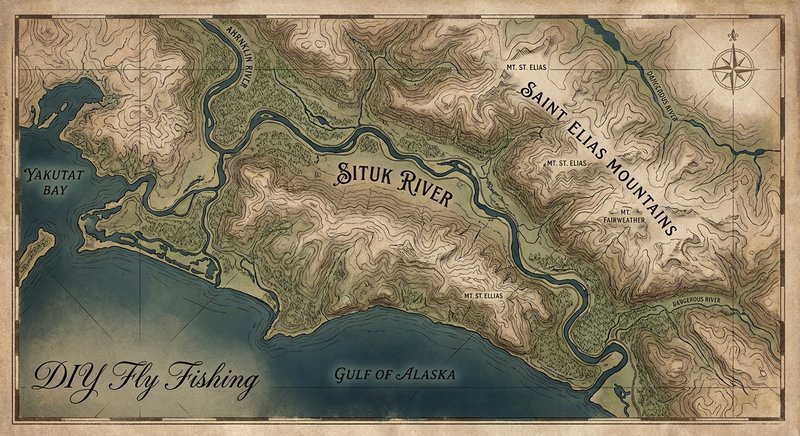
Situk River
Fly fishing in Alaska · Intermediate · Best seasons: Spring, Fall
Target Species
Steelhead, Silver Salmon
About This Water
One of the top steelhead rivers in Alaska. Remote fishing near Yakutat with excellent runs.
Fishing Recommendations
🎣 Fly Fishing Guide: The Situk River, Alaska
The Situk River is arguably the most productive wild Steelhead river in the world. Located near the remote community of Yakutat, it is a small, intimate, tea-colored coastal stream that winds through the Tongass National Forest. Unlike the massive glacial torrents common in Alaska, the Situk is mellow, wadable, and condensed, offering an almost unbelievable density of fish in a confined space.
🎣 Location Overview
The Situk is a "low gradient" river. It doesn't have the crashing rapids of the Rockies; instead, it features slow glides, deep woody debris (sweepers), and perfect gravel riffles.
What makes it special:
- The Density: In a peak spring week, there can be 10,000+ Steelhead in just 14 miles of river.
- The Setting: It is quintessential Alaska—towering Sitka spruce, moss-covered banks, and a backdrop of the Fairweather Range.
- Wadability: Much of the river is thigh-deep or shallower, making it a "sight-casting" paradise when the light is right.
🐟 Target Species & Behavior
Steelhead (Spring)
These are 100% wild, coastal rainbow trout that migrate to the ocean. They are aggressive, acrobatic, and range from 8 to 15 pounds, with "monsters" hitting the 20-pound mark.
- Behavior: They hold in the "seams" and at the heads of pools. As the water warms, they move onto the shallow gravel flats to spawn.
- Feeding: While they don't feed actively in freshwater, they are highly territorial and possess a predatory instinct that makes them strike flies out of aggression.
Silver (Coho) Salmon (Fall)
The Situk Silvers are legendary for their size and willingness to take a fly on the swing or even the surface.
- Behavior: Silvers love "froggy" water—slow-moving sloughs, back eddies, and deep holes with structure. They are notorious for following a fly all the way to your boots before striking.
- Feeding: They are highly aggressive. If you find a pod of fresh "chrome" fish, they will often compete to hit your fly.
📅 Best Times to Fish
Spring (Steelhead)
- Window: Mid-April through late May.
- Peak: Usually the first two weeks of May.
- Conditions: You want the ice to be out and the water temps to be rising above 40°F. Rain is common; a "blown out" river usually clears in 24–48 hours because the Situk is moderated by Situk Lake.
Fall (Silver Salmon)
- Window: Late August through September.
- Peak: Mid-September.
- Conditions: Fall in Yakutat is wet. Be prepared for rain. The silver run coincides with the dying off of Pink and Sockeye salmon, meaning the river is nutrient-rich and busy.
🪰 Recommended Flies & Techniques
Steelhead Techniques
- Indicator Nymphing: The most effective way to catch numbers. Use a heavy fluorocarbon leader (12lb–15lb) and plenty of weight to get down in the "buckets."
- The Swing: Using a Spey or switch rod is popular in the lower river. Swing large, high-contrast intruders.
- Patterns:
- Glo-Bugs/Beads: 8mm and 10mm in "Oregon Cheese," "Mottled Roe," and "Peach."
- Lifesavers: Pink or Orange Marabou jigs.
- Intruders: Black/Blue or Pink/Purple for swinging.
Silver Salmon Techniques
- The "Strip & Twitch": Use a weighted fly and give it short, erratic strips to trigger a chase.
- Topwater: In low light, a pink "Wog" (Pollywog) skittered across the surface can produce heart-stopping strikes.
- Patterns:
- Dolly Varden Specials: Pink/White streamers.
- Flash Flies: Clouser Minnows in purple, pink, or chartreuse with lots of Krystal Flash.
- Pink Pollywogs: For surface action.
💡 Pro Tips & Local Knowledge
- The "Situk Float": Most anglers rent a drift boat and float from the "9-Mile Bridge" to the "Lower Landing." It is a 14-mile drift. Do not rush. The best fishing is often in the first 3 miles. If you find fish, drop anchor (where legal) or pull over and work the hole thoroughly.
- Look for Wood: On the Situk, "wood is good." Steelhead love to tuck under fallen logs. You will lose flies, but that’s where the big fish live.
- Respect the Redds: In late May, you will see fish on bright white gravel patches. These are spawning beds (redds). Please do not fish for these actively spawning fish; target the fish in the deeper "staging" water behind or ahead of the flats to ensure the future of the run.
- The Dolly Varden Bonus: In the spring, the river is thick with Dolly Varden (char). They are beautiful, voracious, and will eat any egg pattern you throw.
⚠️ Important Information
- Access: You must fly into Yakutat (YAK) via Alaska Airlines (usually from Seattle or Juneau). There are no roads to Yakutat from the outside world.
- Bear Safety: This is high-density Brown Bear country. Always carry bear spray, make noise when walking through thick brush, and never leave your fish or food unattended.
- Regulations: Alaska Department of Fish & Game (ADF&G) regulations are strict.
- A Steelhead Salmon Stamp is required in addition to your non-resident license.
- The Situk is generally Catch and Release only for Steelhead.
- Check for "Single Point Barbless Hook" requirements, which are common here.
- Gear: 8-weight rods are the standard for both Steelhead and Silvers. Bring the best Gore-Tex waders and rain jacket you can afford—it will rain.
Final Piece of Advice: Book your lodging and drift boat rentals 6–12 months in advance. The town of Yakutat is small, and the "prime" weeks fill up fast!
Bug Hatches & Matching Flies
| Hatch | Type | Peak months | Time of day | Hook sizes | Matching flies |
|---|---|---|---|---|---|
| Midges Chironomidae | midge | March, April, May | All Day | #18-24 | Zebra Midge #18-22, Griffith's Gnat #20-22, Top Secret Midge #20-24 |
| Blue Winged Olive Baetis | mayfly | May, September | Afternoon | #16-20 | BWO Sparkle Dun #18-20, Pheasant Tail #16-18, RS2 #18-20 |
| Early Black Stonefly Capniidae | stonefly | April, May | Midday | #14-18 | Black Copper John #14-16, Little Black Sloan #16-18 |
| American Grannom Brachycentrus occidentalis | caddis | May, June | Evening | #14-16 | Peacock Caddis #14-16, Holy Grail #14-16 |
| Golden Stonefly Hesperoperla pacifica | stonefly | June, July | Evening | #8-12 | Kaufmann's Stone #8-12, Chubby Chernobyl #10-12 |
| Flesh Fly Calliphoridae | terrestrial | August, September, October | All Day | #4-8 | Bunny Flesh #4-8, Battle Grease #6-8 |
| October Caddis Dicosmoecus | caddis | September, October | Afternoon/Evening | #8-10 | Orange Stimulator #8-10, Peeping Caddis #8-12 |
| Speckled Spinner Callibaetis | mayfly | July, August | Morning | #14-16 | Callibaetis Spinner #14-16, Hare's Ear #14-16 |