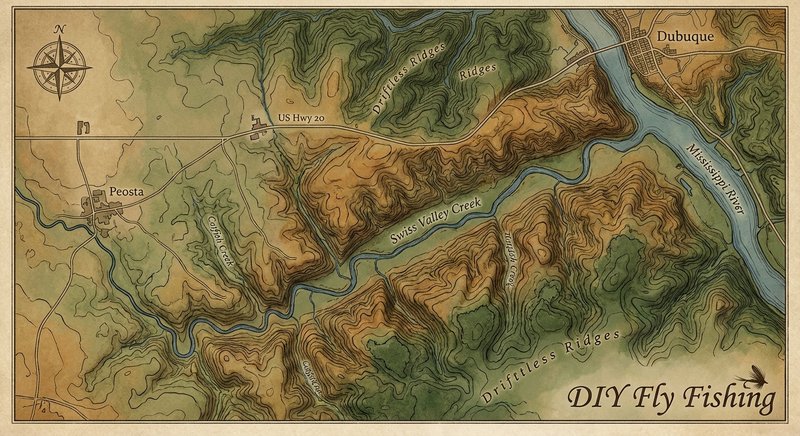
Swiss Valley Creek
Fly fishing in Iowa · beginner · Best seasons: spring, fall
Target Species
Rainbow Trout
About This Water
Dubuque County stream in nature center. Easy access with stocked trout.
Fishing Recommendations
Welcome to the Driftless Area of Iowa. As your guide, I’m excited to introduce you to Swiss Valley Creek. Located just southwest of Dubuque, this is a gem of a limestone spring creek tucked into the Swiss Valley Nature Preserve. While Iowa might not be the first state people think of for trout, the "Driftless" region offers technical, beautiful, and rewarding spring creek fishing that rivals anything in the West.
Here is your comprehensive guide to fly fishing Swiss Valley Creek.
🎣 Location Overview
Swiss Valley Creek is a classic Midwestern spring creek characterized by its cold, nutrient-rich waters and dramatic limestone bluff surroundings. What makes it special is its accessibility combined with its scenic beauty—it feels much more remote than its proximity to Dubuque suggests.
The water is generally clear and narrow, winding through meadows and dense woodlands. Because it is spring-fed, the water temperature remains relatively stable, though it can get a bit warm in the peak of summer. It features a mix of deep undercut banks, gravel runs, and slow, glassy pools that demand a stealthy approach.
🐟 Target Species & Behavior
The primary target here is the Rainbow Trout, which are stocked regularly by the Iowa DNR. You will also find a healthy population of Brown Trout, some of which are wild or "wild-conditioned."
- Behavior: In the faster ripples and runs, Rainbows are often opportunistic. However, in the slower pools, they become incredibly "spooky."
- Holding Patterns: Look for fish tucked tightly against the limestone cut-banks or hovering near submerged logs and root balls.
- Feeding: They feed heavily on scuds (freshwater shrimp) and sowbugs, which are staples of limestone spring creeks. During hatches, they will move to the tail-outs of pools to sip emergers.
📅 Best Times to Fish
Optimal Seasons
- Spring (March – June): This is the prime window. The water is cool, and the first major hatches of the year (Blue Winged Olives and Caddis) bring fish to the surface.
- Fall (September – November): The crowds thin out, and the fish become aggressive again as temperatures drop. The autumn colors against the limestone bluffs are spectacular.
Best Times of Day
- Spring: Mid-morning to late afternoon is best as the sun warms the water slightly, triggering insect activity.
- Fall: Morning and evening transitions are prime, especially for larger Brown Trout.
Prime Conditions
Overcast, drizzly days are "trophy days" on Swiss Valley. The low light cuts the glare on the water and makes the trout less wary of overhead predators, allowing you to get closer and use slightly heavier tippet.
🪰 Recommended Flies & Techniques
Top Fly Patterns
- Nymphs/Scuds:
- Ray Charles (Grey or Olive): Sizes 16-18. A legendary Driftless pattern.
- Pink Squirrel: Sizes 14-18. An Iowa/Wisconsin staple that simply catches fish.
- Gold-Ribbed Hare’s Ear: Sizes 14-16.
- Dry Flies:
- Elk Hair Caddis: Sizes 14-18 (Tan or Olive).
- Parachute Adams: Sizes 16-20 (The ultimate searcher pattern).
- Blue Winged Olive (BWO): Sizes 18-22 for those technical spring/fall hatches.
- Streamers:
- Woolly Bugger: Sizes 8-12 (Black or Olive). Best used after a rain when the water has a "tea" stain.
Effective Techniques
- Technical Nymphing: Use a light tactical indicator or "high-stick" through the deeper slots. Because the creek is narrow, a long 9ft to 10ft rod helps you reach over currents to avoid drag.
- The "Stealth" Dry Fly: When fish are rising in the flats, stay low (on your knees if necessary) and use a long leader (9-12ft) to avoid lining the fish.
💡 Pro Tips & Local Knowledge
- Stay Out of the Water: The most common mistake on Swiss Valley is wading right into the middle of the creek. The water is small; stay on the bank as much as possible to avoid sending shockwaves upstream that alert the trout.
- Fish the "Micro-Eddies": Look for tiny pockets of soft water behind rocks no bigger than a dinner plate. In high-pressure areas, the bigger fish often hide in these overlooked spots.
- The "Bridge" Strategy: Most people fish right near the bridges or the Nature Center. If you are willing to hike a half-mile downstream or upstream into the more wooded sections, you will find less-pressured fish and more consistent action.
⚠️ Important Information
- Access: Access is excellent through the Swiss Valley Nature Park and the Swiss Valley Preserve. There are well-maintained trails that parallel much of the creek.
- Regulations:
- A valid Iowa Fishing License AND a Trout Fee (Trout Stamp) are required for all anglers.
- Check current DNR regulations for "Catch and Release" zones versus "Harvest" zones, as these can occasionally shift or have specific lure restrictions (though most of the preserve is open to standard trout regulations).
- Gear Recommendation: A 3-weight or 4-weight fly rod (7’6” to 9’) is ideal. Anything heavier is overkill and will make delicate presentations difficult.
- Special Consideration: This is a popular area for hikers and families. Be an ambassador for the sport—be polite on the trails and practice "Leave No Trace" ethics.
Tight lines, and enjoy the beauty of the Iowa Driftless!
Bug Hatches & Matching Flies
| Hatch | Type | Peak months | Time of day | Hook sizes | Matching flies |
|---|---|---|---|---|---|
| Midges Chironomidae | midge | January, February, March, November | Midday | #18-24 | Zebra Midge #18-22, Griffith's Gnat #20-24, Morgan's Midge #20-22 |
| Blue-Winged Olive (BWO) Baetis | mayfly | April, May, September, October | Midday | #18-22 | RS2 #20-22, Parachute Adams #18-22, Pheasant Tail #18-20 |
| Grannom Caddis Brachycentrus | caddis | April, May | Afternoon/Evening | #14-16 | Elk Hair Caddis (Dark) #14-16, Peacock Caddis #16, Deep Sparkle Pupa #14-16 |
| Sulphur Ephemerella invaria/dorothea | mayfly | May, June | Evening | #14-18 | Sulphur Parachute #16-18, Split Case Sulphur #16, Sulphur Emerger #16-18 |
| Light Cahill Stenacron canadense | mayfly | June, July | Evening/Dusk | #12-14 | Light Cahill #12-14, Gold Ribbed Hare's Ear #12-14 |
| Trico Tricorythodes | mayfly | July, August, September | Early Morning | #22-26 | Trico Spinner #22-24, Sunken Trico Spinner #22 |
| Cinnamon Caddis Hydropsyche | caddis | June, July, August | Evening | #16-18 | Caddis Variant #16-18, LaFontaine's Emergent Sparkle Pupa #16, Czech Nymph #14-16 |
| Terrestrials Formicidae/Orthoptera | terrestrial | July, August, September | All Day | #10-18 | Dave's Hopper #10-12, Black Foam Ant #16-18, Crowe Beetle #14-16 |
| Scuds Gammarus | crustacean | March, April, October, November | All Day | #14-18 | Ray Charles #16-18, Pink Scud #14-18, Sowbug #16 |