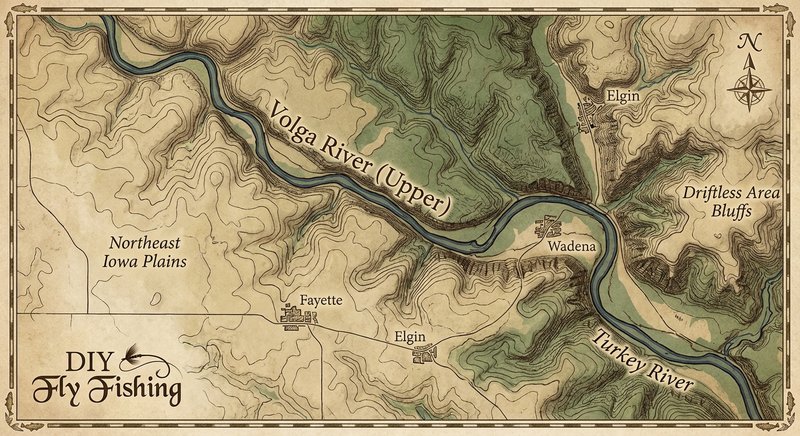
Volga River (Upper)
Fly fishing in Iowa · intermediate · Best seasons: spring, summer, fall
Target Species
Brown Trout
About This Water
Fayette County headwaters with wild trout. Driftless Area character.
Fishing Recommendations
The Upper Volga River in Fayette County, Iowa, is one of the hidden gems of the Driftless Area. While many anglers flock to the more famous streams in Winneshiek or Allamakee counties, the Volga offers a more secluded, rugged, and rewarding experience for those targeting wild and holdover Brown Trout.
🎣 Location Overview
The Upper Volga River is a classic Driftless spring-fed stream characterized by its limestone bluffs, deep valleys, and intimate water. Unlike the wider, slower sections downstream, the "Upper" Volga (primarily from Fayette upstream through the Volga River State Recreation Area) features a higher gradient with a mix of fast-moving riffles, deep limestone-carved pools, and long, glassy flats.
What makes it special is the Volga River State Recreation Area (VRSRA). This 5,000-acre park provides miles of public access in a state where private land can often be a barrier. The water is chemically rich due to the limestone substrate, leading to incredible insect biomass and high-quality trout habitat.
🐟 Target Species & Behavior
The primary prize here is the Brown Trout. While the Iowa DNR stocks some Rainbows in certain sections, the Upper Volga is managed for its self-sustaining and "trophy" Brown Trout potential.
- Behavior: These Browns are notorious for being "bank-oriented." They love the safety of undercut banks, fallen timber, and the deep shadows cast by limestone ledges.
- Feeding: They are opportunistic but wary. In the spring, they focus on aquatic larvae; in the summer, they shift their gaze upward for terrestrials; in the fall, they become aggressive predators, targeting smaller trout and baitfish.
- Holdings: Look for the "bubble line" near rock faces. On the Volga, the biggest fish often sit in the transition zone between a fast riffle and the deep head of a pool.
📅 Best Times to Fish
The Volga is a year-round fishery, but for the best action, focus on these windows:
- Spring (April – June): This is the prime "hatch" season. The water is cold and oxygenated. Look for the massive Grannom Caddis hatches in late April and early May.
- Summer (July – August): Focus on early mornings and late evenings. The Volga stays relatively cool due to spring influence, but the heat of the day can make fish lethargic. This is the peak of Hopper Season.
- Fall (September – October): My personal favorite. The Brown Trout begin their pre-spawn movements. They become highly aggressive and display stunning buttery-gold colors.
- Prime Conditions: 24 to 48 hours after a light rain. The Volga can get "milky" (stained) after a downpour; this is the best time to throw large streamers for the monsters that usually hide during the day.
🪰 Recommended Flies & Techniques
Nymphing (The Bread & Butter)
Nymphing accounts for 80% of the fish caught here.
- Pink Squirrel (Size 14-16): An Iowa Driftless staple. The flash and the pink dubbing are irresistible in these waters.
- Scuds & Sowbugs (Size 14-18): These are the primary food source year-round. Use grey or olive.
- Pheasant Tail: Classic imitation for Mayfly nymphs.
Dry Flies (The Excitement)
- Elk Hair Caddis (Size 14-18): Use this when you see rising fish in the evening.
- Trico Spinners (Size 20-24): For the technical angler in late summer mornings.
- Chubby Chernobyl / Fat Angie: Excellent "indicator" flies for a hopper-dropper rig.
Streamers (For the Trophies)
- Woolly Bugger (Black or Olive): Sizes 6-10.
- Sculpzilla: Browns in the Volga love sculpin patterns fished deep near the woodpile.
Presentation Tips
- The "Reach Cast": Essential on the flat pools to prevent drag.
- Stealth: The water is often gin-clear. Avoid wearing bright colors; olive or tan clothing helps you blend into the bluffs.
💡 Pro Tips & Local Knowledge
- The Bridge Strategy: Most anglers fish within 200 yards of a bridge or parking lot. On the Volga, if you hike 20 minutes into the State Recreation Area woods, you will find fish that haven't seen a fly in weeks.
- Kneel while you fish: Because the banks are often elevated, trout can see your silhouette against the sky from a long way off. Stay low!
- Focus on the Wood: The Volga has significant "deadfall" (fallen trees). While you will lose some flies, the biggest Browns live deep inside the submerged branches. Use a heavier tippet (4X) when fishing near wood.
- The "V" Trick: Look for the "V" in the water surface where two currents meet. In the Volga, these seams are conveyor belts for food.
⚠️ Important Information
- Access: The Volga River State Recreation Area (near Fayette) is your primary access point. There are several parking lots and well-marked trails.
- Regulations: Iowa law requires a fishing license and a Trout Fee. Most of the Upper Volga is open to "all legal lures," but always check the current Iowa DNR Trout Fishing Guide for any specific "Artificial Lures Only" or "Catch and Release" stretches that may be implemented.
- Safety: The banks can be muddy and slippery. Cleated wading boots are highly recommended. Also, be aware of wild parsnip in the summer—the sap causes nasty skin burns if exposed to sunlight.
- Private Land: Outside the State Park, Iowa law states that the "riverbed" is often private. Stay in the water or ask for permission before trekking through farm fields.
Guide’s Final Word: The Upper Volga is a "thinking man's" river. It won't give up its secrets easily, but if you move slowly, fish the deep wood, and use Driftless staples like the Pink Squirrel, you’ll find some of the finest Brown Trout in the Midwest. Tight lines!
Bug Hatches & Matching Flies
| Hatch | Type | Peak months | Time of day | Hook sizes | Matching flies |
|---|---|---|---|---|---|
| Blue-Winged Olive Baetis spp. | mayfly | March, April, September, October | Midday | #18-22 | RS2 #18-22, Parachute BWO #18-20, Pheasant Tail #18-22 |
| Grannom Caddis Brachycentrus spp. | caddis | April, May | Afternoon/Evening | #14-16 | Peacock Caddis #14-16, LaFontaine's Deep Sparkle Pupa #14-16, Elk Hair Caddis (Dark) #14-16 |
| Trico Tricorythodes spp. | mayfly | July, August, September | Morning | #20-24 | Trico Spinner #20-24, Griffith's Gnat #20-22, Trico Nymph #22-24 |
| Light Cahill Stenacron interpunctatum | mayfly | June, July | Evening | #12-14 | Light Cahill #12-14, Gold Ribbed Hare's Ear #12-14, Cahill Emerger #14 |
| Tan Caddis Hydropsyche spp. | caddis | May, June, July, August | Evening | #14-18 | Elk Hair Caddis (Tan) #14-18, Hydropsyche Larva #14-16, Soft Hackle Hare's Ear #14-16 |
| Terrestrials Formicidae / Orthoptera | terrestrial | July, August, September | Midday/Afternoon | #8-18 | Dave's Hopper #8-12, Black Foam Ant #16-18, Coffee's Sparkle Beetle #14-16 |
| Midges Chironomidae | midge | February, March, November | All Day | #18-26 | Zebra Midge #18-22, Morgan's Midge #20-24, Palomino Midge #20-22 |
| Little Brown Stonefly Strophopteryx fasciata | stonefly | March, April | Midday | #14-16 | Early Brown Stone #14-16, Prince Nymph #12-16, Pats Rubber Legs (Small) #14 |