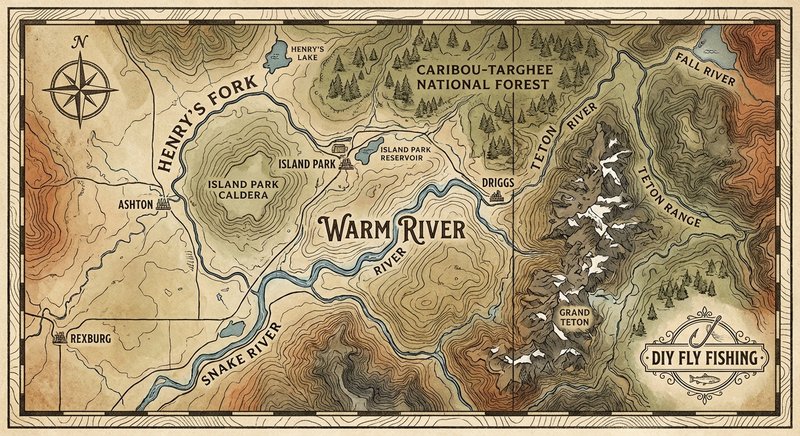
Warm River
Fly fishing in Idaho · Beginner · Best seasons: Summer, Fall
Target Species
Rainbow Trout, Brown Trout
About This Water
Near Ashton with rainbow trout. Scenic fishing near Island Park and Yellowstone.
Fishing Recommendations
Warm River is one of Idaho’s hidden gems. While many anglers rush past it to reach the world-famous Henry’s Fork, those in the know pull over to enjoy this spring-fed sanctuary. As your guide, I’m excited to break down this unique fishery for you.
🎣 Location Overview
Warm River is a major tributary of the Henry’s Fork, located near Ashton, Idaho. Its name is somewhat misleading; it isn't "warm" in the literal sense, but because it is largely spring-fed, it maintains a remarkably consistent temperature (around 40-50°F) year-round. While other rivers are freezing over or blowing out with snowmelt, Warm River remains stable.
The river flows through the lush Caribou-Targhee National Forest, characterized by crystal-clear water, gentle gradients, and a mix of pine forests and meadows. It is an intimate river—narrower and more manageable than the Henry's Fork—making it a paradise for the wading angler who values stealth and precision over long-distance casting.
🐟 Target Species & Behavior
- Rainbow Trout: These are the primary residents. They are exceptionally healthy, vibrant, and known for their aerial acrobatics. You’ll find them in the faster riffles and at the heads of pools.
- Brown Trout: The "heavy hitters" of the river. Browns here love structure. Look for them tucked deep under undercut banks, behind fallen timber, or in the shadows of the old railroad bridge pillars.
- Mountain Whitefish: Plentiful and often very large. While not the primary target, they provide great action on nymphs when the trout are being finicky.
Behavior Note: Because the water is so clear, these fish are "spooky." They have excellent vision and will bolt if they see a shadow or a sloppy splash-down of a fly line.
📅 Best Times to Fish
Summer (Late June – August)
- The Salmonfly Hatch: Usually hits in late June. It is less chaotic than on the main Henry’s Fork, offering a more manageable experience with massive dry flies.
- Terrestrial Season: August is prime for Hoppers, Ants, and Beetles.
- Time of Day: Early morning (dawn to 10:00 AM) and "the witching hour" (last two hours of daylight).
Fall (September – October)
- The Brown Trout Run: Large Browns move up from the Henry’s Fork into Warm River to prepare for spawning.
- Blue Winged Olives (BWO): Cloudy autumn days trigger massive BWO hatches.
- Conditions: Crisp mornings and golden aspens make this the most scenic time to be on the water.
🪰 Recommended Flies & Techniques
Dry Flies
- Salmonflies (June): Rogue River Stone or Clark’s Stone (#6-8).
- Caddis: Elk Hair Caddis (Tan/Olive, #14-16) are a staple all summer.
- Terrestrials: Chubby Chernobyls, Dave’s Hoppers, and Black Foam Ants (#12-16).
- Mayflies: Parachute Adams or Tilt-Wing PMDs (#16-18).
Nymphs
- The "Bread & Butter": Bead-head Pheasant Tails (#16-18) and Zebra Midges (Black/Silver, #18-22).
- Attractors: Prince Nymphs or Rubber Leg Stoneflies (size #8-12) to get down fast in the deeper holes.
Streamers
- Patterns: Woolly Buggers (Olive or Black) and Gold-Ribbed Hare’s Ear streamers.
- Technique: Use a "swing and strip" method near undercut banks to entice aggressive fall Browns.
Presentation Tip
The "Hopper-Dropper" is the most effective way to fish Warm River. Use a buoyant Chubby Chernobyl as your indicator and hang a small Pheasant Tail or Copper John 18-24 inches below it.
💡 Pro Tips & Local Knowledge
- The "Fish Tunnel": There is a famous abandoned railroad tunnel and bridge. The deep water around these structures holds some of the largest fish in the river.
- Stealth is Mandatory: Wear natural colors (greens/browns) to blend into the forest. Approach the banks slowly. I often recommend kneeling while casting to stay below the fish’s line of sight.
- Mind the "Micro-Drag": Because of the varying current speeds near the banks, your fly will often drag unnaturally. Use a "Reach Cast" to create slack in your line and ensure a dead drift.
- The Confluence: The area where Warm River meets the Henry's Fork is a high-traffic area for fish moving between systems. It’s a "bucket list" spot for many Idaho anglers.
⚠️ Important Information
- Access: The Warm River Campground is the primary access point. There is also access via the Railroad Grade trail, which allows you to hike or bike to more remote stretches away from the crowds.
- Regulations: Idaho fishing licenses are required. Ensure you check the current Idaho Fish & Game seasons, as some stretches may have specific catch-and-release rules or gear restrictions (barbless hooks are always a good idea).
- Bear Safety: This is Grizzly and Black Bear country. Always carry bear spray, make noise while walking through thick brush, and never leave food or trash out.
- Wading Safety: The river bottom can be slick and "pitted" with beaver holes. A wading staff is highly recommended for stability.
Guide’s Final Thought: Warm River is a place for the "thinking angler." If you take your time, observe the water, and match your fly to the subtle hatches, you’ll have a world-class day of trout fishing. Tight lines!
Bug Hatches & Matching Flies
| Hatch | Type | Peak months | Time of day | Hook sizes | Matching flies |
|---|---|---|---|---|---|
| Blue Winged Olive Baetis | mayfly | March, April, September, October | Late Morning/Afternoon | #18-22 | RS2 #20-22, BWO Sparkle Dun #18-20, Parachute Adams #18-22 |
| Salmonfly Pteronarcys californica | stonefly | May, June | All Day | #4-8 | Rogue River Stone #4-8, Pat's Rubber Leg #6-10, Chubby Chernobyl (Orange) #6-10 |
| Pale Morning Dun Ephemerella excrucians | mayfly | June, July | Late Morning/Early Afternoon | #16-18 | PMD Sparkle Dun #16-18, Pheasant Tail Nymph #16-18, Split Case PMD #16-18 |
| Golden Stonefly Hesperoperla pacifica | stonefly | June, July | Afternoon/Evening | #8-12 | Water Walker (Golden) #8-12, Golden 20-Incher #10-12 |
| Spotted Sedge Hydropsyche | caddis | June, July, August, September | Evening | #14-18 | Elk Hair Caddis #14-18, LaFontaine's Deep Sparkle Pupa #14-16, Goddard Caddis #14-16 |
| Yellow Sally Isoperla | stonefly | June, July | Afternoon | #14-16 | Yellow Sally Stimulator #14-16, Iron Sally #14-16 |
| Midges Chironomidae | midge | January, February, March, December | Mid-day | #20-24 | Zebra Midge #20-22, Griffith's Gnat #20-24, Morgan's Midge #20-22 |
| Terrestrials Various | terrestrial | August, September | Afternoon | #10-16 | Morrish Hopper #10-12, Black Foam Ant #16-18, Grape Slushy #12-14 |