West Branch Pleasant River
Fly fishing in Maine · Intermediate · Best seasons: Summer, Fall
Target Species
Brook Trout
About This Water
Remote Piscataquis County stream with wild brook trout. Backcountry fishing.
Fishing Recommendations
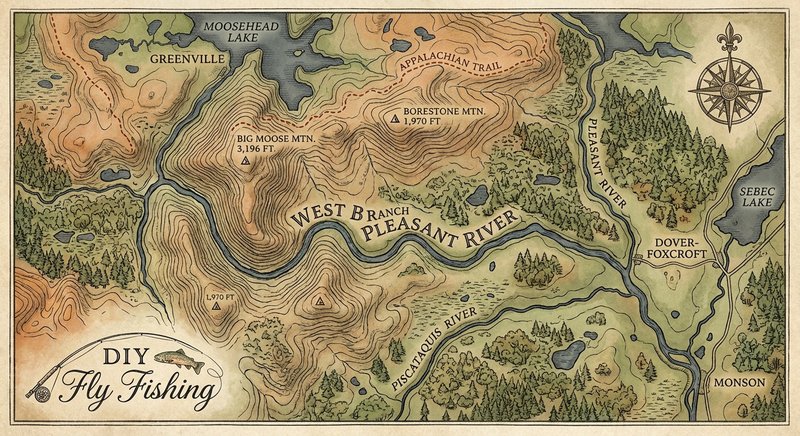
The West Branch of the Pleasant River is one of Maine’s crown jewels for the adventurous fly angler. Flowing through the rugged "100-Mile Wilderness" and the Katahdin Iron Works (KIW) region, this is classic North Woods freestone water. It is a place of wild beauty, characterized by the dramatic Gulf Hagas canyon—often called the "Grand Canyon of the East"—and some of the most genetically pure wild brook trout habitat in the Eastern United States.
🎣 Location Overview
The West Branch is a high-gradient, freestone river that drains the mountains east of Moosehead Lake. What makes it special is its remoteness and physical variety. You’ll find everything from plunging waterfalls and deep canyon pools in the Gulf Hagas section to classic "pocket water," long riffles, and quiet deadwaters further downstream.
The water is tea-stained but clear, running cold even in the summer due to heavy forest canopy and mountain springs. Anglers love it because it offers a "backcountry" experience; you aren’t just fishing, you are immersing yourself in a landscape of moss-covered boulders, old-growth pines, and the frequent company of moose and loons.
🐟 Target Species & Behavior
Native Brook Trout are the primary draw here. These are not stocked fish; they are wild, vibrant, and incredibly beautiful, sporting deep oranges and haloed blue spots.
- Behavior: In the summer, they are opportunistic but temperature-sensitive. They hold in "pocket water" behind boulders where oxygen levels are high.
- Holding Spots: Look for "seams" where fast water meets slow water, and the deep, cool slots at the base of waterfalls. In the fall, they move toward spawning gravel in smaller tributaries or headwater sections.
- Feeding: They feed heavily on caddis, stoneflies, and small forage fish (sculpins/dace). Because the growing season is short, they are often aggressive, but they are easily spooked by a heavy footfall or a poor shadow cast.
📅 Best Times to Fish
While the river is open in spring, you requested the best Summer and Fall windows:
- Summer (Late June – August): This is "pocket water" season. Focus on the early mornings and late evenings. During the heat of the day, fish will move into the fastest, most aerated water or deep canyon holes.
- Fall (September – September 30th): This is the "magic window." As water temperatures drop, the Brookies become aggressive and don colors that are breathtaking. They move out of the deep holes and into shallower runs.
- Prime Conditions: Overcast days are best. In the summer, fish the "evening rise" (the last 90 minutes of light). In the fall, midday fishing can be excellent as the sun warms the water slightly.
🪰 Recommended Flies & Techniques
Top Fly Patterns
- Dry Flies:
- Summer: Elk Hair Caddis (#14-16), Royal Wulff (#12-14), and Stimulators (#10-12) in orange or yellow to mimic golden stoneflies.
- Fall: Blue Winged Olives (BWO) (#18-22) on drizzly days and the classic Hornberg (fished as a dry or a streamer).
- Nymphs:
- Bead-head Pheasant Tails (#14-18), Prince Nymphs, and Pat’s Rubber Legs (black/brown) for the deeper canyon pools.
- Streamers:
- Black or Olive Woolly Buggers and the Muddler Minnow. The Muddler is a local favorite because it mimics both a sculpin and a grasshopper.
Techniques
- High-Sticking/Euro-Nymphing: The river is full of boulders. Using a long rod to keep your line off the complex currents is the best way to get a natural drift in the pockets.
- Dry-Dropper: A favorite summer tactic. Use a buoyant Stimulator as your indicator and hang a small Pheasant Tail 18 inches below it.
- Stealth: The water is often crystal clear. Keep a low profile and wade quietly; if you can see the fish, they have likely already seen you.
💡 Pro Tips & Local Knowledge
- The Gulf Hagas Hike: Some of the best fishing requires a hike. If you are physically able, hike into the Gulf Hagas trail. The pools at the bottom of the falls (like Screw Auger Falls) hold larger fish that stay cool all summer.
- The "Maine Twitch": When fishing a dry fly like a caddis, don't be afraid to give it a tiny skitter or twitch. Native Brookies often react to movement more than a perfect dead drift.
- Look for "Cold Water Refugia": In August, look for where small, icy mountain brooks enter the main river. Fish will stack up in these plumes of cold water.
- Logging Roads: This is "Paper Company" land. The roads are gravel and used by massive logging trucks. They have the right of way. Always pull over completely and give them space.
⚠️ Important Information
Access
- KIW Jo-Mary Forest: Most access is through the Katahdin Iron Works gate. There is a per-person, per-night (or day use) fee. It is a private working forest managed for public recreation.
- Navigation: Bring a physical map (The Maine Atlas and Gazetteer) and a spare tire. Cell service is non-existent once you pass the gate.
Regulations
- General Law: Maine fishing laws are specific. Many sections of the West Branch are Artificial Lures Only (ALW) or Fly Fishing Only (FFO).
- Catch and Release: While some sections allow harvest, I highly recommend 100% catch and release for wild Brook Trout to preserve this fragile fishery.
- Always check the Maine MDIFW Open Water Fishing Laws before you head out, as regulations on "S-codes" (special rules) can change annually.
Special Considerations
- Bugs: In June and July, the black flies and mosquitoes are legendary. Bring high-quality repellent or a bug net.
- Safety: You are in a remote area. Carry a first aid kit, plenty of water, and tell someone exactly where you are going. A satellite communicator (like a Garmin inReach) is a wise investment here.
Bug Hatches & Matching Flies
| Hatch | Type | Peak months | Time of day | Hook sizes | Matching flies |
|---|---|---|---|---|---|
| Quill Gordon Epeorus pleuralis | mayfly | May | Mid-day | #12-14 | Quill Gordon Dry #12-14, Hare's Ear #12-14 |
| Hendrickson Ephemerella subvaria | mayfly | May, June | Afternoon | #12-14 | Hendrickson Pink Lady #12-14, Red Quill #12-14, Hendrickson Emerger #14 |
| Grannom Caddis Brachycentrus | caddis | May | Morning/Afternoon | #14-16 | Green Weenie #14-16, Peacock Caddis #14-16, Elk Hair Caddis (Olive) #14-16 |
| March Brown Maccaffertium vicarium | mayfly | June | Afternoon/Evening | #10-12 | March Brown Dry #10-12, Gold Ribbed Hare's Ear #10-12 |
| Sulphur Ephemerella invaria | mayfly | June, July | Evening | #14-18 | Sulphur Parachute #16-18, Sulphur CDC Emerger #16-18 |
| Giant Black Stonefly Pteronarcys dorsata | stonefly | June | Night/Early Morning | #4-8 | Kaufmann's Stone #6-8, Pat's Rubber Legs #6-8 |
| Light Cahill Stenacron interpunctatum | mayfly | July, August | Evening/Dusk | #12-16 | Light Cahill Dry #14-16, Cream Usual #14-16 |
| Blue-Winged Olive Baetis | mayfly | May, September, October | Mid-day/Afternoon | #18-22 | BWO Sparkle Dun #18-22, Pheasant Tail #18-22 |
| Cinnamon Caddis Hydropsyche | caddis | July, August | Evening | #14-18 | Elk Hair Caddis (Tan) #14-16, LaFontaine's Deep Sparkle Pupa #16 |
| Terrestrials (Ants/Beetles) Formicidae / Coleoptera | terrestrial | July, August, September | All Day | #12-18 | Black Foam Ant #14-18, Crowe Beetle #12-16 |