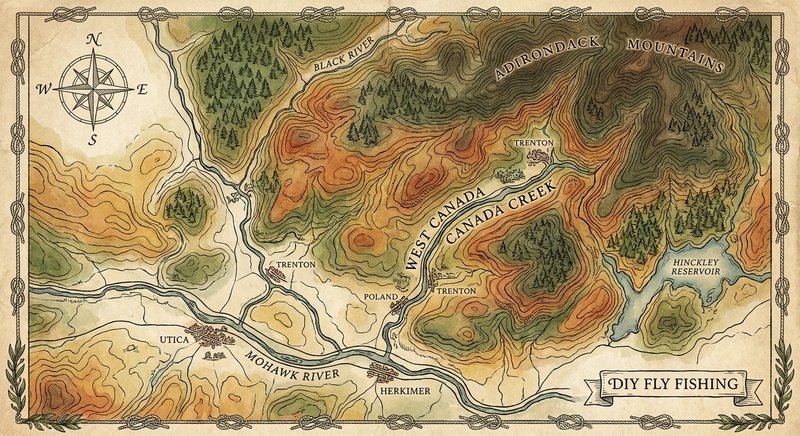
West Canada Creek
Fly fishing in New York · Intermediate · Best seasons: Spring, Summer, Fall
Target Species
Brown Trout, Brook Trout
About This Water
Southern Adirondack stream with wild brown trout. Excellent hatches and scenic gorge fishing.
Fishing Recommendations
West Canada Creek is one of New York’s premier tailwater fisheries. Located in Central New York, flowing from the Adirondack foothills toward the Mohawk River, it is a river of two personalities: a classic freestone stream in its upper reaches and a broad, powerful tailwater in its most famous lower sections.
As your guide, here is the comprehensive breakdown of how to find success on "The West."
🎣 Location Overview
West Canada Creek is legendary among New York anglers primarily because of the Hinckley Reservoir Dam. As a tailwater, the river receives cold-water releases from the bottom of the dam, which keeps the water temperatures optimal for trout even during the dog days of July and August when other regional streams become dangerously warm.
The river is characterized by its wide, expansive bed, varying from 100 to 200 feet across in many areas. You’ll find a mix of long, glassy glides, heavy riffles, and deep "dark water" pools. The substrate is largely slippery cobble and limestone shelf, making wading a challenge but providing a rich environment for insect life. It feels like a "big" river, requiring technical casting and a good eye for reading water.
🐟 Target Species & Behavior
- Brown Trout: The stars of the show. The river holds a massive population of both stocked and holdover Browns. In the "Trophy Section," you will find wild fish and holdovers that reach 20+ inches. They are notorious for being "surface-oriented" during hatches but retreat to deep ledge holes and undercut banks when the sun is high.
- Brook Trout: Found more frequently in the upper reaches above Hinckley Reservoir or near the mouths of cold-water tributaries (like Cincinnati Creek). They are opportunistic but smaller than the Browns.
Behavior Note: Because it is a tailwater, these fish are "flow-aware." When the water rises due to a dam release, fish often move toward the banks to escape the heavy current. When flows are stable, they spread out into the riffles.
📅 Best Times to Fish
- Spring (Late April – June): This is prime time for major hatches. The Hendrickson hatch in May is the highlight of the year. The water is high but clear, and the fish are hungry after winter.
- Summer (July – August): While other rivers shut down, the West Canada thrives. Early mornings and late evenings are best. This is the time for the famous White Miller (Ephoron leukon) hatch in August, which can create a literal blizzard of bugs at dusk.
- Fall (September – October): As the water cools further, Browns become aggressive ahead of the spawn. Streamer fishing becomes the go-to method for targeting the largest fish in the system.
🪰 Recommended Flies & Techniques
Top Fly Patterns
- Dry Flies: Hendrickson (Size 12-14), Blue Winged Olive (18-22), Light Cahill (14-16), and the White Miller (12-14) for August nights. For terrestrials, Ants and Beetles are deadly in summer.
- Nymphs: Zebra Midges (20-22), Pheasant Tails (14-18), and Scuds/Sowbugs (16-18). Tailwater trout eat scuds year-round.
- Streamers: Black or Olive Wooly Buggers, Sculpin patterns, and the "Bank Robber" style streamers for high-water days.
Techniques
- The "Long Leader" Dry Fly: The water in the glides can be very flat. Use 12–15 foot leaders tapered to 5X or 6X to avoid spooking "bank feeders."
- European Nymphing: Given the river's width and various pocket water, Euro nymphing is incredibly effective here for reaching fish in the deeper center-river slots.
- Swinging Wet Flies: A traditional Catskill technique that works wonders here. Swinging a pair of Soft Hackles through the riffles is a great way to cover water during a hatch.
💡 Pro Tips & Local Knowledge
- The Trophy Section: Focus your efforts on the 2.5-mile stretch from the bridge in Trenton Falls downstream to the mouth of Cincinnati Creek. This is a "No Kill" catch-and-release zone with special regulations. It holds the highest concentration of large fish.
- The "Bubble Line": On this wide river, fish the seams where slow and fast water meet. Look for the "bubble line"—if bubbles are floating there, the nymphs are drifting there too.
- Wading Safety: The rocks on the West Canada are notoriously "greasy." Studded boots and a wading staff are non-negotiable. Do not try to cross the river in high flow; the power of the water is deceptive.
- The "White Miller" Madness: If fishing in August, stay until you can’t see your fly anymore. The White Miller hatch usually starts in the final 30 minutes of daylight. It can be some of the most frantic dry-fly fishing in the Eastern US.
⚠️ Important Information
- Water Levels (CRITICAL): The West Canada is a hydroelectric river. Water levels can rise several feet in a matter of minutes. Always keep an eye on a stationary rock at the water's edge. If it disappears, get to the bank immediately.
- Check the Brookfield Renewable Power "Power Line" or USGS Gauge at Kast Bridge before heading out.
- Regulations:
- Trophy Section: Catch and Release Only, Artificial Lures/Flies Only.
- General Sections: Standard NY State inland trout regulations apply, but always check the current NYSDEC handbook for updates on seasons and creel limits.
- Access: There are numerous NYSDEC Public Fishing Rights (PFR) spots along Route 28. Look for the yellow and blue "Public Fishing" signs.
Guide’s Final Word: The West Canada Creek is a "reward" river. It can be technical and the wading is tough, but for the angler who masters the drift and respects the water levels, it offers some of the finest trout fishing in the Northeast. Tight lines!
Bug Hatches & Matching Flies
| Hatch | Type | Peak months | Time of day | Hook sizes | Matching flies |
|---|---|---|---|---|---|
| Blue Winged Olive Baetis | mayfly | April, May, September, October | Afternoon | #18-22 | RS2 #18-22, Parachute BWO #18-20, Pheasant Tail #18-20 |
| Hendrickson Ephemerella subvaria | mayfly | April, May | Afternoon | #12-14 | Hendrickson Sparkle Dun #12-14, Red Quill #14, Hare's Ear Nymph #12-14 |
| Grannom Caddis Brachycentrus | caddis | April, May | Morning/Afternoon | #14-16 | Elk Hair Caddis (Green body) #14-16, Deep Sparkle Pupa #14-16, Pulsating Caddis #14-16 |
| March Brown Maccaffertium vicarium | mayfly | May, June | Afternoon | #10-12 | March Brown Dry #10-12, Gold Ribbed Hare's Ear #10-12, March Brown Wet Fly #12 |
| Light Cahill Stenonema/Stenacron | mayfly | June, July | Evening | #14-16 | Light Cahill Dry #14-16, Cream Usual #14-18, Fox Squirrel Nymph #14-16 |
| Isonychia Isonychia bicolor | mayfly | June, July, August, September | Late Afternoon/Evening | #10-12 | Iso Parachute #10-12, Prince Nymph #10-12, Zug Bug #10-14 |
| Tan Caddis Hydropsyche | caddis | June, July, August | Evening | #14-18 | Tan Elk Hair Caddis #14-18, LaFontaine's Emerger #16, Frenchie #14-18 |
| Trico Tricorythodes | mayfly | July, August, September | Morning | #22-26 | Trico Spinner #22-26, Griffith's Gnat #22-24, Trico Drowned Spinner #24 |