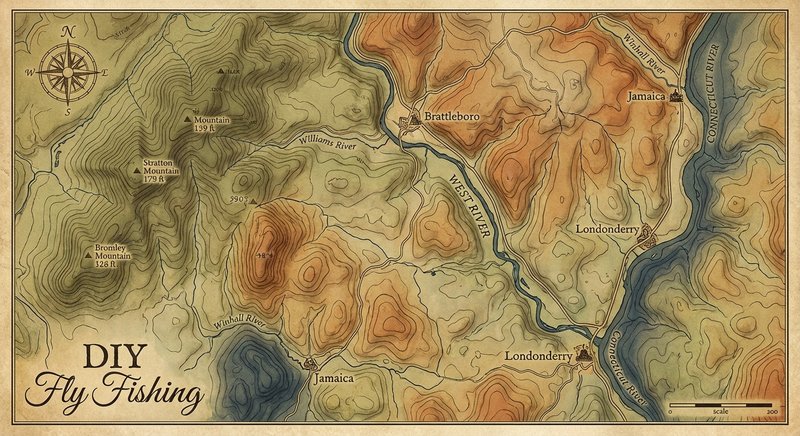
West River
Fly fishing in Vermont · Intermediate · Best seasons: Spring, Summer, Fall
Target Species
Brown Trout, Rainbow Trout
About This Water
Southern Vermont stream with brown and rainbow trout. Popular for both fly fishing and kayaking.
Fishing Recommendations
The West River in southern Vermont is a quintessential New England freestone stream. Flowing from the Green Mountains down toward the Connecticut River, it offers a diverse range of water, from tumbling pocket water and deep gorges to wide, classic runs. It is a river of moods, heavily influenced by two major dams (Ball Mountain and Townshend), providing anglers with both a technical challenge and the reward of beautiful, hard-fighting trout.
🎣 Location Overview
The West River is a scenic gem that winds through the heart of the Green Mountain National Forest. What makes it special is its structural diversity. In the upper reaches near Weston and Londonderry, it is a charming, smaller stream. As it moves toward Jamaica and Townshend, it transforms into a powerful river characterized by massive granite boulders (locally called "The Dumplings"), deep ledge pools, and swift riffles.
Anglers love the West because it feels "wild." Even though sections are stocked by the Vermont Fish & Wildlife Department, the river’s complex structure allows for significant "holdover" fish that grow large and wary. The scenery, particularly within Jamaica State Park, is some of the finest in the Northeast.
🐟 Target Species & Behavior
- Brown Trout: The kings of the deep ledge pools and undercut banks. The West River Browns are known for being opportunistic but cautious. They often hold in the "cushion" in front of large boulders or deep in the tail-outs of pools during low light.
- Rainbow Trout: Found primarily in the faster, oxygenated water. Look for them in the "pocket water" and at the heads of riffles. They are generally more aggressive than the browns and will rise more readily to a well-presented dry fly.
- Behavioral Note: Because the West is a freestone river, fish are highly attuned to water temperature and flow. During high water, they hug the banks; during the heat of summer, they seek out "thermal refuges" where cold-water tributaries enter the main stem.
📅 Best Times to Fish
- Spring (Late April – June): This is the prime window. Once the snowmelt (runoff) subsides in mid-May, the river comes alive. The legendary Hendrickson hatch occurs in May, bringing the largest fish to the surface.
- Summer (July – August): Fishing becomes more technical. Focus on the early morning (sunrise to 10:00 AM) and late evening (7:00 PM to dusk). Pro Tip: Monitor water temperatures; if the water hits 70°F, stop fishing to protect the trout.
- Fall (September – October): My personal favorite time. The Brown trout become aggressive and territorial as they prepare to spawn. The water cools, and the "Isonychia" and "Blue Winged Olive" hatches can provide spectacular dry fly action against a backdrop of world-class fall foliage.
🪰 Recommended Flies & Techniques
Dry Flies
- Hendrickson (Light & Dark) #12-14: Vital for May.
- Elk Hair Caddis #14-18: A staple all summer long.
- White Wulff #10-12: A high-visibility classic for the fast water in Jamaica State Park.
- Royal Wolf / Stimulator #10-14: Excellent "attractor" patterns for prospecting pocket water.
Nymphs (The most consistent producers)
- Pheasant Tail #14-18: Mimics almost everything.
- Pat’s Rubber Legs #8-12: Essential for the deeper, faster runs; mimics the large Stoneflies found in the West.
- Prince Nymph #12-16: Great for the "flash" it provides in slightly stained water.
Streamers
- Woolly Bugger (Black or Olive) #6-10: The gold standard.
- Black Ghost: A classic New England pattern that works wonders for holdover Browns in the fall.
Techniques
- High-Sticking/Tight-Line Nymphing: Because the West is so rocky, traditional indicator nymphing can be tough. Use a tight-line approach to navigate the "pockets" between boulders.
- The "Swing": Swinging a wet fly or small streamer through the tail-outs of the larger pools is a deadly local secret.
💡 Pro Tips & Local Knowledge
- Focus on Jamaica State Park: This stretch offers the best access and the most diverse water. Walk the "Rail Trail" along the river to find spots away from the main bridges—the further you walk, the better the fishing gets.
- The "Dumplings": In the section known as the Dumplings, the rocks are massive. Fish the soft water immediately behind these boulders. Trout wait there to intercept food washed down by the heavy current.
- Watch the Dam Releases: The Army Corps of Engineers manages Ball Mountain Dam. Always check the USGS gauge for "West River at Jamaica." A sudden release can make wading dangerous and put the fish off the bite.
- Stealth Matters: The West River can run very clear. Long leaders (9–12 feet) and light tippets (5X or 6X) are often necessary during the summer months.
⚠️ Important Information
- Access: Route 30 parallels much of the river. Look for pull-offs with "Fishing Access" signs. Jamaica State Park requires a small entry fee but provides the best parking and trail access.
- Regulations: Vermont fishing licenses are required. Most of the West River follows general state regulations, but always check the current Vermont Digest of Hunting and Fishing Laws, as some sections or tributaries may have "Trophy Trout" or "Catch and Release" designations that change periodically.
- Safety: The rocks in the West River are notorious for being slippery. Felt-soled boots with studs are highly recommended. A wading staff is not just a luxury here; it’s a safety requirement, especially in the gorge sections.
- Clean-Drain-Dry: To prevent the spread of invasive species like Didymo (rock snot), ensure your gear is thoroughly cleaned before moving to other watersheds.
Bug Hatches & Matching Flies
| Hatch | Type | Peak months | Time of day | Hook sizes | Matching flies |
|---|---|---|---|---|---|
| Hendrickson Ephemerella subvaria | mayfly | April, May | Afternoon | #12-14 | Red Quill #12-14, Hendrickson Emerger #12-14, Pheasant Tail #12-14 |
| Blue-Winged Olive Baetis / Acerpenna | mayfly | April, May, September, October | Late Morning/Afternoon | #18-22 | BWO Sparkle Dun #18-22, RS2 #20-22, WD-40 #18-22 |
| Grannom Caddis Brachycentrus | caddis | April, May | Morning/Afternoon | #14-16 | Elk Hair Caddis (Olive) #14-16, Pupa-Leathen #14-16, Deep Sparkle Pupa #14-16 |
| March Brown Maccaffertium vicarium | mayfly | May, June | Afternoon | #10-12 | March Brown American #10-12, Gold Ribbed Hare's Ear #10-12, March Brown Wet Fly #12 |
| Sulphur Ephemerella invaria / dorothea | mayfly | June, July | Evening | #14-18 | Sulphur Parachute #14-18, Sulphur Snowshoe Emerger #16-18, Split Case Sulphur #16-18 |
| Light Cahill Stenacron / Stenonema | mayfly | June, July, August | Evening/Dusk | #12-14 | Light Cahill #12-14, Cream Usual #14, Lesser Cahill Nymph #14 |
| Golden Stonefly Acroneuria | stonefly | June, July | Morning/Evening | #8-12 | Stimulator (Yellow) #8-12, Pat's Rubber Leg #8-12, 20 Incher Stone #10-12 |
| Tan Caddis Hydropsyche | caddis | June, July, August, September | Evening | #14-18 | Elk Hair Caddis (Tan) #14-18, LaFontaine's Emergent Pupa #14-16, Frenchie #14-18 |
| Black Ant Formicidae | terrestrial | July, August, September | All Day | #14-18 | Black Foam Ant #14-18, Cinnamon Ant #16-18, Chernobyl Ant #10-12 |