Blacksmith Fork River
Fly fishing in Utah · Beginner · Best seasons: Summer, Fall
Target Species
Brown Trout, Cutthroat Trout
About This Water
Northern Utah stream with brown and cutthroat trout. Good canyon fishing.
Fishing Recommendations
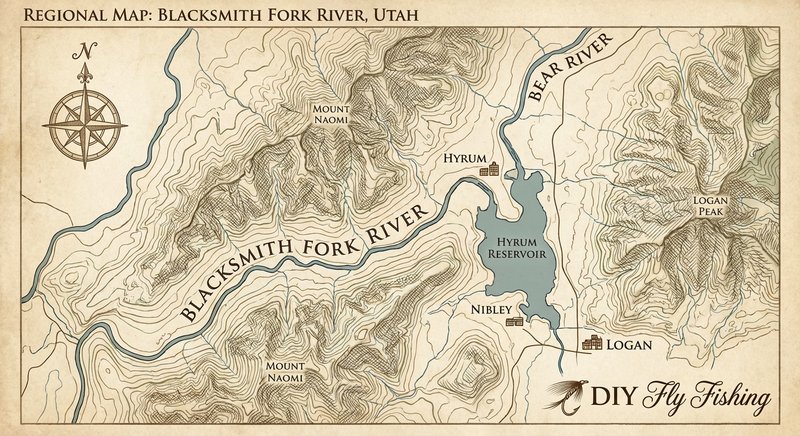
The Blacksmith Fork River, located just south of Logan, Utah, is often overshadowed by its more famous neighbor, the Logan River. However, for the discerning angler, "the Blacksmith" offers a more intimate, less crowded, and incredibly productive fly fishing experience. As your guide, I’m excited to break down this Logan Canyon gem.
🎣 Location Overview
The Blacksmith Fork is a classic freestone stream that winds through a dramatic limestone canyon before opening into high-mountain meadows. What makes it special is its diversity of water. You’ll find everything from turbulent pocket water and plunging pools in the lower canyon to slow-moving, technical undercut banks in the upper meadow sections near Hardware Ranch.
Anglers love the Blacksmith Fork because it feels "wilder" than the Logan. The fish are predominantly wild, the scenery is rugged, and the insect hatches—particularly the caddis and terrestrials—are legendary in Northern Utah.
🐟 Target Species & Behavior
The river is a stronghold for two primary species:
- Brown Trout: These are the kings of the lower and middle canyon. They are opportunistic but wary. They love "overhead cover"—look for them tucked tight under willow overhangs, beneath undercut banks, or behind large limestone boulders. During the fall, they become highly aggressive as they prepare for the spawn.
- Bonneville Cutthroat Trout: As you move higher up the drainage (above the Left Fork confluence), the ratio shifts toward these native beauties. Cutthroats are often found in the faster "bubble lines" and at the very heads of pools. They are generally less selective than the Browns but require a stealthy approach in the clear water.
📅 Best Times to Fish
While you can fish the Blacksmith year-round, the Summer and Fall are the undisputed prime windows.
- Summer (July – August): This is the peak of dry fly action. Once the spring runoff subsides (usually by late June), the river settles into a perfect flow.
- Time of Day: Mid-morning for mayfly hatches; late afternoon and dusk for the "Caddis Blizzard."
- Fall (September – October): This is arguably the best time for trophy Browns. The water cools, the crowds vanish, and the fish are looking for "big meals" to bulk up for winter.
- Time of Day: Bank-to-bank terrestrial fishing is excellent from noon to 4:00 PM.
- Prime Conditions: Overcast days in September can trigger massive Blue Winged Olive (BWO) hatches, providing some of the best technical dry fly fishing of the year.
🪰 Recommended Flies & Techniques
Top Fly Patterns
- Dry Flies:
- Caddis: Elk Hair Caddis (Tan/Olive, sizes 14-18) – a staple here.
- Terrestrials: Chubby Chernobyl (Orange or Black, sizes 10-14), Hippie Stomper, and Dave’s Hopper.
- Mayflies: Parachute Adams, PMD Sparkle Dun (size 16-18).
- Nymphs:
- Attractors: Prince Nymph, Copper John (Red or Lime).
- Tactical: Zebra Midge (Black/Silver), Pheasant Tail (Perdigon style for fast water).
- Streamers:
- Woolly Buggers (Olive or Black, size 8-10) and Gold Ribbed Hare's Ear streamers.
Techniques
- The Hopper-Dropper: This is the most effective summer setup. Run a buoyant Chubby Chernobyl with 2–3 feet of 5X fluorocarbon tippet to a small Zebra Midge or Pheasant Tail.
- High-Sticking/Euro Nymphing: In the canyon sections, the current is complex. Using a tight-line approach to keep your fly line off the water will prevent drag and lead to more hookups in the pocket water.
- Skating Caddis: In the evenings, don't just let your caddis drift. Give it a slight twitch or skate it across the surface to trigger aggressive strikes from Browns.
💡 Pro Tips & Local Knowledge
- Stealth is Key: The Blacksmith Fork is crystal clear. If you can see the fish, they have likely already seen you. Wear earthy tones, stay low, and avoid casting your shadow over the holes.
- Focus on the "Left Fork": The confluence of the Main Fork and Left Fork is a hotspot. The Left Fork is smaller and brushier, perfect for a 3-weight rod and a "tenkara-style" approach for native Cutthroats.
- The "Hardware Ranch" Meadows: If you prefer slow, technical water, head up to the WMA (Wildlife Management Area) near Hardware Ranch. The river meanders here, creating deep undercut banks that hold surprisingly large Browns.
- Look for "Micro-Eddies": On the canyon stretches, the fish often sit in tiny pockets of calm water right against the bank, sometimes only 6 inches deep. Don't overlook the shallow water!
⚠️ Important Information
- Access: Most of the river along Highway 101 is public land (Uinta-Wasatch-Cache National Forest). There are numerous pull-offs. However, keep an eye out for private property signs, especially in the lower reaches near the mouth of the canyon.
- Regulations:
- Check the current Utah Fishing Guidebook before heading out.
- While bait is allowed in some sections, most serious anglers use artificial flies and lures.
- Catch and release is highly encouraged to maintain the wild trout populations.
- Safety:
- Rattlesnakes: The canyon walls are prime rattlesnake habitat in the summer. Watch your step when hiking between holes.
- Wading: The rocks in the Blacksmith are notorious for being slippery. Felt soles or studs are highly recommended.
- Permits: A valid Utah Fishing License is required for everyone 12 years and older. You can purchase these online via the Utah DWR website.
Tight lines, and enjoy one of Northern Utah's best-kept secrets!
Bug Hatches & Matching Flies
| Hatch | Type | Peak months | Time of day | Hook sizes | Matching flies |
|---|---|---|---|---|---|
| Blue Winged Olive Baetis | mayfly | March, April, September, October | Late Morning/Afternoon | #18-22 | Parachute Adams #18-22, RS2 #20-22, Pheasant Tail Nymph #18-20 |
| Pale Morning Dun Ephemerella | mayfly | June, July, August | Morning/Early Afternoon | #14-18 | PMD Sparkle Dun #16-18, Quill Gordon #14-16, Military Mayfly #16-18 |
| Mother's Day Caddis Brachycentrus occidentalis | caddis | May | All Day | #14-16 | Peacock Caddis #14-16, LaFontaine's Deep Sparkle Pupa #14-16, Elk Hair Caddis (Olive) #14-16 |
| Spotted Sedge Hydropsyche | caddis | June, July, August | Evening | #12-16 | Elk Hair Caddis (Tan) #12-16, Soft Hackle Hare's Ear #14-16, Hydropsyche Larva #12-14 |
| Golden Stonefly Hesperoperla pacifica | stonefly | June, July | Morning/Afternoon | #6-10 | Chubby Chernobyl #8-10, Pat's Rubber Legs #6-10, Golden Rogue Stone #8 |
| Yellow Sally Isoperla | stonefly | June, July | Afternoon/Evening | #14-16 | Yellow Sally Dry #14-16, Iron Lotus #16, Little Yellow Sloan #14 |
| Trico Tricorythodes | mayfly | August, September | Early Morning | #20-24 | Trico Spinner #20-24, Sunken Trico Spinner #22, Griffith's Gnat #20-22 |
| Midges Chironomidae | midge | January, February, March, December | Late Morning | #18-24 | Zebra Midge #18-22, Morgan's Midge #20-22, Blood Midge #18-20 |
| Grasshoppers Orthoptera | terrestrial | August, September | Late Morning/Afternoon | #8-12 | Parachute Hopper #10-12, Morrish Hopper #8-10, Dave's Hopper #10-12 |