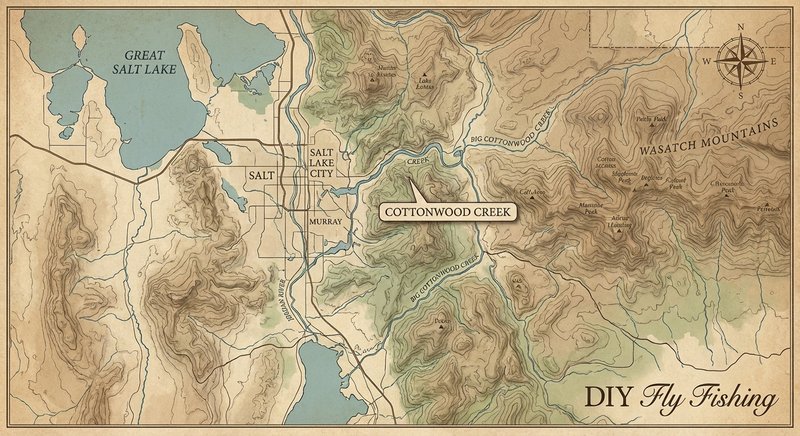
Cottonwood Creek
Fly fishing in Utah · Intermediate · Best seasons: Summer, Fall
Target Species
Brown Trout, Cutthroat Trout
About This Water
Central Utah stream with wild trout. Remote canyon fishing near Castle Dale.
Fishing Recommendations
Tight lines! As an expert guide who has spent significant time in the high deserts and mountain canyons of Utah, I can tell you that Cottonwood Creek (specifically the stretch below Joes Valley Reservoir in the San Rafael Swell region) is a hidden gem that offers a truly unique "red rock" fly fishing experience.
Here is your comprehensive guide to fly fishing Cottonwood Creek.
🎣 Location Overview
Cottonwood Creek is a tailwater fishery located in Emery County, Utah. What makes this water special is the dramatic contrast in scenery; you are fishing for cold-water trout in a landscape of towering sandstone cliffs and desert boulders.
The creek is relatively small and intimate, characterized by crystal-clear water, deep plunge pools, and technical pocket water. Because it is a tailwater (fed by the bottom of Joes Valley Dam), the water temperatures remain cool enough for trout even when the surrounding desert is scorching. Anglers love it because it lacks the heavy crowds of the Provo or Green Rivers, offering a "solitude-heavy" experience in a rugged, prehistoric setting.
🐟 Target Species & Behavior
The creek is primarily home to Brown Trout and Cutthroat Trout (specifically Bear Lake or Bonneville strains stocked in the reservoir that find their way down).
- Brown Trout: These are the kings of the creek. They are wild, aggressive, and highly territorial. They love to tuck deep under the undercut banks and behind the massive sandstone boulders that have fallen into the river.
- Cutthroat Trout: Generally found in the faster, more oxygenated riffles and at the heads of pools. They are often less "picky" than the browns but are stunningly colored against the red rock backdrop.
- Behavior: These fish are opportunistic but wary. Because the water is often very clear, they have excellent vision. They feed heavily on midges, small mayflies, and—most importantly—terrestrials that fall from the desert brush.
📅 Best Times to Fish
While you can fish here year-round, the Summer and Fall windows are world-class.
- Summer (Late June – August): This is prime time for terrestrial fishing. While the air temperature can hit 90°F+, the water stays cool. The fish are looking up for grasshoppers and ants.
- Fall (September – October): This is arguably the best window. The Brown Trout become aggressive as they prepare for the spawn. The cottonwood trees turn a brilliant gold, and the cooling air makes for comfortable hiking.
- Time of Day: In the summer, fish the "shoulders" of the day—early morning and late evening. In the fall, the midday window (10:00 AM – 3:00 PM) is the sweet spot as the sun warms the water slightly and triggers insect activity.
🪰 Recommended Flies & Techniques
Presentation is more important than the specific pattern here, but you need the right tools in the box.
Top Fly Patterns
- Dry Flies: Chubby Chernobyl (Size 10-14) in orange or tan, Amy’s Ant, Parachute Adams (Size 16-20), and Stimulators.
- Nymphs: Zebra Midges (Size 18-22) in red or black, Frenchies, and Bead-head Pheasant Tails.
- Streamers: Small Wooly Buggers in olive or black, and Gold Ribbed Hare’s Ear streamers to mimic small baitfish.
Effective Techniques
- Dry-Dropper: This is the "bread and butter" technique for Cottonwood Creek. Use a buoyant hopper or Chubby Chernobyl as your indicator and hang a small Zebra Midge or Pheasant Tail 18–24 inches below it.
- High-Sticking/Euro-Nymphing: The creek is full of "pockets" created by boulders. Dropping a heavy nymph into these pockets without any fly line on the water is deadly.
- Small Streamer Stripping: In the deeper pools, cast a streamer toward the shadows of the boulders and give it short, erratic strips.
💡 Pro Tips & Local Knowledge
- Stealth is Mandatory: The water is clear and the creek is small. If you can see the fish, they have likely already seen you. Wear earthy tones (no bright white or blue shirts) and approach pools from downstream, staying low.
- The "Boulder Hop": Don't spend too much time in one hole. The fish are spread out. The most successful anglers are those who move quickly, hitting the "prime" spot of a pool and moving to the next.
- Watch the Flows: Check the release rates from Joes Valley Dam. Ideal flows for wading are between 30 and 80 CFS. If it’s over 150 CFS, the creek becomes difficult to fish and wade safely.
- Focus on the Shadows: In the desert sun, trout will hug the shaded side of the canyon or the undersides of rocks. If a part of the creek is in direct, bright sun, move to a section that is shaded by the canyon walls.
⚠️ Important Information
- Access: Access is primarily via SR-29 west of Orangeville. There are several pull-offs along the road between Orangeville and the Joes Valley Dam. Much of the upper canyon is public land (USFS/BLM), but always keep an eye out for "Posted" signs as you move downstream toward the valley floor.
- Regulations: Always check the current Utah Fishing Guidebook. Generally, standard limits apply, but many locals practice strict Catch and Release here to preserve the fragile desert fishery.
- Safety: You are in the desert. Bring more water than you think you need. Cell service is non-existent in the canyon. Also, be mindful of rattlesnakes which frequent the rocky banks during the summer months.
- Permits: A valid Utah Fishing License is required for all anglers 12 years and older.
Guide’s Final Word: Cottonwood Creek isn't about catching the biggest fish in Utah—it's about the beauty of the catch. When you land a buttery Brown Trout against a backdrop of 500-foot red sandstone walls, you'll understand why this is one of my favorite spots in the West.
Bug Hatches & Matching Flies
| Hatch | Type | Peak months | Time of day | Hook sizes | Matching flies |
|---|---|---|---|---|---|
| Blue Winged Olive (BWO) Baetis | mayfly | March, April, September, October | Late Morning/Afternoon | #18-22 | Parachute Adams #18-22, RS2 #20-22, Pheasant Tail #18-20 |
| Pale Morning Dun (PMD) Ephemerella excrucians | mayfly | June, July | Late Morning/Afternoon | #14-18 | PMD Sparkle Dun #16-18, Military Mayfly #16-18, Split Case PMD #16-18 |
| Mother's Day Caddis Brachycentrus | caddis | May | All Day | #14-16 | Peacock Caddis #14-16, LaFontaine's Deep Sparkle Pupa #14-16, Elk Hair Caddis (Dark) #14-16 |
| Spotted Sedge Hydropsyche | caddis | July, August | Evening | #12-16 | Elk Hair Caddis (Tan) #14-16, Hydropsyche Larva #12-14, Goddard Caddis #14-16 |
| Golden Stonefly Hesperoperla pacifica | stonefly | June, July | Morning/Evening | #6-10 | Chubby Chernobyl #8-12, Pat's Rubber Legs #6-10, Golden Rogue Stone #8-10 |
| Little Yellow Sally Isoperla | stonefly | July | Afternoon/Evening | #14-16 | Yellow Sally Dry #14-16, Iron Lotus #16, Stimulator (Yellow) #14-16 |
| Common Midge Chironomidae | midge | February, March, April | Late Morning | #18-24 | Zebra Midge #18-22, Griffith's Gnat #18-22, Morgan's Midge #20-22 |
| Grasshoppers & Ants Formicidae/Acrididae | terrestrial | August, September | Afternoon | #10-16 | Parachute Ant #14-18, Dave's Hopper #10-12, Black Beetle #14-16 |