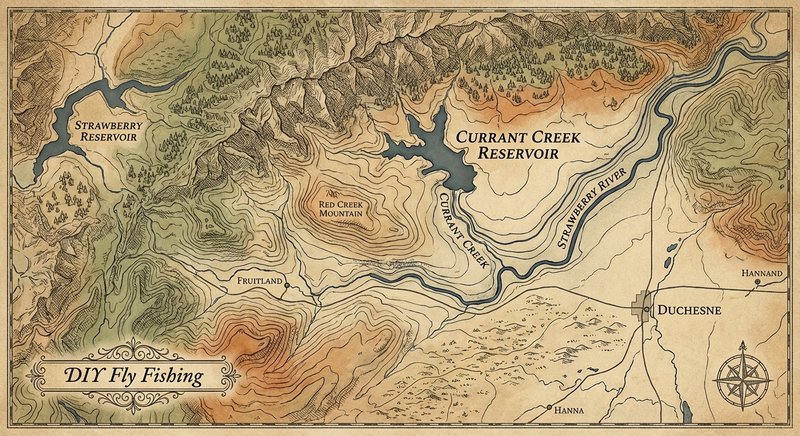
Currant Creek Reservoir
Fly fishing in Utah · Beginner · Best seasons: Summer, Fall
Target Species
Cutthroat Trout, Rainbow Trout
About This Water
Central Utah reservoir with excellent cutthroat. Good camping and fishing.
Fishing Recommendations
Welcome to Currant Creek Reservoir, one of Utah’s premier "Blue Ribbon" stillwater fisheries. Located at approximately 7,700 feet in the Uinta National Forest, this reservoir is a high-mountain gem. It is renowned for its stunning scenery, crystal-clear water, and a robust population of aggressive trout.
As your guide, here is everything you need to know to find success at Currant Creek.
🎣 Location Overview
Currant Creek Reservoir is a high-altitude impoundment surrounded by lodgepole pines, aspens, and sagebrush. What makes it special is its clarity and structure. Unlike many lowland reservoirs that turn murky in summer, Currant Creek remains relatively clear, allowing for exciting sight-fishing opportunities.
The reservoir is characterized by steep drop-offs, submerged timber (the "drowned forest"), and lush weed beds. Because it is a designated Blue Ribbon fishery, it is managed for quality rather than quantity, meaning you have a legitimate shot at Cutthroats and Rainbows exceeding 20 inches.
🐟 Target Species & Behavior
- Bear Lake Cutthroat Trout: These are the "glamour" fish of the reservoir. They are opportunistic predators that love structure. You’ll find them patrolling the edges of weed lines and lurking deep within the submerged standing timber. They are particularly aggressive towards streamers and large terrestrials.
- Rainbow Trout: Generally found in the slightly more open water or near the dam. They tend to be "cruisers," moving along the shoreline looking for midge hatches.
- Feeding Habits: The primary biomass consists of Chironomids (midges), Scuds, and Damselflies. In late summer, the trout focus heavily on Terrestrials (ants, beetles, and hoppers) blown in from the surrounding sagebrush hills.
📅 Best Times to Fish
Seasons
- Summer (July – August): This is the peak season. While valley floor lakes are too hot, Currant Creek is in its prime. The damselfly migration in July is legendary.
- Fall (September – October): My personal favorite time. As temperatures drop, the Cutthroat become extremely aggressive before winter. The crowds thin out, and the "big boys" come into the shallows to feed.
Time of Day
- First Light: The water is usually glass-calm. This is the time for midge clusters and sight-casting to rising fish.
- 10:00 AM – 2:00 PM: As the breeze picks up, the "hopper-dropper" rig becomes deadly near the windward shores.
- Evening: A heavy caddis or midge hatch often occurs in the last hour of light.
🪰 Recommended Flies & Techniques
Top Patterns
- Chironomids: Zebra Midges (Black/Silver, Red/Silver) in sizes 18–22. Ice Buds in Olive.
- Damselflies: Braided Butt Damsel or Marabou Damsel Nymphs (Size 12–14).
- Terrestrials: Foam Ants (Cinnamon or Black), Amy’s Ant, and Dave’s Hopper.
- Streamers: Woolly Buggers (Olive or Black with a bit of flash), Thin Mints, and Sculpzilla.
- Scuds: Weightless or lightly weighted scuds in Olive or Orange (Size 14–16).
Techniques
- The "Static" Midge Rig: Use a long leader (12–15 feet) with a small strike indicator. Hang two midges at different depths. The key is total stillness; let the ripple of the water provide the movement.
- The Damselfly Strip: In July, cast a damselfly nymph toward the weed beds and use a "twitch-twitch-pause" retrieve. Fish often hit on the pause.
- Streamer Stripping: Use a sink-tip line to get flies down near the submerged timber. Be prepared for a hard strike from a Cutthroat defending its territory.
💡 Pro Tips & Local Knowledge
- The North End (The Inlet): This is where Currant Creek flows into the reservoir. It is almost always the most productive area for Cutthroats, as the moving water brings in constant nutrients.
- The Float Tube Advantage: While shore fishing is possible, a float tube or kayak is a game-changer here. It allows you to fish the "drowned forest" on the western shore, which is nearly impossible to fish from the bank without snagging.
- The "Hang": When fishing nymphs or midges from a tube, always pause your fly vertically for 10 seconds before Recasting. Trout often follow the fly up and will strike right as it "escapes" toward the surface.
- Check the Stream Below: If the reservoir is slow, the tailwater section of Currant Creek below the dam holds beautiful, though smaller, wild trout and offers a technical small-stream experience.
⚠️ Important Information
Access
- Access is via Highway 40, turning north near Fruitland. The road is paved part of the way but turns to well-maintained gravel. It is accessible by most passenger cars in the summer.
Regulations (Crucial)
- Slot Limit: At the time of writing, the limit is 4 trout in total. However, all Cutthroat Trout between 15 and 22 inches must be immediately released. This ensures a trophy population remains in the lake.
- Artificial Only: Check current Utah DWR proclamations, as certain sections of the tributaries are restricted to artificial flies and lures only.
Special Considerations
- Weather: At 7,700 feet, thunderstorms can roll in over the mountains in minutes. If you see lightning or the wind kicks up "whitecaps," get off the water immediately.
- Supplies: There are no shops at the reservoir. Ensure you have plenty of water, sunscreen, and all the 4x and 5x tippet you’ll need before leaving Heber or Duchesne.
Guide’s Final Word: Bring a camera. The "red-slashed" Bear Lake Cutthroats against the backdrop of the Uinta National Forest is a sight you'll want to remember. Tight lines!
Bug Hatches & Matching Flies
| Hatch | Type | Peak months | Time of day | Hook sizes | Matching flies |
|---|---|---|---|---|---|
| Chironomids Chironomidae | midge | May, June, September | All Day | #12-22 | Zebra Midge #16-20, Ice Cream Cone #12-16, Griffith's Gnat #18-22 |
| Callibaetis (Speckled Duns) Callibaetis | mayfly | July, August | Late Morning/Early Afternoon | #12-16 | Callibaetis Spinner #14-16, Hare's Ear Nymph #12-16, RS2 #16 |
| Damselfly Enallagma | terrestrial | June, July | Morning/Afternoon | #10-12 | Marabou Damsel #10-12, Parachute Damsel #12 |
| Traveling Sedge Hesperophylax | caddis | July, August | Evening | #8-12 | Goddard Caddis #8-10, Mikulak Sedge #10-12 |
| Blue Winged Olive (BWO) Baetis | mayfly | April, October | Afternoon | #16-20 | Parachute Adams #16-20, Pheasant Tail #18-20 |
| Terrestrial Ants Formicidae | terrestrial | August, September | Afternoon | #12-18 | Carpenter Ant #12-14, Chernobyl Ant #10-14 |
| Cinnamon Caddis Hydropsyche | caddis | July, August | Evening | #14-16 | Elk Hair Caddis #14-16, Soft Hackle Hare's Ear #14-16 |
| Buffalo Midges Simulium | midge | May, June | Morning | #16-18 | Zebra Midge #16-18, Morgan's Midge #18 |