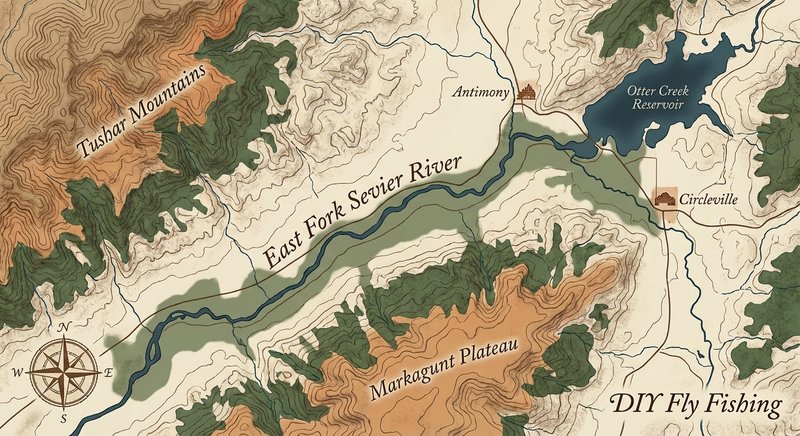
East Fork Sevier River
Fly fishing in Utah · Beginner · Best seasons: Summer, Fall
Target Species
Brown Trout, Rainbow Trout
About This Water
Southern Utah stream with wild brown trout. Kingston Canyon section is excellent.
Fishing Recommendations
The East Fork of the Sevier River in Southern Utah is a hidden gem that offers two very different fishing experiences depending on where you stand. Known primarily for its high-desert scenery and the legendary "Black Canyon" section, it is a bucket-list destination for anglers who appreciate technical pocket water and the chance to land a trophy Brown trout in a remote setting.
🎣 Location Overview
The East Fork Sevier is a tale of two rivers. Below Tropic Reservoir, it winds through the high-altitude King’s Creek area. However, the most famous stretch is the Black Canyon, located between the town of Antimony and Kingston.
What makes this water special is its rugged beauty and the "wild" feel of the fish. Unlike the more famous Green or Provo rivers, the East Fork feels intimate. The water is generally smaller, characterized by deep pools, undercut banks, and classic riffle-run-pool sequences. It is a productive tailwater (below Otter Creek Reservoir) and a freestone-style meadow stream above, offering a variety of challenges for the adventurous angler.
🐟 Target Species & Behavior
- Brown Trout: The stars of the show. In the Black Canyon, these fish are notorious for hiding under deep ledges and in the "guts" of the pools. They are aggressive predators and can reach impressive sizes (18-22 inches).
- Rainbow Trout: Found throughout the system, often in the swifter riffles and at the heads of pools. They are generally more willing to rise to a dry fly than the Browns.
- Behavior: These fish are opportunistic but wary. In the meadow sections, they spook easily at the sight of a shadow. In the canyon, they hold tight to structure. They feed heavily on stoneflies, caddis, and a variety of terrestrial insects during the summer months.
📅 Best Times to Fish
Optimal Seasons
- Summer (July - August): This is prime time for terrestrial fishing. While other Utah rivers might get too warm, the East Fork generally stays fishable, especially in the canyon.
- Fall (September - October): This is arguably the best time for trophy Browns. As they prepare to spawn, they become more aggressive. The fall colors in the canyon are spectacular.
Best Times of Day
- Morning/Evening: During the heat of summer, the "magic hour" occurs just before dusk when the caddis hatch.
- Mid-Day: Excellent for hopper-dropper rigs when the wind picks up and knocks terrestrials into the water.
Prime Windows
- The Salmonfly Hatch (Late June/Early July): If you time it right, the Black Canyon sees a massive hatch of giant stoneflies.
- Late September: The "Blue Winged Olive" (BWO) days when overcast skies trigger consistent surface feeding.
🪰 Recommended Flies & Techniques
Top Fly Patterns
- Dries:
- Terrestrials: Fat Albert (Size 6-10), Amy’s Ant, Dave’s Hopper, or Chernobyl Ants.
- Mayflies: Parachute Adams (14-18), BWO Sparkle Dun.
- Caddis: Elk Hair Caddis (14-16) in tan or olive.
- Nymphs:
- Stoneflies: Pat’s Rubber Legs (Black or Coffee).
- Attractors: Prince Nymph, Rainbow Warrior (16-18), Frenchie.
- Classic: Pheasant Tail (14-18), Hare’s Ear.
- Streamers:
- Wooly Buggers (Olive or Black), Gold Ribbed Hare’s Ear Streamers, or Sculpzilla.
Effective Techniques
- Hopper-Dropper: This is the bread and butter of the East Fork. Use a large, buoyant foam hopper and hang a weighted nymph (like a Prince Nymph) 2-3 feet below it.
- High-Sticking/Euro Nymphing: In the Black Canyon, the currents are complex. Short-line nymphing allows you to get deep into the pockets without drag.
- Tight-Line Streamer Stripping: Cast streamers toward the undercut banks and strip them back aggressively to trigger a reaction strike from a big Brown.
💡 Pro Tips & Local Knowledge
- The "Undercut" Rule: If there is an undercut bank, there is a fish under it. Do not walk right up to the edge; stay back 5-10 feet and cast to the bank before you approach.
- Stealth is Key: The water is often crystal clear. Wear earthy tones (no bright shirts) and move slowly. If you see a fish, it has likely already seen you.
- The Black Canyon Access: It requires a bit of hiking. The further you are willing to walk from the access points, the better the fishing gets.
- Tipple Heavily: While 5x is standard for dries, if you are fishing the Black Canyon for big Browns, don't be afraid to use 3x or 4x fluorocarbon. These fish will dive straight for the rocks and submerged wood once hooked.
⚠️ Important Information
Access Information
- Black Canyon: Access is primarily via Hwy 22 between Antimony and Kingston. Look for the BLM access points and parking areas.
- King’s Creek/Tropic Reservoir: Accessible via Forest Service roads south of Bryce Canyon National Park.
Regulations & Permits
- License: A valid Utah Fishing License is required.
- Specific Rules: Parts of the East Fork have specific "Bait" vs "Artificial Only" regulations. Always check the current Utah Fishing Guidebook, as sections of the Sevier can have "Two-fish limits" or "Catch and Release only" designations depending on the specific stretch.
Special Considerations
- Flash Floods: This is desert country. If there are heavy rains upstream or near Bryce Canyon, the East Fork can turn into "chocolate milk" very quickly. Always check the weather.
- Rattlesnakes: The Black Canyon is prime rattlesnake habitat in the summer. Watch your step and keep your eyes on the trail.
- Wading: The rocks in the Black Canyon are notoriously slippery. Felt soles (where legal) or studded boots and a wading staff are highly recommended.
Bug Hatches & Matching Flies
| Hatch | Type | Peak months | Time of day | Hook sizes | Matching flies |
|---|---|---|---|---|---|
| Blue Winged Olive (BWO) Baetis | mayfly | March, April, September, October | Mid-day | #18-22 | Parachute Adams #18-22, RS2 #20-22, Pheasant Tail #18-20 |
| Pale Morning Dun (PMD) Ephemerella excrucians | mayfly | June, July | Late Morning to Afternoon | #16-18 | PMD Sparkle Dun #16-18, Frenchie #16-18, Barr's PMD Emerger #16-18 |
| Green Drake Drunella doddsi | mayfly | June, July | Afternoon | #10-12 | Green Drake Hairwing #10-12, Hares Ear Nymph #10-12, Green Drake Cripple #12 |
| Spotted Sedge Hydropsyche | caddis | June, July, August | Evening | #14-18 | Elk Hair Caddis #14-18, LaFontaine's Deep Sparkle Pupa #16, Godzilla Caddis #14 |
| Trico Tricorythodes | mayfly | August, September | Early Morning | #20-24 | Trico Spinner #22-24, WD-40 #20-22 |
| Yellow Sally Isoperla | stonefly | June, July | Afternoon/Evening | #14-16 | Yellow Sally Foam Stone #14-16, Iron Lotus #16 |
| Grasshoppers Orthoptera | terrestrial | July, August, September | Late Morning through Evening | #8-12 | Parachute Hopper #10-12, Morrish Hopper #8-12 |
| Chironomids Midge | midge | January, February, March, December | Anytime | #18-24 | Zebra Midge #18-22, Griffith's Gnat #20-22, Buzzer #18 |
| Golden Stonefly Hesperoperla pacifica | stonefly | June | Morning/Afternoon | #8-12 | Pats Rubber Legs #8-12, Chubby Chernobyl #10-12 |